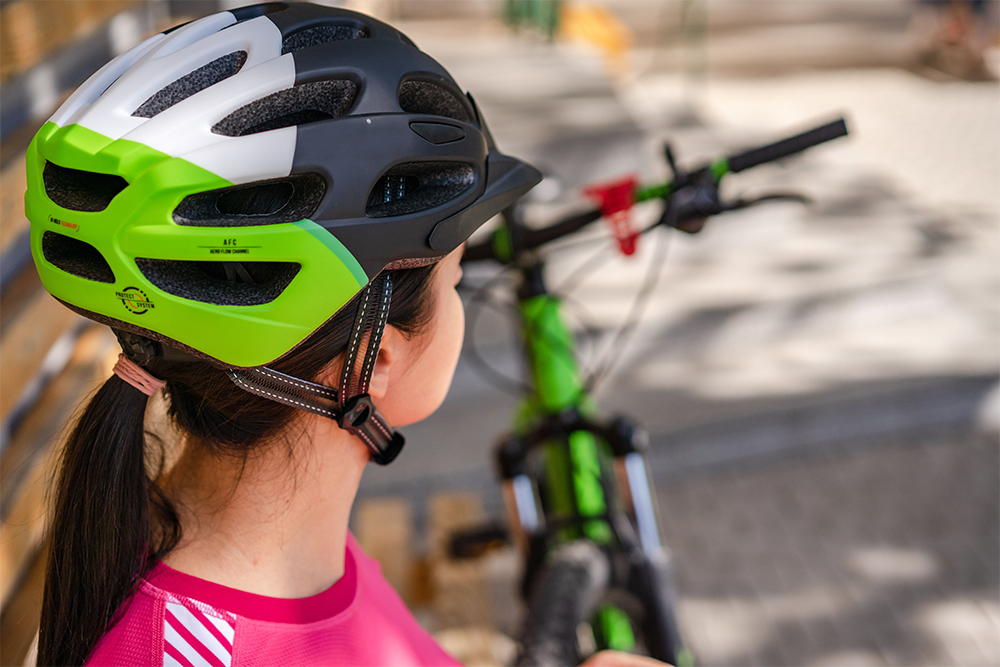
As electric bicycles continue to gain popularity among children and teenagers, safety advocates are working to address a growing concern: an increase in serious injuries involving young riders.
One of those advocates is Meghna Iyer, a rising fourth-year medical student at Oakland University William Beaumont School of Medicine, who recently participated in a nationwide effort to promote safer e-bike use through the Trainees for Child Injury Prevention (T4CIP) program.
T4CIP, a program supported by the American Academy of Pediatrics, trains future health care professionals in leadership, advocacy, communication, and injury prevention. Each year, participants focus on a child safety issue affecting communities across the country. This year’s campaign centered on e-bike safety and reducing preventable injuries among children and adolescents.
“T4CIP is a program that pairs us with mentors across the country who are involved in injury prevention,” said Iyer. “They choose a topic for us to learn about, advocate for, and bring back to our communities. This year it was e-bikes and preventing injuries from e-bike use.”
The initiative culminated in a National Day of Action on May 20, during which participants developed outreach efforts tailored to their local communities. While a national webinar featured pediatric injury prevention experts from across the country, Iyer focused her efforts on educating healthcare professionals, community members, and policymakers in Michigan.
“I had a lecture with pediatric residents about the topic,” said Iyer. “One of the pediatric hospitalists and I created social media videos that will be shared through Corewell Health, and one of our pediatric surgeons appeared on local news to discuss e-bike safety.”
Iyer also participated in the American Academy of Pediatrics Advocacy Day in Lansing, where she met with state legislators to discuss safety concerns surrounding e-bike use among children.
The campaign is not aimed at discouraging children from using e-bikes, Iyer said. Instead, it focuses on helping riders and families understand the risks associated with the rapidly growing form of transportation.
“The key is using e-bikes safely,” said Iyer. “They can travel up to 28 miles per hour, and there are different regulations depending on the state. Because of that, we’re seeing severe injuries among children who may not fully understand the risks.”
According to injury prevention data highlighted during the campaign, children ages 10 to 13 are among the groups most frequently injured in e-bike accidents. One of the most alarming trends involves helmet use.
“About 97 percent of riders who suffered significant e-bike injuries were not wearing a helmet,” said Iyer. “Since e-bikes are heavier and move faster than traditional bicycles, crashes often result in more severe injuries, especially head injuries.”
The campaign encourages riders to wear properly fitted helmets that are designed and tested for higher speeds. Advocates also stress the importance of following age recommendations, understanding local traffic laws, and using e-bikes responsibly.
“Many kids riding e-bikes don’t yet have a driver’s license, so they may not fully understand the rules of the road,” said Iyer. “Education is a major part of preventing injuries.”
In addition to helmet use, T4CIP supports efforts to create more consistent safety standards across the country. Iyer pointed to proposed federal legislation, H.R. 5265, which would improve data collection on e-bike crashes and help identify strategies for reducing injuries nationwide.
At the state level, some regions are already exploring additional regulations. Massachusetts, where Iyer is originally from, is currently considering a Ride Safe Act that would establish several safety measures similar to those promoted by T4CIP.
Locally, Iyer has worked alongside injury prevention specialists connected to Corewell Health and community organizations to expand educational outreach. Safety information has been distributed through schools, parent-teacher organizations, and bike safety events where children receive free helmet fittings and instruction on safe riding practices.
The effort has also extended to Michigan's Bike and Pedestrian Committee, which is part of the Governor’s Traffic Safety Advisory Commission. Through those partnerships, advocates hope to bring greater attention to the issue as e-bike usage continues to rise.
For Iyer, the ultimate goal is simple: preventing serious injuries before they happen.
“In the last few months, as the weather has gotten nicer, there have been a lot of trauma activations related to e-bike injuries at children’s hospitals,” said Iyer. “The biggest thing we can do is educate people. Whether that’s community members, parents, young riders, or legislators, increasing awareness can make a real difference.”
More from OUWB
Student at OUWB says playing piano helps with his medical education
OUWB cohort visits The Zekelman Holocaust Center, preps for Study Trip to Auschwitz
Nutrition Focused Physical Exam session added to OUWB curriculum
To request an interview, visit the OUWB Communications & Marketing webpage.
This work is licensed under a Creative Commons Attribution-NonCommercial 4.0 International License.