Oakland University William Beaumont School of Medicine
586 Pioneer Drive
Rochester, MI 48309
(248) 370-3634


Oakland University William Beaumont School of Medicine
OUWB Body Donation Program
Oakland University William Beaumont (OUWB) School of Medicine faculty, students and staff are grateful for your interest in the Body Donation Program (BDP). The opportunity to learn about the human body in the advancement of learning for students at all stages of their academic and professional careers is indispensable. This gift strengthens the education of medical students, postgraduate physicians and students of related disciplines.
Christina Drakos, Body Donation Program Coordinator
- Phone: (248) 370-3457
- Email: [email protected]
- Mail: Christina Drakos
Body Donation Program Coordinator
Oakland University William Beaumont School of Medicine
586 Pioneer Drive
O’Dowd Hall, Rm. 455
Rochester, MI 48309-4482
1. Who can donate?
Any person of sound mind who is at least 18 years of age may register to donate their body.
We welcome donors from all backgrounds who share our commitment to advancing medical education and research.(Self-Donation: Application is initiated and completed by the donor.)
2. How do I register for body donation?
To register, please complete and sign the OUWB Body Donation Program (BDP) registration form. (Large-print registration forms available upon request.)
You may request this form by phone, email, or through our website.
Once your form is received, our staff will confirm your enrollment and send you a BDP Donor Card.
3. Can I change my mind after registering?
Yes, you may withdraw from the program at any time by contacting the BDP by email, phone or written letter.
Withdrawal will not affect your medical care or eligibility for other donation programs. We deeply appreciate your consideration and generosity, regardless of your final decision.
4. What happens at the time of death?
At the time of death, the individual or institution responsible should immediately contact BDP at (248) 370-3457. Our staff will provide instructions and coordinate transportation to OUWB. Transportation costs within Southeast Michigan are typically covered by the program.
5. Are donations accepted when an autopsy is performed?
If a coroner requests an autopsy, a pre-registered donation may still be accepted. If autopsy prevents educational use the BDP will respectfully arrange for cremation. Donations cannot be accepted if an autopsy is requested by any other party. (Autopsies or extensive organ removal may prevent acceptance; coroner-required autopsies are evaluated individually).
6. Can I donate my body and also register as an organ donor?
Whole-body donation is generally not compatible with organ donation as organ removal prevents anatomical study. However, eye (cornea) donation is possible and can be coordinated with your local eye bank in conjunction with your registration for body donation. (Organ donation for transplantation must occur first; if successful, the body typically cannot be used for whole-body study)
7. Can my family view my body at the OUWB BDP facility?
For health and privacy reasons, the BDP facility is not open for family viewing. If your family wishes to hold a viewing, arrangements should be made with a funeral home before your body is transported to OUWB. The funeral home must contact the BDP office (248) 370-3457 for specific instructions regarding the required preparation of your body.
8. How are donated bodies used?
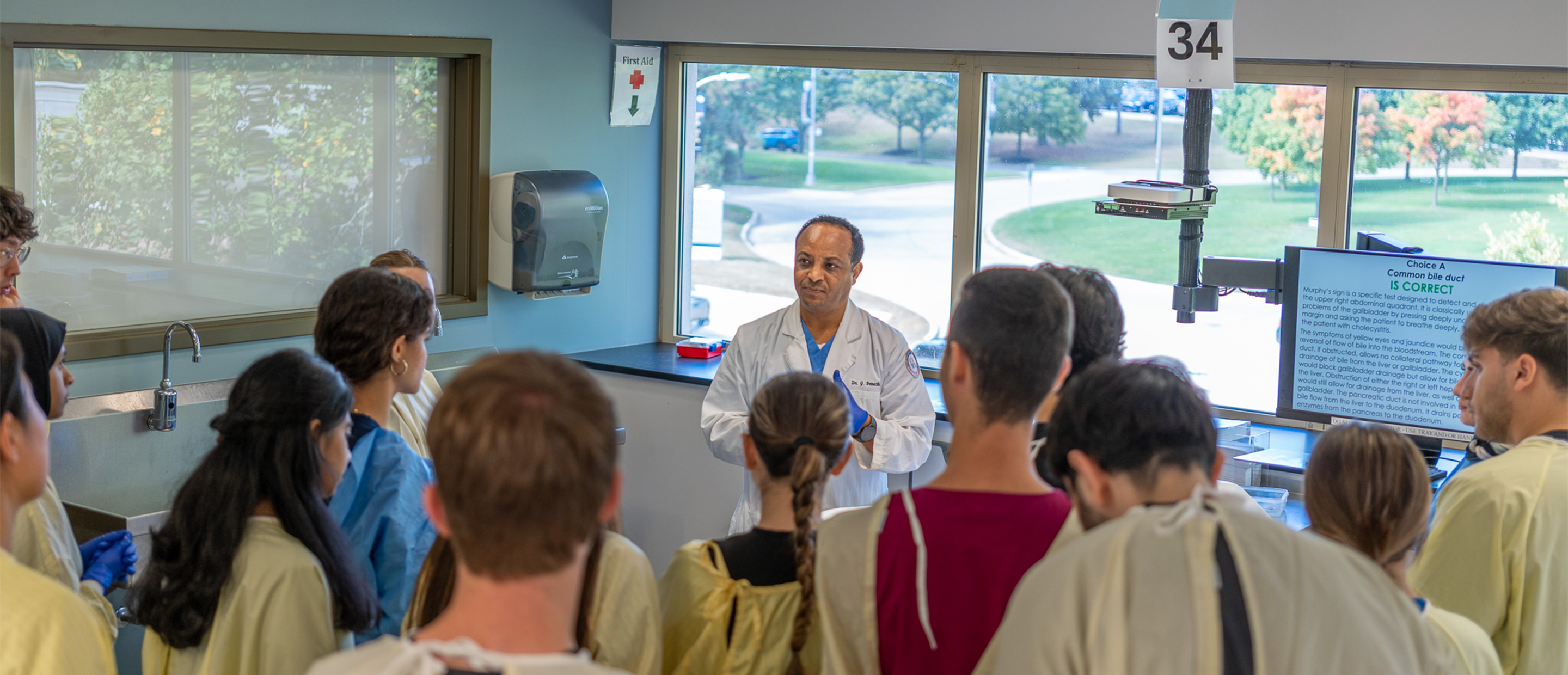
Donors become teachers for future physicians, nurses and health professionals who will honor your gift throughout their studies. Body donations are used for education and/or research at Oakland University and other educational and health care institutions. All partner institutions adhere to the same high standards of confidentiality, respect, ethical care and integrity. Please note that donors or families cannot specify how the donation will be used or who will use it.
9. How long will my body stay with the BDP?
The duration of use varies depending on educational and research needs. Most studies are completed within two to three years of donation.
10. What happens once studies are completed?
After studies conclude, the BDP will coordinate cremation of the remains. Donors indicate their wish for final disposition at the time of registration, choosing from these options: :
- Interment of cremains in the OUWB Mausoleum at Mt. Avon Cemetery in downtown Rochester.
- Return of cremains to a designated individual by mail delivery or in-person pickup at OUWB.
Once cremation is complete, your designated representative will be notified, and the entire set of cremains will be mailed to one designated recipient, as the BDP is unable to divide ashes.
11. Will my family receive medical findings or details of the studies?
No. In keeping with donor privacy and ensuring educational integrity, OUWB does not release reports of medical findings, cause of death or details of specific studies.
12. What if I relocate or pass away outside Michigan?
If you pass away in lower Michigan, the BDP can arrange transportation to our facility. Unfortunately, we cannot manage transport from outside the state but we can help locate a nearby accredited program.
If you move or expect to pass away elsewhere, we can assist in connecting you with a nearby medical school’s body donation program..
13. Are there any costs involved?
There is no cost to register for the program. OUWB typically covers transportation, cremation, and interment costs within Southeast Michigan. Families may incur expenses only if they choose a private funeral home viewing or if transportation is required from outside our service area.
14. After I register, will my body automatically be accepted after I pass away?
Although acceptance cannot be guaranteed, we make every effort to honor each donor’s wishes. Final acceptance is determined at the time of death based on medical and logistical factors (for example, infectious disease, trauma or distance). Therefore, we recommend having an alternative plan with your family or funeral home in case your donation cannot be accepted.
15. Is there an annual memorial ceremony?
Yes. OUWB holds an annual memorial ceremony to honor donors who passed away in the previous calendar year. This meaningful event brings together students, faculty and families to celebrate the donors’ legacy and contribution to medical education. Invitations are sent to the family contacts listed on the registration form. Videos of past ceremonies may be viewed here. (Family photos or messages may be included with permission.)
16. What regulations govern body donation in Michigan?
The OUWB Body Donation Program complies with the Uniform Anatomical Gift Act (UAGA) and all applicable state and federal regulations. View Michigan Public Health Code (Act 368 of 1978), found here.
- Medical school’s anatomy lab helps ready military medics for combat zones
- Donors make the ultimate sacrifice for new OU med school program (The Oakland Press)
- 'Our greatest teachers:' OUWB 2025 Anatomy Memorial honors people who donate their bodies to medical education
- First person to sign up for OUWB Body Donation Program shares why she didn’t think twice about it
- Anatomy Memorial at OUWB honors those who donated their bodies to medical education
- Donate your body to science at Oakland University, get a free spot at Rochester cemetery (Detroit Free Press)
- Donate your body to science and get a free resting place at a Metro Detroit cemetery (Fox 2 - Detroit)
- OUWB opens anatomy lab to military medics for 'extremely unique opportunity'
- Gifted mausoleum supports new body donation program at OUWB
- Dan the Man: Meet the manager of OUWB's Anatomy Lab, and Medical Students' 'first patients'