About Pawley Lean
Our Mission
To provide instruction, research and further development of interdisciplinary principles and practices of Lean organizational improvement for business, education and public service.
Established in 2002 with a $1 million contribution by Dennis Pawley, OU Board of Trustees member and alumnus, the Pawley Lean Institute (PLI) offers Lean courses, resources and training.
The first Lean graduate course, Lean Principles and Application, began in Winter 2004. Three schools, the School of Education and Human Services, the School of Engineering and Computer Science, and the School of Business Administration, worked together to develop the course. Current courses include HRD 3600: Lean Principles and Practices in Organization, HRD 4600: Lean Kaizen in Organizations, HRD 4610: Lean Green Belt as well as POM 4600: Lean Kaizen in Organizations. Current courses from engineering include ISE 4483: Production Systems and Workflow Analysis, ISE 4484: Flexible and Lean Manufacturing Systems, POM 4600: Lean Kaizen in Organizations.
To hear Dennis Pawley, Founder of the Pawley Lean Institute, reflect on why he wanted to establish an institute for Lean Learning, view the Pawley Lean Institute video.
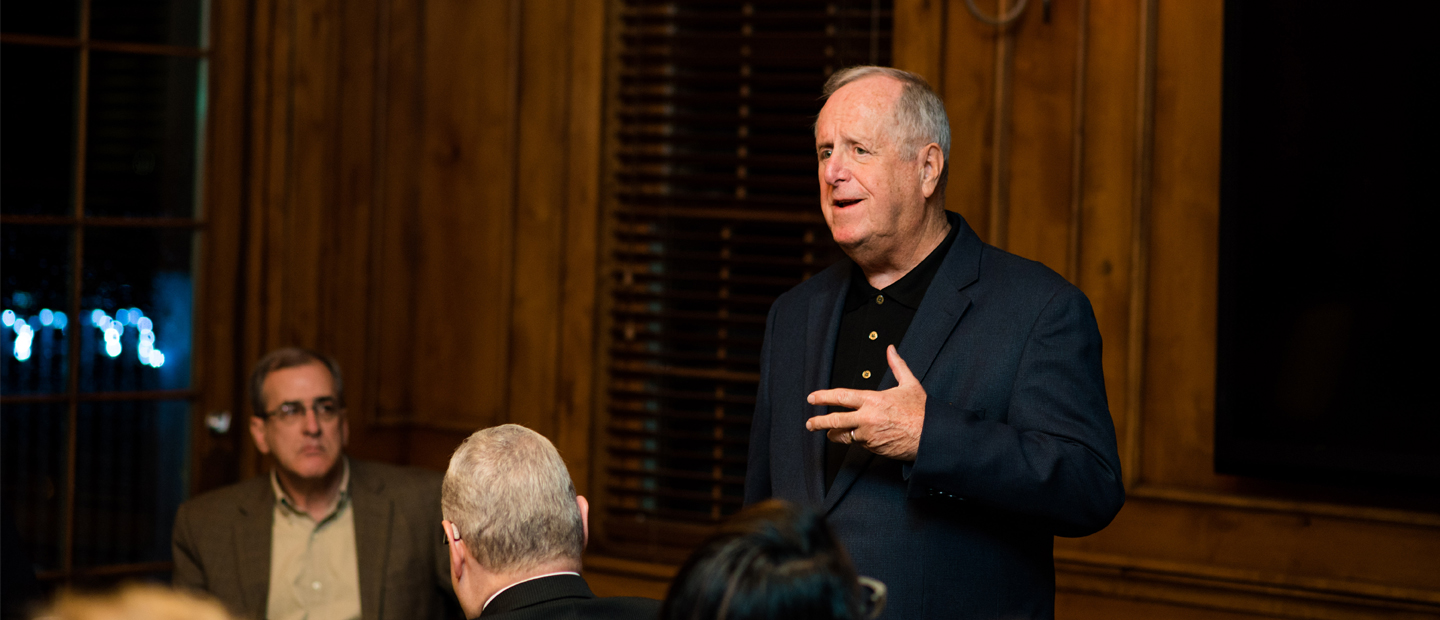
Dennis Pawley, Pawley Institute Founder
As the former executive vice president of manufacturing for Chrysler Corporation, Pawley developed the Chrysler Operating System in the early 1990s to restore productivity and streamline procedures.
"Similar to major corporations, universities must remain competitive to produce a better product ... future employees," Pawley said.
Pawley said the concept of Lean thinking will benefit the automotive industry and Oakland students who are schooled in the philosophy of Lean.
"There's a great need to expand educational opportunities to students nationwide. As we look forward to the next century, America can only remain a leader in manufacturing through joint efforts between universities and corporations. That's why developing specific curricula to meet those challenges are so important."
Pawley graduated from OU's School of Education and Human Services in 1982. He has previously served on the Oakland University Foundation Board of Trustees. He was a member of the Board of Trustees from 1996-98, 2002-10, and 2012-13. He is chair and CEO of Pawley Enterprises in Farmington, Mich. In 1997, he and his wife, Carlotta, donated $2 million to Oakland University to support the schools of Education and Human Services, and Engineering and Computer Science.
Pawley was awarded the OU Distinguished Alumni Achievement Award as well as an honorary doctorate. He has been an active alumni volunteer and has devoted many years of service to the university.
Leading Lean is the official podcast for the Pawley Lean Institute and explores leadership, continuous improvement and the real-world impact of lean thinking by highlighting people, ideas and experiences driving meaningful change.
For more information about the podcast, please contact Pawley Lean Institute Coordinator Laura Klein, Ph.D., at lkklein@oakland.edu.
Episode 1
In this first episode, we sit down with recent Oakland University graduates Amy Rowan and Nicholas Subagyo to discuss their experiences with lean principles, the opportunities they’ve pursued through the Pawley Lean Institute and what’s next as they prepare for additional lean internships this summer. From professional growth to hands-on learning experiences, Amy and Nicholas reflect on how lean thinking has shaped their academic and career journeys.
Transcript
[MUSIC]
We've all been there, staring at a process that doesn't seem efficient thinking there has to be a better way to do this. Most people just talk about it. But our guests today, two students who actually went out on a quest to make things better. Hello, and welcome to the Pawley Lean Institute, Leading Lean Podcast at Oakland University in Rochester, Michigan. I'm your host, Laura Klein, a Special Lecturer at Oakland University and also Coordinator for the Pawley Lean Institute. Thank you for joining us. Each episode we will be talking to students and experts, including academic, community, and industry leaders to share concepts and practices of lean thinking to streamline processes and eliminate waste while providing value from the customer perspective. Today, we're talking to the next generation of efficiency experts, OU students who took lean from the classroom into community organizations to make a difference. Thank you for joining us today.
Hi, thank you for having us.
It's a pleasure to be here.
Great. Thanks for being here. Joining us here at the Grizzly Podcast Studio are two students, Nicholas Subagyo and Amy Rowan, both seniors who also happen to be Division I athletes here at Oakland University. Nicholas is a senior in industrial and systems engineering. He's also a distance swimmer in the mile, 500 yards, 200 yards freestyle at OU. He has held two community service lean internships, one at Fleece and Thank you most recently, and another one at Lighthouse Food Pantry in Pontiac. Nicholas also has a yellow belt certification. Amy is also a senior and she's majoring in the human resource development program. She is on the cross country and track and field teams. She has completed also two community service lean internships, one with Forgotten Harvest, and the other where you joined Nicholas, working together at Fleece and Thank you most recently. She is a yellow belt and also green belt certified here at Oakland University. With that, welcome, and let's just get started. The word lean, a lot of students when we talk about what lean is, I think there are some different perceptions of what lean is, and some students haven't really heard about it. In your own words, when we talk about describing what lean is maybe to your peers, how would you do that?
Well, in my own words, I would describe it as optimizing processes and minimizing inefficiencies.
I would piggyback off that is very much so just simply finding a more efficient and time conducive way to do things, things that is optimizing productivity.
You've both had a lot of lean coursework, correct? What types of classes have you taken beside your green belt certification and yellow belt certification?
Last year at the winter semester I took an online class called Flexible and Lean Manufacturing Systems.
I'll be graduating with a certificate in lean. I've had a decent chunk of lean coursework along with there's a few lean courses that are implemented into the HRD program. It's all been very useful and helpful information.
What really drew you into lean coursework? How did you get started on that path?
It was interesting for me. The class I took was a requirement for my degree. But at around the same time, I was looking for internship in the summer. I reached out to the dean of industrial engineering, and he recommended me to reach out to Dennis Wade, Head of the Pawley Lean Institute. I was looking for a summer internship. Unfortunately, it was already filled, but Dennis offered me a spot on the summer lean workshop, there was three days, and I thought it was very interesting. I had a really good experience, and that made me want to try out the internships last semester and continuing this semester.
Great. Amy, what drew you into lean coursework and programming?
I actually learned about lean in my intro course for HRD. Dennis came in and introduced it. We watched the video that's on the site and all that. That's where I got to learn about it. Then right after class, I talked to him about it, and then I had a one-on-one meeting with him after that, just to learn more and just talk to him about, is this really going to set me apart? Because big in the HR realm is just, what can I do to set myself apart? I talked to him, and it's just a really cool thing to add to my resume and really elevate me and make me more, what's the word?
Differentiator.
Differentiator. Yes.
Well, that's great. You both certainly have done quite a bit besides the coursework. We talked a little bit about your lean projects, your lean internships, your community service internships. Those are a little more flexible than maybe a traditional internship. Let's talk about with the workload that you have, plus being a student athlete and trying to manage all these things. How did that work for you to, I should say, do it all, if you will?
I would say it's a very big challenge for me because I'm in my senior year, I have lots of projects, and like this semester I had my Horizon League conference championships for swimming. It was a challenge for me just to prioritize, do I really want to focus on swimming? Before I started my internship I was thinking, was I able to add this to the workload of this semester? I was like, hey, I got the opportunity, why not just give it a try? The good thing is, as you said, it's flexible. We have the option to come in any day as long as we're able to meet with our supervisor, Taylor Greer at Fleece and Thank You. It really worked out for the two of us. We were able to set schedules and basically just come in.
See what worked best for you with training, with events that you have going on, it gave you a lot of flexibility.
Yes. I did have to miss one week of my internship because of the conference championship, but it worked out.
You were able to make up the time and get the job done. But that's great. Amy, what about you? Just trying to budget all of this as a student athlete and also trying to finish your criteria you need to for your program.
It definitely is a struggle at times, for sure, because you have a lot on your plate. For Nicholas and I, we're both training probably close to six hours a day, five days a week, sometimes six for me, and then also adding on competitions and all of that. The hours vary a lot. It's very much so balancing how things work and just saying, Okay, if I can't do it this week, I'll do it next week. Then also with the internships, it was very flexible of also being able to do things at home, too, which was really helpful because at times, Nicholas and I would get on a call at 9:00 PM or whatever.
I think more work was done at home than on-site because it's mostly thinking, discussion, and we visit on-site when we need to see something or implement something.
Just briefly, tell me a little bit about that project that you worked on most recently. I know it had to do with eliminating waste of scrap material. Just if you can just give me a very brief overview.
Fleece and Thank You is a nonprofit that specializes in processing fleece blankets for sick children in the hospital. We were assigned to help out with the scrap management because these fleece blankets have to be perfect. They can't be cut wrong and they should not have any defects like stains or spots. Any of those imperfect blankets tossed. They already have a disposition for the different types of substandard blankets, whether they want to generate revenue or donate or repurpose it. But often all these different types of scrap, they just get mixed up, and it takes up lots of space and also time for the volunteers. With having the space cleared up, it'll definitely be more productive for the warehouse, too. Also having these different types of scraps figured out, it'll be very helpful and more effective for the company moving forward.
Amy, for you, what was it like the experience adding on to what Nicholas had to say about making a difference there at Fleece and Thank you? But the experience of taking some of the classroom learnings and putting it actually into practice. Did you feel that the experience of being submerged into that environment helped you along with the collaboration you had with the team member and the team at Fleece and Thank you?
Absolutely. I think you don't realize how little you feel like you learn in a class until you're put in the actual environment and you're just like, here, figure it out a little bit, which is great. I think there's just so much you continuously learn through lean, which is amazing. Then also it's just a lot of like, oh, what do we do now? With the lean internships and all that, we also have the beautiful opportunity of having mentorship with that. When we were stuck, when we were unsure what to do next, we could email our mentors and say, "This is all the issues we're hitting. This is what it is. What can we do to help get past this issue or find a solution to this issue?" I think we also have that beautiful capability as well.
Definitely a game changer when you have experts, professors, industry experts that can help you and guide the path for you and still give you the room to explore and problem solve on your own, too.
I remember day one of us visiting, I was like, "Oh, my gosh, there's so much." It's a lot for me. But with the mentors help, we were able to narrow it down. Just focus on a specific aspect of the scrap management system, and that really helped.
One thing I will add, with Fleece and Thank You, it's very different than all the other internships I've been at or even just like my one last semester, simply being, it was a very small and young company. We hit a little bit of stopping points of there's no statistics, there's no data, there's no things to go off of. It was realizing, how do we now find this? Because a lot of companies you work with, they have this data. But for Fleece and Thank You, they didn't have that data, which is fine. But it was, again, like Nicholas said, a little overwhelming because you have no data and you have nothing to work with, which it's cool and amazing because you have the liberty to do so much, but it's also overwhelming and stressful because you have the liberty to do you as much as you want.
Best of both worlds in a way.
Yes.
You really got to learn a lot, but in doing so, there were some growing pains along the way. Well, that's great. I'm going to ask this question. Either one of you can answer it. But before you started, you had this textbook definition of lean. But as you moved into your internship, how did that differ? You touched on it a little bit, Amy, that I'm in the classroom, I'm learning about lean principles, and all of that is great, and that's really the foundation. But until I really actually had to put it into action. When did it connect for you that, wow, this is I'm actually making a difference, I'm driving change, and I'm really trying to fix things, make it better at the organization you were at? Either you can take this one.
You want go?
Yes. I think it's definitely different. It just saw you don't realize how little you know, like I was saying, until you're jumping headfirst into it and pushed into the deep end, if you will. But it's such a cool experience to be able to from the classroom, you learn all these things and you know all these things, but it's like how applicable is it? With a lot of the classes I will say, I've had the pleasure of having great professors that we do use a lot of very applicable ways. But it's like, okay, we're organizing our closet. How can we make organizing our closet the most efficient? It's great, yes. But it's like, no, how does that work and translate to the work field? It was really cool to understand that little things can also be big things as well with lean.
That's great. We touched a little bit when we were just talking about common themes of lean. I'll ask you then, Nicholas, what's a common maybe myth about lean, like it's just for manufacturing or it's just about cutting cost, that you'd like to debunk or just give us a little different scope as to what it entails?
When people think of lean they might think, you're just reducing inefficiencies. Also from lean courseworks, you learn about these lean principles and theories like 5S or the value stream mapping. But in reality it's not that straightforward. There's a lot of collaboration happening, communication. There's tons of disagreements that you have to deal with. Just like the pool of ideas that you have to choose from in order to apply to the company. But like I said, with this collaboration, it really helps narrow it down and just working with people because you're improving the process for the people, too.
I like your point about it's not textbook.
It's very different.
There are other things that come up that keep it really fluid. That's a great point. Both of you have considerable experience to put on your resume: coursework, certifications, internships. Tell me a little bit about how you're using that to give yourself a competitive advantage through your resume and career marketing tools.
I think putting it on your resume is great. I think employers and all that value variety. I think through having different internships from lean or for me, HR, having variety really helps. Obviously, you want it to be applicable for the job that you're applying for because you don't want something that's completely unrelated, but lean is very applicable in all careers, so obviously, it looks good, and then also it's great conversation starter because especially in HR, it's not heard of. Every interview, even mock interviews that I've done, people are like, "Wait, what's lean?" You're like, 'Well, let me tell you.".
Great conversation starter, and opens a lot of doors, it sounds like, from an opportunity perspective for you.
Yes, for sure.
I'd like to thank both of you, Amy and Nicholas, for joining us today on Leading Lean. This is our inaugural episode, and your perspective has really been invaluable from a student perspective who has not only done the coursework, but you've been able to be out in community organizations, work with mentors and professors that can help guide you and help you learn as you do the work out in the field. Your perspective has been wonderful to hear, and thank you for taking your time to join us today.
I'm honored to be part of this episode.
That's great. We're happy to have you and look forward to really exciting things for both of you. I know you both have additional internships scheduled for this summer. Nicholas, you are going to be at, it's going to be Sparrow Hospital.
Yes.
Very good. Taking that into the health care.
It'll be very different this time.
It's going to be different. You'll have a whole other perspective. Amy, you're going into Forgotten Harvest where you're going to have a lot of opportunity to make significant change there, too. Both unique and exciting experiences. Again, thank you Nicholas and Amy for joining us today. We really appreciate having you here and all the valuable input you've given for students who may be looking at lean in the future. With that, I'd like to thank you for joining us on this episode of Leading Lean. I'm looking forward to future episodes, and welcome you back to learn more about how lean is making a difference at Oakland University and out in our community and various industries. Thank you for joining us. If you'd like to learn more about the Pawley Lean Institute, please visit oakland.edu/lean. Thank you.
In 2022, the Pawley Lean Institute celebrated its 20th anniversary. Watch the video below to learn more about how Dennis Pawley’s contributions had a lifelong impact on the OU community. To learn more about how the Pawley Lean Institute has celebrated 20+ years of philanthropy and impact, read this article.
Transcript
After joining the Pawley Lean Institute in 2014, I wasn't quite sure what we would be doing. But I think what I've always tried to focus on is the belief that Dennis had, was that his vision of providing students with Lean coursework and developing skill sets, would allow them to become more employable once they graduated from Oakland University and sought employment.
I've been involved with the Pawley Lean Institute since day one; creating the initial course, lean principles and application. Once they finish that course, they now have the tools and understand what lean is and how to apply it and that leads to the project-based learning. And we apply that mostly through our senior design course where students will take those tools to do continuous improvement projects that are run at local companies. The students are actually embedded at the local company, led by the company on a project and that has been a big value add for students.
I think the impact of the Pawley Lean Institute is fairly obvious. We've had over 500 students that have attended high school workshops we've completed 11 community service internships, which means we've awarded $55,000 to students, the scholarship fund that you set up has given nearly $50,000 out and when you look at internship placements in general, we're close to 130 internships over an eight-year period of time.
I was fortunate enough to receive two scholarships from the Pawley Lean Institute, both of these were extremely helpful. in reducing the financial burden of tuition, on me. Then due to this, I was able to focus more on academics and participate in two internships. One was at Humble Design and the other one was at Leader Dogs for the Blind, both of these taught me real world examples of how lean processes are used. What I was interviewing for a full-time position, I was able to speak on these experiences which helped me land my dream job at General Motors as an Industrial Engineer.
And the Pawley Lean Institute has been recognized by industry. We now have corporate partners that are supporting many of the programs that we put in place.
AT&T's partnership with Pawley Lean began in 2015, with support of their high school outreach workshops, which expose high school students to careers in science and technology. Currently, we're helping Pawley Lean students to develop their personal career development plans which helps them to hone their soft skills. Pawley Lean is creating the next generation of critical thinkers which will help companies, like AT&T, continue to thrive innovate with a well-prepared workforce of the future.
So, as the Pawley Lean Institute reaches its 20th year, its impact is incredible. We see it in the programs, we see it in the students and we see it in the graduates.
- “Where the Classroom Meets the Gemba: Oakland University and the Pawley Lean Institute” — Michigan Lean Consortium
- “Connecting the Classroom to Industry: Experiential Lean Learning with Dennis Wade and Lisa Eshbach” — Lean Enterprise Institute
- “Pawley Lean Institute Partners with Lean Learning Center, Provides New Educational Opportunities” — The Oakland Post
Pawley Lean Institute
456 Pioneer Drive
Rochester, MI 48309-4482
(location map)
(248) 370-4542
lean@oakland.edu


Pawley Lean Institute
456 Pioneer Drive
Rochester, MI 48309-4482
(location map)
(248) 370-4542
lean@oakland.edu