Defense Announcements
There are three phases to a dissertation defense:
Public Presentation of the Dissertation and Defense
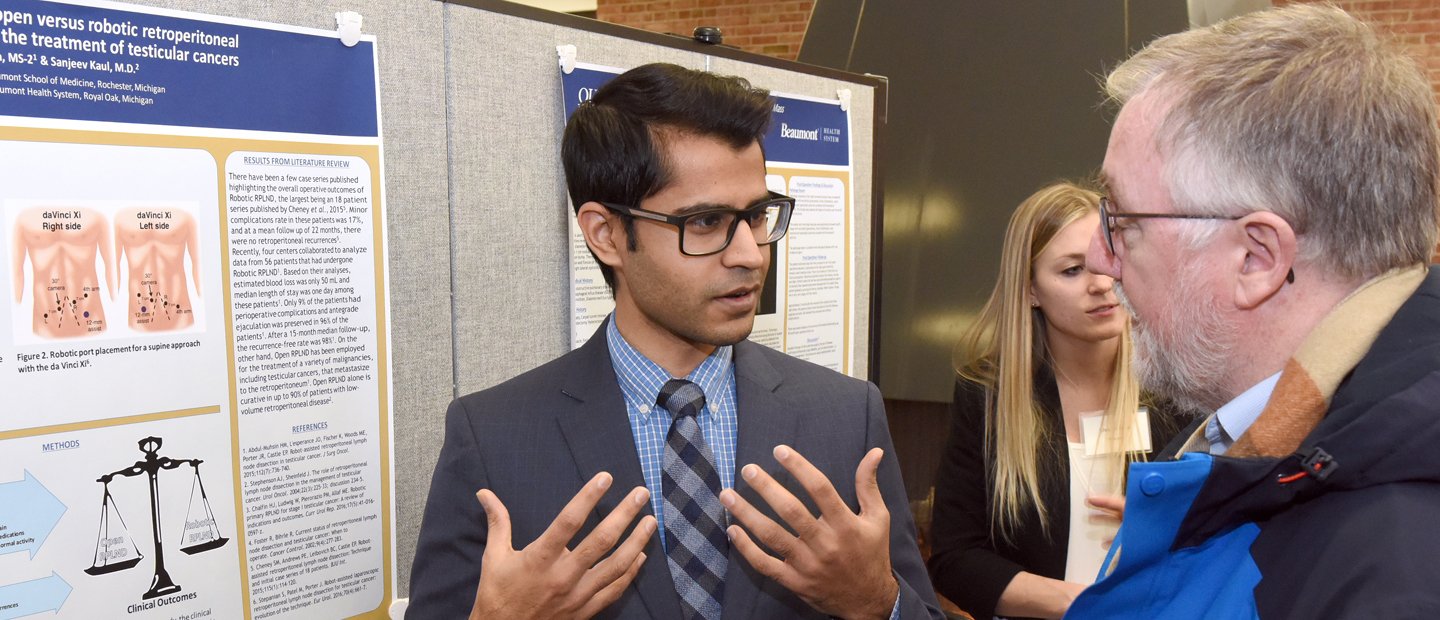
In the public lecture or presentation, the candidate is expected to share the results of his or her dissertation research with the dissertation committee and audience. This presentation may vary in length depending on the circumstances and discipline. At the end of this public presentation, members of the dissertation committee, as well as members of the audience are encouraged to direct questions to the candidate pertaining to the research.
The Dissertation Committee's Meeting with the Candidate
At the conclusion of the public presentation and defense, the dissertation committee members will meet privately with the candidate to pose further questions about the candidate's research or to address issues related to the dissertation manuscript. The dissertation committee can ask the candidate to address these additional questions or changes to the manuscript. The dissertation committee chair presides at this meeting.
Evaluation of the Candidate's Performance
Upon completion of the public presentation and defense and the private meeting, the dissertation committee members, in the absence of the candidate and the audience, discuss the candidate's performance and decide whether or not she or he has passed the defense. The committee chair or one of the co-chairs leads the discussion and communicates the result to the candidate.
For any questions or concerns in regards to a dissertation defense contact [email protected].
Defense date, time, room number, summary and committee chair:
- 3/16/26
- Ali Alamri at 11 AM on Zoom
- Biological and Biomedical Sciences, Ph.D.
- Degenerative disc disease leads to chronic neck and back pain as intervertebral discs (IVDs) deteriorate. We used perinatal mesenchymal stem cell-derived nucleus pulposus-like cells and 3-D scaffolds to regenerate IVDs and alleviate pain in an animal model.
- Doctoral committee chair: G. Rasul Chaudhry
- Brooke Golgiri at 1 PM on Zoom | Meeting ID: 932 9096 9376 | Passcode: 832310
- Nursing, Ph.D.
- Understanding mental health outcomes in U.S. undergraduate students: a comparative and predictive study of SGM and non-SGM students. This secondary analysis uses ACHA’s National College Health Assessment III data from Fall 2019 to Spring 2023.
- Doctoral committee chair: Dr. Suha Kridli
- Ali Alamri at 11 AM on Zoom
- 3/13/26
- Dionne Shell at 10 AM in 5037 HHB
- Human Movement Science, Ph.D.
- This qualitative study examines the impact of mentoring and social support on the educational journey of Black physical therapy students with implications for admission, retention, and graduation.
- Doctoral committee chair: Kris Thompson
- Kimberly Ellen Stein at 3:30 PM on Zoom
- Literacy, Culture, and Language, Ph.D.
- Students find curriculum more accessible when it mirrors their societal realities and personal identities.
- Doctoral committee chair: S Rebecca Leigh
- Dionne Shell at 10 AM in 5037 HHB
- 3/12/26
- Cornelius Bright Vordey at 10 AM in 376 MSC
- Applied Mathematical Sciences, Ph.D.
- The dissertation studies three models for the vibrations of a beam that may contact an obstacle. The contact condition used is the Damped Normal Compliance condition. The models, analysis and computer simulations show the behavior of the system.
- Doctoral committee chair: Meir Shillor
- Balakrishnan Dharmalingam at 10 AM in 347 EC
- Computer Science and Informatics, Ph.D.
- This research presents Aero-LLM, a novel, distributed framework that harnesses the cognitive strengths of LLMs to overcome the operational and computational challenges faced by modern autonomous UAVs.
- Doctoral committee chair: Anyi Liu | co-chair: Subra Ganesan
- Aisha Omar Kadi at 12 PM via Zoom | Meeting ID: 973 8917 1013 | Passcode: 940720
- Early Childhood Education, Ph.D.
- This study explored how kindergarten teachers in Saudi Arabia understood, implemented, and reflected on the use of Feelings/Emotion Picture Cards (FEPCs). The findings underscore the critical role of trauma-informed visual strategies in supporting children’s emotional well-being.
- Doctoral committee chair: Tomoko Wakabayashi
- Nichole Mayes at 6:30 PM in 205 VH
- Music Education, Ph.D.
- This qualitative study investigates the role of music ensemble repertoire selection in the formation of musical identity in high school students in a constructivist, culturally responsive classroom.
- Doctoral committee chair: Dr. Liz Kattner | co-chair: Dr. Deborah VanderLinde
- Cornelius Bright Vordey at 10 AM in 376 MSC
- 3/11/26
- Yamen Taleb at 10 AM in 347 EC
- Electrical and Computer Engineering, Ph.D.
- This dissertation presents a predictive, blockchain-enhanced framework that uses Kalman filters and smart contracts to process diagnostic trouble codes (DTCs) in real time.
- Doctoral committee chair: Mohamed Zohdy
- Abraham Mezaael at 1 PM in 347 EC
- Electrical and Computer Engineering, Ph.D.
- This paper proposes the adoption of an innovative solution: the Extended Kalman Filter (EKF) state estimator to overcome limitations of sensors that measure critical parameters like the vehicle's position, velocity, and acceleration.
- Doctoral committee chair: Mohamed Zohdy
- Emmanuel Adusei at 1:15 PM in 168 MSC
- Biomedical Sciences: Health and Environmental Chemistry, Ph.D.
- This dissertation investigates bent naphthodithiophene (NDT) scaffolds for organic electronics,using donor–acceptor design, imine functionalization, and intramolecular N···S interactions to tune electronic structure and photophysical properties.
- Doctoral committee chair: Dr. Zacharias Kinney
- Kwamise Taylor at 6:45 PM in 206 VH
- Music Education, Ph.D.
- This study examines motivations for choral singing within an African American ecclesiastical community, grounded in historical and cultural foundations, exploring how ecclesiastical engagement shapes motivation, self-determination, social cohesion, collective effervescence, and flow.
- Doctoral committee chair: Dr. Mike Mitchell | co-chair: Dr. Deborah VanderLinde
- Yamen Taleb at 10 AM in 347 EC
- 3/10/26
- Christopher Paul McDonough at 1:15 PM in 386 MSC
- Biomedical Sciences: Medical Physics, Ph.D.
- This dissertation presents the design, development, characterization, and validation of a single-sided field-free line (FFL) MPI scanner with a goal of translation to breast imaging applications.
- Doctoral committee chair: Alexey Tonyushkin
- Christopher Paul McDonough at 1:15 PM in 386 MSC
- 3/9/26
- Oluwafeyisayo Oyeniyi at 2 PM in 347 EC
- Computer Science and Informatics, Ph.D.
- This dissertation presents a trust-centric AI framework that formalizes trust as a multi-layer architectural objective.
- Doctoral committee chair: Amartya Sen
- Oluwafeyisayo Oyeniyi at 2 PM in 347 EC
- 3/5/26
- Ekhlass Alkharabsheh at 10 AM in 347 EC
- Electrical and Computer Engineering, Ph.D.
- This dissertation presents a comprehensive framework for optimizing real-time data transmission in cloud-based cooperative perception systems (CPS), focusing on adaptive video compression, hybrid networking, and cloud-based inference.
- Doctoral committee chair: Shadi Alawneh
- Ekhlass Alkharabsheh at 10 AM in 347 EC
- 3/2/26
- Mohammad Pervez at 10 AM in 347 EC
- Electrical and Computer Engineering, Ph.D.
- The adoption of mmWave communication in vehicular environments faces unique challenges. This presentation will be focused on the solution and optimized analysis of different aspects of mmWave antennas.
- Doctoral committee chair: Amanpreet Kaur
- Mohammad Pervez at 10 AM in 347 EC
- 2/27/26
- Victorine Clotilde Wakam Younang at 4 PM in 347 EC
- Computer Science and Informatics, Ph.D.
- This dissertation presents a multi-layered framework that addresses the gap across four stages of the technology life cycle: socio-technical, operational, security-evaluative, and formal-foundational.
- Doctoral committee chair: Amartya Sen
- Victorine Clotilde Wakam Younang at 4 PM in 347 EC
- 2/25/26
- Boyun Kim at 1 PM in 204 PH
- Early Childhood Education, Ph.D.
- This dissertation evaluated the preliminary impact of the 2024 revision of the Head Start Program Performance standards. The study examined the relationship between classroom teacher turnover and wages before and after the policy change to identify shifts in workforce stability.
- Doctoral committee chair: Tomoko Wakabayashi
- Boyun Kim at 1 PM in 204 PH
- 2/23/26
- Danielle Alexander at 11 AM on Zoom
- Literacy, Culture, and Language, Ph.D.
- This manuscript-style dissertation examines how writing teacher identity shapes instruction and assessment in a suburban Michigan high school, accounting for variation in pedagogy and students’ writing opportunities across classrooms and over time.
- Doctoral committee chair: Gwendolyn Thompson McMillon | co-chair: Greg Bartley
- Reem Assiri at 12 PM on Zoom
- Early Childhood Education, Ph.D.
- A qualitative study of Saudi teachers’ perceptions of storytime to support children’s emotion regulation. The Scaffolded Emotional-Moral Experience Model explains how teachers use storytime to develop emotional understanding, self-regulation, and moral reasoning in Saudi classrooms.
- Doctoral committee chair: Julie Ricks-Doneen
- Alycia Roberts at 12 PM on Zoom
- Educational Leadership, Ph.D.
- This study examined the relationship between different school leadership approaches used by school principals and their views about standardized testing. The study found important differences by leadership approach, with implications for future study.
- Doctoral committee chair: Julia Smith
- Danielle Alexander at 11 AM on Zoom
- 2/20/26
- Laura Marchwinski at 9 AM in 5036 HHB
- Human Movement Science, Ph.D.
- This qualitative study explored women’s perceived barriers and catalysts influencing their completion of phase II cardiac rehabilitation which resulted in a framework to enhance participation outcomes.
- Doctoral committee chair: Sara Arena
- Laura Marchwinski at 9 AM in 5036 HHB
- 2/19/26
- Kaitlin Patrzalek at 11 AM in 493 PH
- Education: Counseling, Ph.D.
- The aim of this doctoral dissertation study is to understand the perceived impact of nature-based schools on students' capacities for self-regulation and wellness while considering the implications for both education and counseling.
- Doctoral committee chair: Dr. Lisa Hawley
- Kaitlin Patrzalek at 11 AM in 493 PH
- 2/18/26
- Ashley E. Muller at 12 PM in 493 PH
- Education: Counseling, Ph.D.
- This dissertation explores the student perceived helpfulness of five different types of School Based Mental Health Services (SBMHS). The results of this study will add to the SBMHS literature and inform researchers and stakeholders on student perceived helpfulness of SBMHS.
- Doctoral committee chair: James T. Hansen, Ph.D.
- Ashley E. Muller at 12 PM in 493 PH
- 2/13/26
- Raed Alotaibi at 10 AM in 347 EC
- Electrical and Computer Engineering, Ph.D.
- This dissertation develops PDQN-CLR, a parameterized deep reinforcement learning controller that selects a discrete operational category and a continuous vector of DER real and reactive setpoints, targeting priority-weighted restoration while enforcing its feasibility.
- Doctoral committee chair: Mohamed Zohdy
- Ibrahim Albariqi at 1 PM in 347 EC
- Systems Engineering, Ph.D.
- This study proposes the Resilient-Sustainable Supplier Selection System (RSSSS), a machine learning based decision support framework that integrates performance, resilience, and sustainability indicators.
- Doctoral committee chair: Mohamed Zohdy
- Raed Alotaibi at 10 AM in 347 EC
- 2/11/26
- Siyuan Fang at 10 AM in 347 EC
- Mechanical Engineering, Ph.D.
- This dissertation develops a white-light multi-camera, double-side DIC system that reconstructs both faces in a unified measurement frame, enabling direct thickness-strain measurement together with in-plane strains.
- Doctoral committee chair: Lianxiang Yang
- Siyuan Fang at 10 AM in 347 EC
- 1/27/26
- Minjie Yu at 3 PM in 386 MSC
- Applied Mathematical Sciences, Ph.D.
- This dissertation empirically explores the statistical behavior and predictive dynamics of major cryptocurrencies including Bitcoin, Ethereum, Ethereum Classic, XRP, Cardano, Dogecoin, and Tether.
- Doctoral committee chair: Ravindra Khattree
- Minjie Yu at 3 PM in 386 MSC
- 1/26/26
- Ahmed Alsalem at 9 AM in 347 EC
- Systems Engineering, Ph.D.
- This dissertation introduces an improved convolutional neural network (CNN) model enhanced with a Convolutional Block Attention Module (CBAM) for the detection of smoke in wheatfield fires using unmanned aerial vehicle (UAV) imagery.
- Doctoral committee chair: Mohamed Zohdy
- Ahmed Alsalem at 9 AM in 347 EC
- 1/16/26
- Mohsen Moradi Moghadam at 10 AM in 347 EC
- Computer Science and Informatics, Ph.D.
- This research aims to tackle software challenges by advancing testing in two key domains: actor concurrency and machine learning widely used across web, mobile, and desktop applications and adopted at scale by companies like Google and Facebook.
- Doctoral committee chair: Medhi Bagherzadeh
- Mohsen Moradi Moghadam at 10 AM in 347 EC
- 12/4/25
- Sudeep Chavare at 1 PM in 347 EC
- Mechanical Engineering, Ph.D.
- This dissertation advances uncertainty quantification (UQ) in machine learning by introducing novel approaches that enhance both reliability and efficiency.
- Doctoral committee chair: Zissimos Mourelatos
- Sudeep Chavare at 1 PM in 347 EC
- 12/3/25
- Victor Daogaru at 1 PM in 347 EC
- Systems Engineering, Ph.D.
- This research focuses on two important issues: (i) Demand forecasting and (ii) Resource planning. A new approach is presented to forecast demand by taking a “bottom up” approach as opposed to a traditional top down approach.
- Doctoral committee chair: Sankar Sengupta
- Victor Daogaru at 1 PM in 347 EC
- 11/21/25
- Nicole Urhahn-Schmitt at 1 PM in 493 PH
- Education: Counseling, Ph.D.
- This quantitative study examines whether participation in Peer Recovery Support Services decreases relapse rates in individuals with Alcohol Use Disorder during the first 90 days of recovery.
- Doctoral committee chair: Dr. Todd Leibert
- Nicole Urhahn-Schmitt at 1 PM in 493 PH
- 11/13/25
- Ahmad Abdelhafiz at 3 PM in 347 EC
- Electrical and Computer Engineering, Ph.D.
- This research introduces a hybrid edge-to-cloud framework in which autonomous vehicles utilize their onboard supercomputers when underused or idle as distributed processing nodes.
- Doctoral committee chair: Subra Ganesan
- Ahmad Abdelhafiz at 3 PM in 347 EC
- 11/5/25
- Farag Lagnf at 10 AM in 347 EC
- Electrical and Computer Engineering, Ph.D.
- This research presents a complete real-time FPGA-based security framework for Controller Area Network (CAN) systems, addressing the absence of confidentiality, integrity, and authentication in legacy automotive communication.
- Doctoral committee chair: Subra Ganesan
- Farag Lagnf at 10 AM in 347 EC
- 10/31/25
- Juan Pablo Favero at 1 PM on Zoom
- Education: Counseling, Ph.D.
- This qualitative phenomenological study examined the lived experiences of professional baseball players at various levels within MLB organizations during two critical moments in their efforts to return to competitive play after a long-term injury.
- Doctoral committee chair: Dr. Todd Leibert
- Juan Pablo Favero at 1 PM on Zoom
- 10/30/25
- Angela Super at 12 PM on Zoom
- Educational Leadership, Ph.D.
- This case study examined teacher preparation programs in Michigan. It explored their responses to changes in the standards enacted by the Michigan Department of Education concerning teaching linguistically diverse learners.
- Doctoral committee chair: Julia Smith
- Angela Super at 12 PM on Zoom
- 10/29/25
- Daniyah Alaswad at 9 AM in 347 EC
- Electrical and Computer Engineering, Ph.D.
- Our findings show that high-quality representations of Egyptian
monuments that are diverse and consistent with the original can be detected by using the right model tweaks. Such advances can significantly change the definition of how we do things like preserving cultural heritage. - Doctoral committee chair: Mohamed Zohdy
- Sam Fallahpasand at 1 PM in 347 EC
- Mechanical Engineering, Ph.D.
- This work studies the natural frequencies, stability, and modal properties of a spinning cantilever beam with a rigid tip body for a range of rotation speeds in this work.
- Doctoral committee chair: Christopher Cooley
- Daniyah Alaswad at 9 AM in 347 EC
- 10/28/25
- Saeid Nasheralahkami at 10 AM in 347 EC
- Mechanical Engineering, Ph.D.
- Steels used in auto structures are prone to sheared-edge cracking during trimming and punching. Experimental testing and finite element modeling are used to evaluate edge quality, stretchability, and fracture mechanisms under varying clearances.
- Doctoral committee chair: Sergey Golovashchenko
- Jennifer Sepetys at 1 PM via Zoom
- Educational Leadership, Ph.D.
- This case study examined the impact of a high school course focusing on positive psychology on student anxiety, factors contributing to stress, and their coping behaviors. Results showed significant gains compared to those who did not take the course.
- Doctoral committee chair: Julia Smith
- Saeid Nasheralahkami at 10 AM in 347 EC
- 10/24/2025
- Cody Trevillian at 2 PM in 164 MSC
- Applied and Computations Physics, Ph.D.
- Dynamic magnon-mediated interactions that enrich quantum systems by exploiting on-demand resonance tuning and magnons’ strong coupling to bosonic and fermionic quantum objects are presented. A near-term host and platform-agnostic computing and interference protocols are shown.
- Doctoral committee chair: Vasyl Tyberkevych
- Charles Shamoun at 3 PM in 2045 HHB or Zoom
- Nursing, Ph.D.
- This dissertation examined how health-related social needs shape caregiver burden among care partners of stroke survivors. Findings revealed unmet needs and predictors of social needs that significantly impacted caregiver burden, providing a foundation for future research.
- Doctoral committee chair: Laura Pittiglio
- Cody Trevillian at 2 PM in 164 MSC
- 10/23/2025
- Jason Rose at 5 PM in 231 VH
- Music Education, Ph.D.
- This study examines the nature of belonging among members of a high school marching band through a community of practice lens.
- Doctoral committee chair: Dr. Gregory Cunningham, Ph.D. | co-chair: Dr. Deborah VanderLinde, Ph.D.
- Jason Rose at 5 PM in 231 VH
- 10/21/2025
- Ibrahim Abbas at 10 AM in 347 EC
- Electrical and Computer Engineering, Ph.D.
- AI-driven Socially Assistive Virtual Robots (SAVRs) delivered through a ChatGPT-powered home simulation are evaluated for early childhood learning in real home settings.
- Doctoral committee chair: Subra Ganesan
- Hussein Alawsi at 12 PM via Zoom
- Electrical and Computer Engineering, Ph.D.
- This dissertation proposes a reinforcement learning-assisted model predictive control(RL-assisted MPC) framework to improve autonomous vehicle parking performance.
- Doctoral committee chair: Jun Chen
- Ibrahim Abbas at 10 AM in 347 EC
- 10/20/2025
- Qinghua Chen at 3 PM in 347 EC
- Electrical and Computer Engineering, Ph.D.
- Learning from Demonstration (LfD) enables socially assistive robots to acquire complex skills for ABA therapy. This work targets efficient learning by improving sample efficiency and info extraction in HRI.
- Doctoral committee chair: Osamah Rawashdeh
- Qinghua Chen at 3 PM in 347 EC
- 10/14/2025
- Jessica Ross at 1 PM via Zoom
- Education: Counseling, Ph.D.
- This dissertation investigates the relationship between SBW schema internalization and sexual functioning among Black women in the United States.
- Doctoral committee chair: James Hansen
- Jessica Ross at 1 PM via Zoom
- 10/8/2025
- Mary Patillo-Dunn at 11 AM via Zoom
- Literacy, Culture, and Language, Ph.D.
- This study examines how elementary principals in urban schools view and prioritize literacy-focused partnerships with teacher preparation programs. Findings show school culture, climate, personal relationships, and alignment of goals shape “mutual benefit.”
- Doctoral committee chair: Gwendolyn Thompson McMillon
- Mary Patillo-Dunn at 11 AM via Zoom
- 10/2/2025
- Nicholas Ingarra at 9:30 AM in 347 EC
- Mechanical Engineering, Ph.D.
- This work improves data analysis of total water flow in porous media.
- Doctoral committee chair: Chris Kobus
- Nicholas Ingarra at 9:30 AM in 347 EC
- 10/1/2025
- Prabhu Acharya at 9 AM in 316 PH
- Biomedical Sciences: Medical Physics, Ph.D.
- This dissertation deals with measures of tumor physiology and vascular characterization of human glioblastoma in orthotopic rat models using dynamic contrast-enhanced MRI.
- Doctoral committee chair: Yang Xia | co-chair: James Ewing
- Prabhu Acharya at 9 AM in 316 PH
- 9/26/25
- Aditya Bhalerao at 11 AM via Zoom
- Biological and Biomedical Sciences, Ph.D.
- Developed functional BBB-on-chip models with human cell co-cultures. Models replicate barrier function under flow, predict small molecule permeability, and support receptor-mediated transport studies for brain-targeted drugs
- Doctoral committee chair: Luca Cucullo
- Aditya Bhalerao at 11 AM via Zoom
- 9/4/25
- Anna Szala at 12 PM via Google Meet
- Psychology, Ph.D.
- This dissertation finds that the Need for Chaos (NFC) is linked more to psychological traits (e.g., risk-taking, social disconnection) than ideology, with higher NFC in Poland than the US, regardless of politics, across four studies in both countries.
- Doctoral committee chair: Todd Shackelford, Ph.D.
- Anna Szala at 12 PM via Google Meet
- 7/14/25
- Jacob Pappas at 1 PM via Google Meet
- Psychology, Ph.D.
- Three studies test the validity of a modified formulation of response-readiness theory to explain the prevalence of ADHD traits in non-clinical, undergraduate samples. The studies explore early life uncertainty, harshness, information-seeking tendencies and threat vigilance.
- Doctoral committee chair: Jennifer Vonk
- Jiahao Liu at 1 PM in 347 EC
- Mechanical Engineering, Ph.D.
- This dissertation aims to study how the pulse charging strategy can shorten the charging time under different temperature environments, how to alleviate the loss of battery capacity after multiple cycles, and optimize the pulse charging strategy.
- Doctoral committee chair: Xia Wang
- Jacob Pappas at 1 PM via Google Meet
- 7/11/25
- Damilola Alao at 11 AM on Zoom
- Computer Science and Informatics, Ph.D.
- Addresses the challenge of managing resource-constrained IoT devices while meeting dynamic user service & security needs & contributes to the sustainability/security of energy-harvesting IoT networks by developing energy optimization framework for RF energy harvesting in IoT networks.
- Doctoral committee chair: Amartya Sen
- Adrianna Jurek at 1 PM in 127 DH
- Biological and Biomedical Sciences, Ph.D.
- I generated 4 genetically informative F2 mouse strains to understand the cell-type-specific regulation of 3 important hemostatic proteins. Quantitative trait locus analyses were performed to identify loci regulating the expression of F5, PAI-1, and Protein C.
- Doctoral committee chair: Randal Westrick
- Saber Khanmohammadi at 1 PM in 347 EC
- Mechanical Engineering, Ph.D.
- The global freshwater crisis, driven by population growth, climate change, & rising industrial demand, requires energy-efficient, sustainable desalination. This study investigates use of low-grade thermal energy to enhance performance of membrane-based desalination technologies.
- Doctoral committee chair: Jonathan Maisonneuve
- Sandeep Aryal at 3 PM in 347 EC
- Mechanical Engineering, Ph.D.
- Fertilizer solutions are explored as energy-efficient alternatives to remove excess moisture from humid environments. They are studied as liquid desiccant using thermodynamic analysis, transport modeling, experimental analysis and real-time application to real plant chambers.
- Doctoral committee chair: Jonathan Maisonneuve
- Damilola Alao at 11 AM on Zoom
- 7/9/25
- Kristy Brinker Brouwer at 10 AM in 347 EC
- Mechanical Engineering, Ph.D.
- Special circumstance scenarios exist where a child safety seat (CSS) cannot be, or is not, used according to best practices recommended by the American Academy of Pediatrics. This research identifies three such scenarios that uniquely affect the safe use of CSS.
- Doctoral committee chair: Michael Latcha
- Kristy Brinker Brouwer at 10 AM in 347 EC
- 7/8/25
- Karoline Kenville at 1 PM via Zoom
- Early Childhood Education, Ph.D.
- The purpose of this study was to investigate the effectiveness of a humanoid Nao robot in training individuals with no prior experience in Applied Behavior Analysis to implement Discrete Trial Training procedures using the Behavior Skills Training model.
- Doctoral committee chair: Jessica Korneder
- Lawrence Young at 1 PM via Zoom
- Educational Leadership, Ph.D.
- This study examines the experiences of Black men with Hip-Hop identities who graduated from historically White institutions. It explores their voices by centering their experiences of joy and resilience, rather than echoing deficit based narratives.
- Doctoral committee chair: V. Thandi Sule
- Karoline Kenville at 1 PM via Zoom
- 7/3/25
- Raenece Johnson at 12 PM via Zoom
- Educational Leadership, Ph.D.
- This research examined the lived experiences of Black students who transferred from a 2-year to a 4-year college or university. Findings reveal important issues that arise for these students and help frame ways to improve the transfer process.
- Doctoral committee chair: Thandi Sule
- Raenece Johnson at 12 PM via Zoom
- 6/30/25
- Hussam Al-Tarazi at 10 AM in 347 EC
- Computer Science and Informatics, Ph.D.
- This study emphasizes the critical role of protection relay algorithms specifically differential and harmonic restraint algorithms in safeguarding power transformers from electrical faults.
- Doctoral committee chair: Julian Rrushi
- Amanveer Singh at 1 PM in 225 HH
- Biomedical Sciences: Medical Physics, Ph.D.
- This dissertation presents three investigations that aimed to detect the early progression in post-traumatic osteoarthritis with the use of high-resolution imaging.
- Doctoral committee chair: Yang Xia
- Hussam Al-Tarazi at 10 AM in 347 EC
- 6/27/25
- Noelle Mongene at 11 AM via Zoom
- Psychology, Ph.D.
- Two qualitative studies examine the experiences of Black and Native American women in Science, Technology, Engineering, and Mathematics (STEM) fields. They highlight the importance of belonging, representation, and affirmation of the intersectional identities of women in STEM.
- Doctoral committee chair: Martha Escobar | co-chair: Michele Parkhil-Purdie
- Juna Kotori at 3 PM via Zoom
- Educational Leadership, Ph.D.
- A theory of human growth through positive self-leadership
- Doctoral committee chair: Dave Strubler
- Noelle Mongene at 11 AM via Zoom
- 6/26/25
- Meghna Chowdhary Nautiyal at 9 AM in 5036 HHB
- Human Movement Science, Ph.D.
- Juvenile Idiopathic Arthritis, a common childhood rheumatic condition, may lead to short and long-term disabilities. Surveys were used to explore parent and child perspectives on physical activity and fear of movement; and physical therapist experiences with these children.
- Doctoral committee chair: Melodie Kondratek
- Meghna Chowdhary Nautiyal at 9 AM in 5036 HHB
- 6/17/25
- Petro Artemchuk at 12 PM in 187 MSC
- Applied and Computations Physics, Ph.D.
- The dissertation studies formation and properties of the Bose-Einstein condensate (BEC) of magnons in antiferromagnetic (AFM) crystals . In particular it studies in detail interaction of a magnon gas in the process of BEC formation with an isolated low-frequency magnonic mode.
- Doctoral committee chair: Andrei Slavin | co-chair: Vasyl Tyberkevych
- Petro Artemchuk at 12 PM in 187 MSC
- 6/4/25
- Obieda Ananbeh at 9 AM in 347 EC
- Computer Science and Informatics, Ph.D.
- This work introduces a set of refactoring techniques aimed at mitigating various types of vulnerabilities in software applications.
- Doctoral committee chair: Dae-Kyoo Kim
- Obieda Ananbeh at 9 AM in 347 EC
- 5/30/25
- Brian Venglar at 10 AM in 5036 HHB
- Human Movement Science, Ph.D.
- Hip and shoulder pain are common reasons for physical therapy referral. A structured method for identifying the source of shoulder pain is presented. Psychosocial factors that may impact return to function for persons with hip dysplasia are explored.
- Doctoral committee chair: Melodie Kondratek
- Brian Venglar at 10 AM in 5036 HHB
- 5/29/25
- Abdullah Hamadi at 11 AM via Zoom
- Electrical and Computer Engineering, Ph.D.
- This dissertation introduces a novel harmonic mitigation technique using tertiary winding current injection in a three-winding transformer.
- Doctoral committee chair: Shadi Alawneh | co-chair: S. Ali Arefifar
- Abdullah Hamadi at 11 AM via Zoom
- 5/28/25
- Anwar Ghammam at 9 AM in 347 EC
- Computer Science and Informatics, Ph.D.
- We aim to address under explored areas related to software optimization, shedding light on overlooked challenges in critical facets of modern software systems that span from core to apex—from resource allocation management to source code refactoring enhancement.
- Doctoral committee chair: Amine Barrak
- Anwar Ghammam at 9 AM in 347 EC
- 5/9/25
- Surah Aldahkl at 11 AM in 347 EC
- Electrical and Computer Engineering, Ph.D.
- This work suggests a secure smart energy management system based on the blockchain to protect the cyber security of the smart grid.
- Doctoral committee chair: Mohamed A. Zohdy
- Surah Aldahkl at 11 AM in 347 EC
- 4/24/25
- Matthew Archer at 12 PM on Zoom
- Educational Leadership, Ph.D.
- This dissertation examines the intersection and conflict between current theories concerning sexuality and those explicating disability, as operationalized through the lens of higher education issues.
- Doctoral committee chair: Julia Smith
- Mandy Wowra at 2 PM on Zoom
- Literacy, Culture, and Language, Ph.D.
- This qualitative study used Design-Based Research to explore the experiences of parents discussing gender and sexual orientation with their children to foster understanding and empathy, to help address the literature gap in this area.
- Doctoral committee chair: Julia Smith | co-chair: Gwen McMillon
- Matthew Archer at 12 PM on Zoom
- 4/23/25
- Margaret Kennedy at 2 PM in 2045 HHB
- Nursing, Ph.D.
- Qualitative thematic analysis was utilized to explore childhood trauma and resilience through interviews with child trauma experts. Identified themes reflect on the interplay between development and trauma and key factors that promote resilience in trauma-exposed youth.
- Doctoral committee chair: Dr. Toni Glover
- Margaret Kennedy at 2 PM in 2045 HHB
- 4/18/25
- Judson Estes at 2:30 PM in 347 EC
- Systems Engineering, Ph.D.
- In an agent based model, team dynamics are simulated to understand the effects of cognitive attributes and team member relationships in the context of product development.
- Doctoral committee chair: Vijitashwa Pandey
- Judson Estes at 2:30 PM in 347 EC
- 4/17/25
- Jennifer Hernandez at 11:30 AM in PH
- Educational Leadership, Ph.D.
- The purpose of this study is to investigate if there is a relationship between the degree of standardization-stratification and student achievement. From this point the study will further investigate the relationship with respect to outcomes for marginalized populations.
- Doctoral committee chair: David Strubler
- Jennifer Hernandez at 11:30 AM in PH
- 4/15/25
- Mohammed Alzahrani at 9 AM in 225 HH
- Biomedical Sciences: Medical Physics, Ph.D.
- We study different brain stimulation methods and mechanisms, which can be formulated to target specific neurons in the brain, helping to alleviate symptoms associated with movement disorders, epilepsy, depression, and other neurodegenerative disorders.
- Doctoral committee chair: Yang Xia | co-chair: Brad Roth
- Mohammed Alzahrani at 9 AM in 225 HH
- 4/7/25
- Cassandra Moore at 10 AM in 493 PH
- Educational Leadership, Ph.D.
- This dissertation explores the instructional strategies that elementary mathematics teachers employ to support large groups of students who function two or more grade levels below in tier-three-heavy urban classrooms.
- Doctoral committee chair: Eileen S. Johnson
- Mana Abusaq at 10 AM in 347 EC
- Electrical and Computer Engineering, Ph.D.
- This dissertation investigates the design, optimization, and reliability of photovoltaic (PV)-based microgrids in Najran City, Saudi Arabia’s southern region.
- Doctoral committee chair: Mohamed Zohdy
- Cassandra Moore at 10 AM in 493 PH
- 3/14/25
- Alexandria Aspin at 10 AM in 216 SFH
- Biomedical Sciences: Health and Environmental Chemistry, Ph.D.
- This dissertation studies the interaction of organic compounds with inorganic materials in aqueous solutions at elevated temperatures and pressures. The research is relevant to the origin of life on Earth, the search for life beyond Earth, and green chemistry applications.
- Doctoral committee chair: Ziming Yang
- Alexandria Aspin at 10 AM in 216 SFH
- 3/13/25
- Kellye Wood at 9 AM on Zoom
- Early Childhood Education, Ph.D.
- The purpose of the study was to explore how early childhood teacher characteristics of compassion and mindfulness related to their self-regulatory well-being and adaptive responses for children’s self-regulatory development.
- Doctoral committee chair: Tomoko Wakabayashi
- Ranya Badawi at 10 AM in 347 EC
- Electrical and Computer Engineering, Ph.D.
- We define a framework to utilize event-triggered model predictive control (ET-MPC) in DC-to-DC power converters to achieve significant computational savings without compromising performance.
- Doctoral committee chair: Jun Chen
- Dafer Alali at 12 PM in 347 EC
- Computer Science and Informatics, Ph.D.
- This research explores the relationship between harmonic activities in power transformers and their impact on system behavior in substation computers. We use machine learning models to forecast and assess the impact of cyberattacks on computer systems.
- Doctoral committee chair: Julian Rrushi
- Kellye Wood at 9 AM on Zoom
- 3/11/25
- Asad Vakil at 1 PM on Zoom
- Electrical and Computer Engineering, Ph.D.
- The research presented includes a comparison of over thirty multimodal fusion models for the shared objective of detection and differentiation of vehicle targets and examine the sensor data’s impact on the model’s performance.
- Doctoral committee chair: Jia Li
- Asad Vakil at 1 PM on Zoom
- 3/10/25
- James Noelker at 12 PM in 127 DH
- Biological and Biomedical Sciences, Ph.D.
- Climste-dependent diseases threaten amphibian populations, but most data comes from small scale lab experiments. This dissertation shows that Metabolic Theory-based models can successfully scale up from individual-level infection data predict population level transmission dynamics.
- Doctoral committee chair: Thomas Raffel
- James Noelker at 12 PM in 127 DH
- 3/7/25
- Maya Cobb at 10 AM in 493 PH
- Education: Counseling, Ph.D.
- This study explores how intergenerational labeling within the mother-daughter relationship shapes the self-concept of Black women.
- Doctoral committee chair: Jennifer Matthews
- Jared Edge at 12 PM on Zoom
- Psychology, Ph.D.
- Disclosure of a minority identity is associated with positive health outcomes but may invite stigma. Here, sexual minority participants reported minority stress, past experiences with disclosure, and willingness to disclose their identity as a sexual minority.
- Doctoral committee chair: Jennifer Vonk
- Maya Cobb at 10 AM in 493 PH
- 3/6/25
- Tien-Chuong Lim at 10 AM on Zoom
- Electrical and Computer Engineering, Ph.D.
- A Threshold Feed Forward Neural Network is trained and employed for more consistent ground leveling and better comfort for the operator of a farm tractor.
- Doctoral committee chair: Ka C Cheok
- Tien-Chuong Lim at 10 AM on Zoom
- 3/5/25
- James Radcliffe at 10 AM in 488 PH
- Educational Leadership, Ph.D.
- This case study explored the behavior issues experienced by a middle school as students returned to in-person learning after COVID. The findings identified an important disconnect between teacher, student, and administrator perceptions compared to referral data.
- Doctoral committee chair: Julia Smith
- James Radcliffe at 10 AM in 488 PH
- 3/4/25
- Shuo Huang at 10 AM via Zoom
- Educational Leadership, Ph.D.
- This case study examined leadership at a Chinese Heritage School, applying transformational and distributed leadership theory. Findings showed important issues relevant to volunteer-based organizations.
- Doctoral committee chair: Julia Smith
- Shuo Huang at 10 AM via Zoom
- 3/3/25
- Mansour Hawsawi at 10 AM in 347 EC
- Electrical and Computer Engineering, Ph.D.
- Revolutionizing power conversion: A Fibonacci switched-capacitor converter for high-efficiency renewable energy and portable applications is explored.
- Doctoral committee chair: Mohamed Zohdy
- Mansour Hawsawi at 10 AM in 347 EC
- 2/27/25
- Saeed Alqahtani at 1 PM in 347 EC
- Electrical and Computer Engineering, Ph.D.
- Deep learning models focused on early detection and classifying; non-demented, moderate-demented, mild-demented, very mild-demented, through transfer learning.
- Doctoral committee chair: Mohamed Zohdy
- Saeed Alqahtani at 1 PM in 347 EC
- 1/24/25
- Shweta Kapur at 9 AM in 2045 HHB
- Human Movement Science, Ph.D.
- This dissertation investigated the predictors of healthcare utilization for balance problems in community-dwelling adults. Upon comparing self-report and performance-based balance measures, 7 in 10 adults with performance-based balance deficits were unaware of their condition.
- Doctoral committee chair: Daniel J. Goble | co-chair: Kwame S. Sakyi
- Shweta Kapur at 9 AM in 2045 HHB
Graduate School
586 Pioneer Drive
Rochester, MI 48309-4482
(location map)
(248) 370-2700
Office Hours:
Monday - Friday 9 a.m. - 5 p.m.


Graduate School
586 Pioneer Drive
Rochester, MI 48309-4482
(location map)
(248) 370-2700
Office Hours:
Monday - Friday 9 a.m. - 5 p.m.