
Longing for Belonging: How Social Belonging Fosters Well-being and Success
We are socially driven creatures with a psychological need to be accepted and feel that we belong — in our workplaces, friend groups, universities, etc. The belief that we matter and are supported, accepted, and respected has been connected with subjective well-being and various success indicators (Goplan & Brady, 2019). As faculty, we are in a unique position to help our students develop this sense of belonging and foster their engagement. While it’s not enough to simply tell students they belong, it can be developed with some relatively easy-to-implement strategies.
Most of us have experienced belonging uncertainty at some point in our lives – especially when entering a new social or academic environment (or during a transition). When negative events inevitably occur, students often perceive this as evidence that they do not belong – which may lead them to disengage resulting in poor academic outcomes. Students who develop a sense of belonging, in contrast, tend to display greater academic self-confidence and adjustment, motivation for studies, engagement, use of college resources, self-reported mental health, and persistence (in the course, major, and college). Interventions to bolster social belonging appear to improve academic outcomes for all students but are especially important for underrepresented minorities and first-generation students at four-year colleges and universities (Freeman, et al., 2007; Murphy & Zirkel 2015; Walton & Cohen, 2011).
When Should a Social Belonging Intervention be Used?
There are some practical considerations when adopting a social belonging intervention.
- Students’ active participation and involvement is important.
- An intervention should be delivered early in students’ academic careers – ideally, in the first year.
- It should not be perceived as an intervention (e.g., you could assign one as an active reading and writing exercise).
- You should customize the intervention to fit your context (e.g., Will you address belonging in the course, major, or college?)
- You should start by reviewing your mindset around belonging and consider your social identity and positionality as well as your students’ social identities.
In general, the goal of the intervention is to communicate to the student that:
- they are not alone if they feel they don’t belong in their new school (e.g., communicate that it is normal and temporary), and
- with time, their experience will improve.
When and How Should These Interventions Be Used?
Several two (to three) step interventions have been proposed and supported by research. The three basic steps are as follows.
Exposure to Senior Student Testimonials
The first step is to expose students to senior student testimonials that communicate that they also struggled to belong but found that it got easier with time. In some studies, this was communicated via video testimonials, and in others students were given survey data that showed the senior students also struggled with belonging.
Saying is Believing
A second step has the student write about a time that this happened to them (perhaps when entering high school). Note: Students need to believe they are the experts in this transition and can help future students.
Message to future students (Optional)
To further reinforce their expertise, a third step is to have the students write a speech based on the ‘saying is believing’ essay they wrote in step 2. This can be recorded or written.
This intervention can be adapted for in-person or online environments. I’ve provided a template you can modify for use in your own classroom.
What Else Can I Do to Promote Belonging?
Other evidence-based strategies can be used to increase student belonging and create a community of engagement. The following list is not exhaustive, but the suggestions are easy to incorporate into your course design.
- Encourage your students to find (or remind themselves of) a similarity they have with a classmate or other group to which they belong and take time to connect—over a love of Euchre or Always Sunny in Philadelphia, for example. Finding similarities will help them develop quality relationships.
- Suggest joining a recreational or professional organization or club (e.g., club soccer or euchre club). OU has a wide range of groups and organizations that cater to many interests and professional pursuits.
- Encourage them to volunteer their time. There are plenty of on and off-campus volunteer activities that align with your potential career.
- Communicate lay theories or beliefs that transition to college can be challenging, but that the challenges are normal and not indicative of lack of potential or belonging.
- Use personal stories/experiences to communicate your own struggle to belong.
Given the importance of inclusivity and belonging to students’ success and well-being, I am confident that you will find that the proposed strategies are easy to adapt and go a long way in addressing issues related to equity and belonging.
References and Resources
Allen, K. Kern, M., Rozek, C., McInerney, D. & Slavich, G. (2021). Belonging: A Review of Conceptual Issues, an Integrative Framework, and Directions for Future Research. Australian Journal of Psychology, 73(1), 87-102.
Freeman, T. M., Anderman, L. H., & Jensen, J. M. (2007). Sense of belonging in college freshmen at the classroom and campus levels. Journal of Experimental Education, 75(3), 203–220. https://doi.org/10.3200/JEXE.75.3.203-220.
Gopalan, M., & Brady, S. (2019). College Students’ Sense of Belonging: A National Perspective, 49 (2), 228-233. https://doi.org/10.3102/0013189X19897622
Gopalan, M., Linden-Carmichael, A. Lanza, S. (2022). College students’ sense of belonging and mental health amidst the COVID-19 pandemic, Journal of Adolescent Health, 70(2), 228-233. https://doi.org/10.1016/j.jadohealth.2021.10.010
Gillen-O’Neel, C. (2021). Sense of Belonging and Student Engagement: A Daily Study of First and continuing-generation college students. Research in Higher Education, 62:45–71 https://doi.org/10.1007/s11162-019-09570.
Murphy, M., Gopalan, M., Carter, E., Emerson, K., Bottoms, B., & Walton, G. (2020). A Customized Belonging Intervention Improves Retention of Socially Disadvantaged Students at a Broad-Access University, Science Advances 6 (29)
Murphy, M., & Zirkel, S. (2015). Race and belonging in school: How anticipated and experienced belonging affects choice, persistence, and performance. Teachers College Record, 117(12), 1–40.
Solanki, S., Fitzpatrick, D., Jones, M., & Lee, H. (2020) Social-psychological interventions in college: A meta-analysis of effects on academic outcomes and heterogeneity by study context and treated population. Educational Research Review, 21. https://doi.org/10.1016/j.edurev.2020.100359Get rights and content
Walton, G. & Cohen. G. (2011). A Brief Social-Belonging Intervention Improves Academic and Health Outcomes of Minority Students. Science, 331(6023):1447-332.
Save and adapt a Google Doc version of this teaching tip.
About the Author
Rebecca Malatesta, PhD, is a Special Instructor and Student Success Coordinator in the Psychology Department. She is very interested in understanding barriers to student success and discovering evidenced-based strategies to address inclusion and belonging in the classroom and students’ subjective well-being. Rebecca loves to read, especially the classics.
Rebecca served as guest editor for the Happiness Factor in Academic Success: Boosting Well-being and Performance series. Contribute to the Teaching Blog as a guest editor.
Others may share and adapt under Creative Commons License CC BY-NC. View all CETL Weekly Teaching Tips.
Bringing Place Into Your Classroom Space
Have you ever encountered a class where the students levied the accusation that “they are never going to use this in real life”? Making course learning more relevant does not require an entire overhaul of your curriculum: leaning into Place-Based Education (PBE) can help you counteract these negative and disengaged sentiments. PBE can broadly be defined as “ intentionally engaging students in the natural, cultural, and built environment as starting points to teach transdisciplinary units that promote individual growth, facilitate collaborative learning, and engage students in active and curious participation for social and environmental improvement” (Bocko et al., 2023, p.138). In short, Place-Based Education leverages all the physical, social, and cultural resources of and relationships with a location to facilitate deep and broad interdisciplinary student engagement and learning.
Use Oakland’s Campus as Your Classroom
Though oftentimes treated as a liminal space between home and classroom, the campus can be a wonderful, diverse, and dynamic place ripe for learning, growth, and transformation. Unless a student never sets foot on campus (such as a student only taking online courses), all students and courses can find their unique way to utilize campus as a learning place. As a site of learning and growth, campus is inherently rich in emotion, meaning, connection, and attention. As a large public institution, it is also a place full of culture, economics, politics, and social dynamics, which as stated above, are vital for place-based learning. PBE indicates that we must tap into these dynamics and synthesize them with our instructional practices to best engage our students and their learning. But how exactly do we do this?
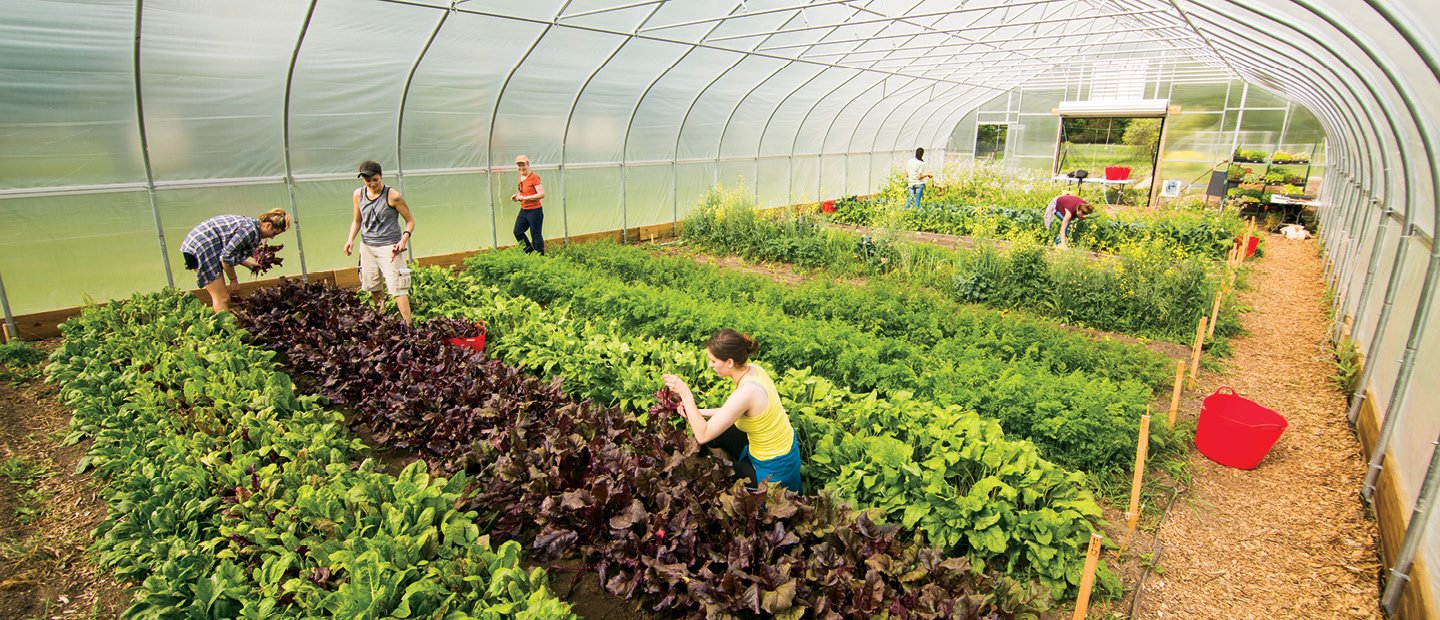
Perhaps the most well known or obvious example, OU's Campus Student Organic Farm can provide a model for a larger-scale implementation of this. However, your uses can be much smaller. For example, students studying Computer Science could partner with Kresge Library to explore user interfaces and potentially find ways for user interface improvement and greater student use of the computers. Or, Economics or Business students could be tasked with interviewing their fellow students about how much the price of different food vendors on campus affects their decision about where to eat. This information could then be shared with Chartwells and the various food vendors on campus to explore ways to better meet students’ financial and nutritional needs. You could also have students studying Human Resources interview the Human Resources department at Oakland regarding a specific function you are exploring in class. All of these acts would help students to develop connections with Oakland as a place that is not just physical, but social, emotional, and interpersonal.
Learn about the Places of Your Students
It has long been a fact that Oakland University serves a large number of commuter students. We as a campus are tied to our surroundings in unique ways. We possess a direct line from our instruction to tangible change within those communities our students are so deeply embedded in and connected to. So, through targeted and purposeful framing and instruction, we can turn a potential challenge to engagement into one of Oakland’s great strengths.. However, in order for you to best tap into this potential, it is important that you get to identify and understand just what these places are.
For Example: At the beginning of the semester, you could put out a survey asking students questions about where they are from, where they work, what types of locations they tend to inhabit, as well as their emotions about those places. Additionally, as you progress through the semester, maintain this inquisitiveness and openness to your students’ backgrounds by asking the class to gradually share with you and each other. This will not only help you understand your students better, but will also strengthen your relationships with your students - a key element in effective teaching (Felten & Lambert, 2020).
Build Place into Your Assignments
The emotional bond students have is critical for place and for deep and transformative learning (Warburton, 2003). They are more aware and receptive to the realities of those places. In short, this means that place can be a great interlocutor for assignments. Allow your students to have a relationship with the work they are doing by utilizing examples or asking students to research or use their places as the subject of their work. And remember, while places are dynamic, interdisciplinary, and systematic, your first forays into this space don’t require a seismic shift in your curriculum. To start, the smaller the better. You can always expand your scope as you learn more about your students and get more comfortable building a place into the framework or problem behind your assignments and instruction.
For Example: In order to assess research skills and higher order and critical thinking as well as discipline-specific outcomes, have the students write a (small or large) report on the context of their chosen place through the lens of your discipline. For example, if you are exploring public policy, you could have the students explore how the local zoning and development laws have influenced the physical appearance of a place they inhabit. You could also have the students write how this appearance of their place affects them emotionally so they can get a better grasp of the influence of emotion on politics and political decision-making. Emotion is doubly important as it is also central to deep learning and hence, is a key feature of PBE-aligned assignments and instruction.
Resources and References
Though not covered here, for a look at some guidelines in assessment for Place-Based Education see: Guidelines for Assessment of Place-Based Learning.
Biasin, C. (2018). Transformative Learning: Evolutions of the adult learning theory. Phronesis, 7(3), 5–17. https://doi.org/10.7202/1054404ar
Bocko, P., Jorgenson, S., & Malik, A. (2023). Place-Based Education: Dynamic response to current trends. In International explorations in outdoor and environmental education (pp. 137–150). https://doi.org/10.1007/978-3-031-29257-6_9
Entwistle, N. (2000). Promoting deep learning through teaching and assessment: conceptual frameworks and educational contexts. TLRP Conference. https://www.arasite.org/RMdatabase/entwistle2000.pdf
Felten, P., & Lambert, L. M. (2020). Relationship-Rich Education: How human connections drive success in college. https://eric.ed.gov/?q=source%3A%22Johns+Hopkins+University+Press%22&id=ED608540
Greenwood, D. A. (2003). The Best of both Worlds: a critical pedagogy of place. Educational Researcher, 32(4), 3–12. https://doi.org/10.3102/0013189x032004003
Orr, D., Stone, M. K., Barlow, Z. (2005). Ecological Literacy: Educating Our Children for a Sustainable World.
Pisters, S. R., Vihinen, H., & Figueiredo, E. (2020). Inner change and sustainability initiatives: exploring the narratives from eco-villagers through a place-based transformative learning approach. Sustainability Science, 15(2), 395–409. https://doi.org/10.1007/s11625-019-00775-9 \
Warburton, K. (2003). Deep learning and education for sustainability. International Journal of Sustainability in Higher Education, 4(1), 44–56. https://doi.org/10.1108/14676370310455332
Save and adapt a Google Doc version of this teaching tip.
About the Author
Thomas Baranski is an intern at the Center for Excellence in Teaching and Learning. His main research interests lie in sustainability and equity in education, critical pedagogies, and arts education. When he finds the time, he enjoys playing music, and reading and writing poetry.
Others may share and adapt under Creative Commons License CC BY-NC.
View all CETL Weekly Teaching Tips. Follow these and more on Facebook, and LinkedIn.

How to Make Every Student Feel Seen: Practical Tips for Student Validation
Can you remember a time when someone made you feel small, made you doubt yourself and your worth? When someone made you and your personal experience feel invalidated? We innately know that all people need validation. This holds true within the classroom as well. Validation in education is defined as “an enabling, confirming and supportive process initiated by in- and out-of-class agents that fosters academic and interpersonal development” (Rendón, 1994, p. 44). However, students from low-income families as well as first-generation college students have a greater risk of being invalidated, and therefore a greater need of validation within their educational experience (Rendón, 1994). Nonetheless, all students benefit when validation is put in the center of the classroom and campus. Below you will find some tips to utilize validation theory within your own practice. While all of these are encouraged, you can start by picking just one and then gradually incorporating the other tips as you see fit.
How to How to Validate and Affirm Students in Your Own Teaching
Prioritize getting to know your students.
While class is of course dedicated to the material and to the overall process of learning, validation theory emphasizes that students learn and perform better when they are in a validating, supportive, and comfortable environment. Therefore it is important to put aside at least some time (particularly at the beginning of a semester) to get to know your students as full people, not just as students in that particular class or program. This showcases that you care about them beyond their grade, and you are willing to listen to them and their specific realities.
EXAMPLE: You could distribute a survey at the beginning of your course asking students to describe themselves, their backgrounds, what makes them unique, their past coursework, their interests. Refer to these surveys throughout the course to find places to gently include students when an area of their expertise or interest arises in the course (Drawn from Step 1: Getting to Know Your Students | Instructional Moves)
Great additional tips for getting to know your students can be found in Professor Jessica Rico’s Teaching Tip Connecting with Students in the First Weeks as well as CETL Faculty Director Sarah Hosch’s Tip Knowing “Who’s in Class” Supports Inclusive Teaching)
Treat Students’ Funds of Knowledge as an Asset
As you are listening to your students, you will come to find that they possess a rich tapestry of beliefs, knowledges, and backgrounds. These backgrounds are strengths you can use to improve learning and increase students’ sense of validation. The Theory of Funds of Knowledge describes this by emphasizing that all students “bring a reservoir of funds of knowledge and experiences that render… students open to learning with validating instructors and classroom climates” (Rendón & Muñoz, 2011, p. 25). In short, allow more, not less, of a student’s background into the classroom. Each student brings unique and valuable knowledge and experience which, when properly tapped into, enriches and enlivens the learning experience for not only your students, but yourself as well.
EXAMPLE: You could design an assignment which asks students to consider how knowledge and understanding of a given topic has been usually developed and compare the benefits of both the traditional western-dominant system as well as local, familial, and non-western forms of knowledge acquisition. This indicates to your students that learning can be done in many ways and that each culture and perspective has their own merits and places of impact. It also simultaneously trains their critical thinking and reflection skills, while growing their knowledge of discipline-specific perspectives.
Embrace Students’ Diverse Life Responsibilities
Related to Funds of Knowledge, each student has a rich life filled with competing interests and obligations. As you get to know your students, try to learn if they have work, family obligations, or other responsibilities which also demand their time and energy. This is especially important given OU’s large population of commuters. Parents and family play a crucial role in affirming students (especially for non-dominant groups), so devaluing or ignoring the role they play in students’ lives can cause dissonance and leave students feeling invalidated and torn between their education and their lives and backgrounds outside of campus (Rivera et al., 2024).
EXAMPLE: When designing your syllabus, consider building in ways for students to naturally have flexibility in their completion of the course through some syllabus-specified mechanism. This could be in the form of token system wherein each student is assigned a limited number of tokens which they can use to extend assignment deadlines, get extra feedback, rewrite an assignment, or request a special meeting outside of office hours (in case they have other commitments during office hours). This will allow students both the agency and responsibility to determine when they need flexibility and it validates them as people with different and oftentimes competing cultural and professional obligations which do not always line up with the planning as initially proposed in the syllabus.
Look Inward, and Expand Your Worldview
The structure and philosophical underpinnings of our education system (and all education systems) are centered within certain dominant-culture expectations and assumptions. Even with the best intentions, an action which is meant to be an opportunity can turn into an act of invalidation (Willis, 2021). Combine this tip with the tips above to learn about the social/cultural contexts of not only your students, but yourself. You too have funds of knowledge, a unique socio-cultural background, and a rich life beyond campus. Remember that validation in education is a continual process, so in cases where good intentions go astray, try to keep listening with compassion. Any missteps can provide opportunities for success in the future. This will also get easier as you grow in your knowledge and expertise in validation praxis.
EXAMPLE: Ethnoautobiography can be a powerful tool for you to explore your own socio-cultural background with both its privileges and disadvantages. Take some time to consider the power dynamics of your own educational experience. Some questions you could ask yourself are: Where do I come from? Where does my family come from? What do I value most in life? What does my community look like? And what do they value? How did I receive knowledge and learning in my culture? Who were the ones responsible for that learning? What does a good/bad student behave according to me? And where did I get that belief from? Where does that belief itself come from? (Drawn from Kremer & Jackson-Paton, 2013)
Consider Not Just What You Teach, But How
It is not just what we say, but how we say it. This age-old adage holds true for our last tip for validation. It is not just the material, but how that material is presented, discussed, and approached. A wonderful lesson plan can fall flat because students don’t feel comfortable and understood enough to engage with the activities and material. Ensure that students know that you are there for them and that their concerns are your concerns. Offer consistent encouragement and regularly reaffirm to each student that they belong and they are capable of not just passing, but thriving within your course and the university overall. Additionally, remember to showcase concern and approachability, ensure students learn the material gradually over time in a manner which meets learners where they are, and ensure that feedback is ample, timely, and meaningful (Pacansky-Brock, et al., 2020).
Conclusion
These tools of Validation Theory are but some potential pathways for you to create a more inclusive and universally impactful pedagogy. Further resources are provided below for you to explore and consider what measures you can implement in your classroom. While all of these methods are impactful, remember, the most important step is to just listen with openness, compassion, and genuineness to each and every student. This will look different in a class for 100 undergraduate students, one small course with graduate students, or an asynchronous online class. So, remember, adjust these tools as needed, and regardless of the form it takes, validation is just another means of building relationships and not only learning about and improving the lives of your students, but also yourself.
References and Resources
For more information on practices of ethnoautobiography see: Kremer, J. W., & Jackson-Paton, R. (2013). Ethnoautobiography: Stories and Practices for Unlearning Whiteness, Decolonization, Uncovering Ethnicities. Revision Publishing.
Humanizing Online Teaching to Equitize Higher Education (For Online Instruction)
For an overview of Validation Theory see: Nora, A., Urick, A., Quijada, P. D., Cerecer,. (2011). Validating Students: A Conceptualization and Overview of Its Impact on Student Experiences and Outcomes. Enrollment Management Journal, 34–52. https://tgslc.org/pdf/emj-s11.pdf
Step 1: Getting to know your students. (n.d.). Instructional Moves. Harvard Graduate School of Education.
Take advantage of CETL resources such as:
"Chat with Your Professor" Builds Instructor-Student Rapport: Teaching Tip
Civility and Compassion: Faculty Resources
Inclusive Practices and Diversity: Teaching Resources
Embodied Learning, Empathy and Emotion: Teaching Resources
Indigenous Perspectives on Teaching and Learning: Faculty Resources
Resources Used
Kremer, J. W., & Jackson-Paton, R. (2013). Ethnoautobiography: Stories and Practices for Unlearning Whiteness, Decolonization, Uncovering Ethnicities. Revision Publishing.
Pacansky-Brock, M., Smedshammer, M., & Vincent-Layton, K. (2020). Humanizing Online Teaching to Equitize Higher Education. Current Issues in Education, 21(2)
Rendón, L. I. (1994). Validating culturally diverse students: Toward a new model of learning and student development, Innovative Higher Education, 19(1), 33-51
Rendón, L. I., & Muñoz, S. M. (2011). Revisiting Validation Theory: Theoretical foundations, applications, and extensions. Enrollment Management Journal, 12–33. https://tgslc.org/pdf/emj-s11.pdf
Rivera, J.; Núñez, A.-M.; Covarrubias, I. (2024) Without my family, I don’t know If I would be here: The role of families in supporting Latinx computer science students at HSIs. Educ. Sci. 14, 815. https://doi.org/10.3390/educsci14080815
Step 1: Getting to know your students. (n.d.). Instructional Moves. Harvard Graduate School of Education.
Willis, A. S. (2021). Teachers’ cultural, social and emotional capabilities: how teacher compassion and humility is an antecedent to student confidence. Pedagogy Culture and Society, 31(1), 91–108. https://doi.org/10.1080/14681366.2021.1884122
Save and adapt a Google Doc version of this teaching tip.
About the Author
Thomas Baranski is an intern at the Center for Excellence in Teaching and Learning. His main research interests lie in sustainability and equity in education, critical pedagogies, and arts education. When he finds the time, he enjoys playing music, and reading and writing a poem or two.
Others may share and adapt under Creative Commons License CC BY-NC.
View all CETL Weekly Teaching Tips. Follow these and more on Facebook, and LinkedIn.
Using Growth Mindset Messaging for First-Generation Student Success
As I think back to my early days of college as a first generation college student, I think of how overwhelmed I was by this new world I found myself in. I made mistakes because I didn't know what I didn't know; and, it never occurred to me that there were services available to guide me. I felt like it was all up to me. Fortunately, a couple of faculty saw some potential and reached out to encourage me and give me some advice. That made all the difference.
- Kevin Cocoran, OU interim provost
As Kevin put it, it’s easy for anyone to be overwhelmed by college processes, coursework, and expectations, especially if few to none in your circles are familiar with them. First generation (FG) college students (those for whom neither parent or guardian have obtained a bachelor’s degree) can experience more challenges navigating and succeeding in college when compared to their continuing-generation college students. A simple way we can help FG students (and all students!) persist is by communicating to them that they can succeed by holding high aspirations, and that effort in learning matters.
Growth Mindset
A growth mindset, a concept developed by Carol Dweck, is the belief that abilities and intelligence can be developed through dedication, effort, and perseverance. This contrasts with a fixed mindset, where talents are seen as innate and unchangeable (Dweck, 2006). Mindsets influence our responses to experiences, decision-making, and self-perception. This means that as our students experience our courses, their mindset impacts their ability to learn effectively, which can influence their success in college and life. For example, an individual with a growth mindset would likely value what they learn over what grade they receive, believe that effort leads to positive growth, and persevere through challenges by learning from mistakes. On the other hand, an individual with a fixed mindset may care more about looking “smart,” believe that if you have to put in effort you must not have the ability to succeed, and give up in response to failure.
Instructors Communicating Mindset
Instructors can communicate their own mindset beliefs in the classroom through their content delivery, interactions with students, and communications. The type of messaging used by instructors, in turn, influences student success. In classrooms where the instructors used fixed mindset messaging, students experienced less motivation, more negative experiences, and higher achievement gaps in classes (Canning, 2019). Other studies (Leenkenecht, 2020; Cavanagh, 2018) further suggest both trust and instructor communication of mindset beliefs play an important role in student learning and success.
Messaging Matters: Research on Growth-Focused Instructor Communication
While all students will experience mindsets somewhere on a continuum, studies on mindset in higher education highlight the importance of a growth mindset in the success of underrepresented minority (URM) and first generation college students. Canning et al. (2019) explain that instructor use of growth mindset messages “shape the motivation and achievement of students in their classes, and these beliefs matter especially for URM students in their classes.”
In addition, a recent study from Washington State University found that a simple growth mindset intervention improved grades on average for all students, and was especially effective for FG learners (Canning et al., 2024). Importantly, this intervention consisted of both the right message, and the right timing of the message. Students received emails containing growth mindset (or control) messaging at key points during the semester, after the first and second exams, when they are likely to use exam grades to gauge their ability to succeed in the course. For example, learners using a fixed mindset lens, a poor exam grade may be equated to an innate lack of ability, which may result in the student dropping the class, cheating, or giving up. However, if instructors support and coach a growth mindset, students may instead perceive a poor exam grade as an opportunity to change their learning habits and make improvements. The intervention group email messages used in this study communicated three key ideas grounded in mindset theory:
1. Students’ abilities can improve over time. In a mindset message, this might look like:
“I believe that every student … can improve their skills, learn from their mistakes, and be successful in this course.”
“Learning is a process and often occurs over time”
“You don’t need to ‘be smart’ to perform at a high level”
2. Experiencing struggle and mistakes as a part of learning is normal. In a mindset message, this might look like:
“don’t worry, you aren’t alone”
“I have worked with multiple students every semester who performed poorly on Exam 1, but then turned things around”
3. Students can overcome challenges by changing your behavior. In a mindset message, this might look like:
“You can work hard and work effectively to master the material.”
“Here’s what students have told me about how they made… improvements.”
The goal of growth mindset messages is to provide motivation for students to make a change. When coupled with concrete strategies they can use to improve their study and learning habits, the hope is that students will tap into their growth mindset, engage more with the material, and take advantage of resources you provide. One major advantage to this intervention, is that unlike other larger, costly university-level interventions used to support student success, email messaging is low effort and comes at little to no cost.
Using mindset messaging with students at key points in the semester, like after the first few exams (Example from Canning, et al, 2024) is a great first step to helping students develop a growth mindset.
Additional ways you can encourage a growth mindset
- Foster connections with your students. Introduce yourself early.
- Create an environment where students feel empowered to take intellectual risks and develop resilience.
- Explain how we learn, for example this video on neuroplasticity.
- Let students try & make mistakes. Use formative assessment to provide feedback so they can make improvements.
- Discuss different learning strategies.
- Encourage and normalize asking for help. (e.g., Asking for Help Shows Strength, Not Weakness: Learning Tip, Normalizing and Promoting Academic Success Support: Teaching Tip)
Additional References
- The Power of Believing that You can Improve-Carol Dweck
- Self-theories | Their Role in Motivation, Personality, and Development
Save and adapt a Google Doc version of this teaching tip.
About the Author
Sarah Hosch is the Faculty Director of the Center for Excellence in Teaching and Learning and a Special Instructor in the Department of Biological Sciences at Oakland University. She teaches all levels of biology coursework and her interests include evidence-based teaching practices to improve student learning gains and reduce equity gaps in gateway course success. Sarah loves exploring nature, cooking, and exercising.
Others may share and adapt under Creative Commons License CC BY-NC.
View all CETL Weekly Teaching Tips.

Mentorship From Award-Winning OU Faculty
In reflecting on her career and life progression as a student, OU president Dr. Ora Pescovitz (2023) knew all she aspired to be at her place and time could not be found in one person:
"Over time, I developed a concept I call my mentor quilt. Rather than depend on a single mentor, I developed a patchwork of mentors to guide, advise, and nurture me throughout my life journey.”
Expressing our strengths as a mentor in 10 words can be a short but powerful way to reflect on how mentorship is a part of our teaching approaches and how this fits into the quilts our students create to achieve their aspirations.
We asked recent recipients of Oakland University’s Outstanding Graduate Mentor Award to share their Mentorship in 10 Words, plus a little more on those 10 words.
My success is my students’ success
Jonathan Maisonneuve, Mechanical Engineering, 2024
This recognition is special to me because I am very proud of the many outstanding students that I have had the privilege of advising at Oakland University. Helping them succeed in their studies and beyond is one of my top priorities. For this reason, I strive to take a genuine interest in my students’ lives and to understand their goals, interests, and skills. Based on this, I try to leverage projects and opportunities in my lab that will support their plans for the future. We meet regularly, set goals, track progress, and celebrate their discoveries and achievements. As I reflect on the many mentors that have helped me on my way, I’m very glad to be able to pay it forward.
Leading by Example
Osamah Rawashdeh, Electrical and Computer Engineering, 2022
“No late assignments, be on time for class, the related work search should be thorough, do your best work…” These expectations resonate in both the classroom and in our research meetings. But then, as a busy faculty member, it’s tempting to occasionally return graded assignments late, arrive a little too late for class, underprepare for a lecture, or criticize others. We must resist! As educators and mentors, we must hold ourselves first, and then others, to the highest standards and expectations. While both carrots and sticks have their place, leading by example has a profound impact on mentees. Over the years, I’ve drawn wisdom and learned from my personal experiences, my own mentors, and from remarkable colleagues. Their actions spoke louder than words, showing dedication, integrity, open-mindedness, and a genuine passion for their work. Modeling the behaviors we seek is our greatest teaching tool. When we arrive prepared, engage enthusiastically, and demonstrate respect for our students and colleagues, we inspire them to do the same, shaping not only individual performance but also the culture of excellence we aspire to create.
Providing opportunities to grow and succeed
Jennifer Vonk, Psychology, 2021
Mentorship styles need to be adjusted depending on individual students’ abilities, ambitions and resources. I think it is important to be flexible and adjust demands and levels of support depending on what students need to meet the goals that are important to them. I start off by providing opportunities to get involved in research and gain valuable experiences such as presenting at conferences and co-authoring papers but I adjust those opportunities based on how well students take advantage of them. That is, the most industrious students receive more opportunities. It is important to let the most competitive students separate themselves from the pack, so long as everyone has those opportunities.
Reference
Pescovitz, O. H. (2023). My mentor quilt. JAMA, 330(12):1137. doi:10.1001/jama.2023.16822
Save and adapt a Google Doc version of this teaching tip.
Image by Photo by Photo by Olga Ferina on Unsplash. Others may share and adapt under Creative Commons License CC BY-NC. View all CETL Weekly Teaching Tips.
Center for Excellence in Teaching and Learning
100 Library Drive
Rochester, Michigan 48309-4479
(location map)
(248) 370-2751
[email protected]


Center for Excellence in Teaching and Learning
100 Library Drive
Rochester, Michigan 48309-4479
(location map)
(248) 370-2751
[email protected]