Help Students Build Empathy Before They Engage with the Community
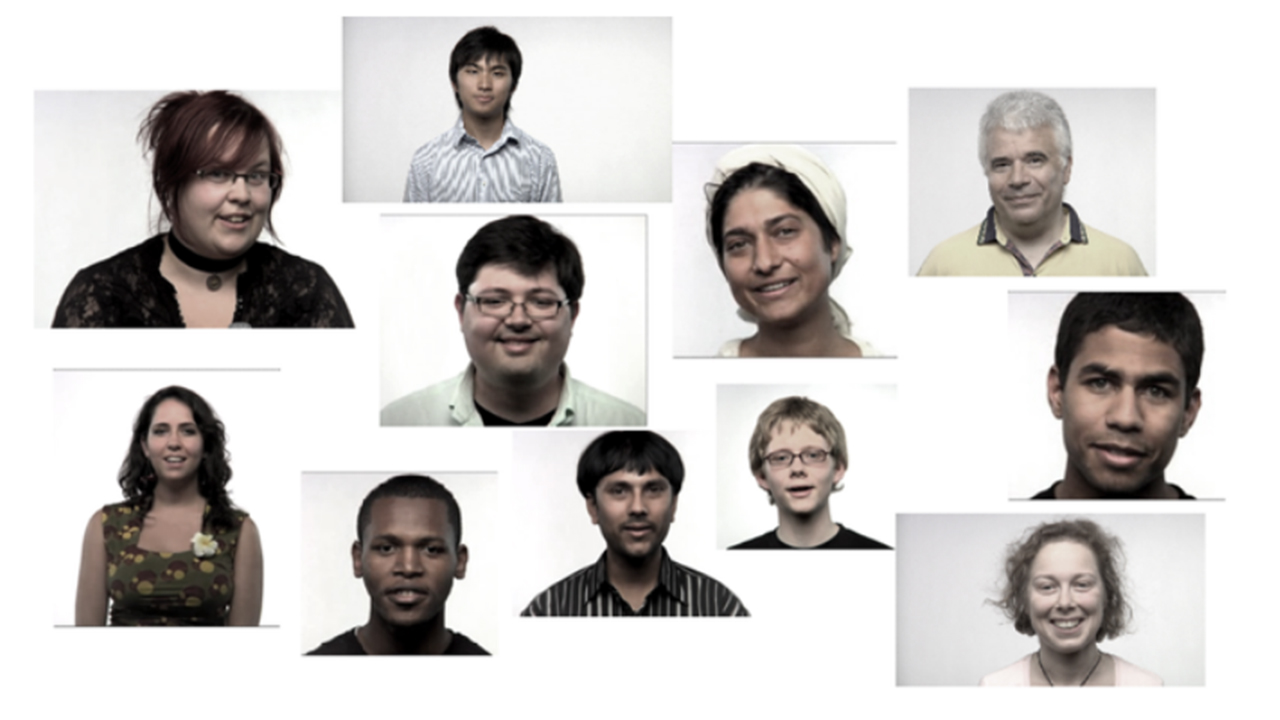
How do we prepare students to engage sensitively with people who are different from themselves? The following are suggestions for helping students build empathy for people with whom they will interact in the community (or even in classes or careers). The intended audience for this tip includes faculty who are new to preparing students to engage with the community, as well as faculty asking students to interact with vulnerable populations. This list was compiled through conversations with many experienced instructors.
Steps for Building Empathy
Start by asking students, “What kinds of activities can you imagine would help you gain empathy?” Their ideas may supplement the suggested steps below.
- INVESTIGATE. Through reading and research, learn as much as you can about the group and related issues through secondary sources.
- REFLECT. Reflect and write about your own identity, and how it may influence your assumptions about others. Here is a sample class activity on identify, intersectionality, and privilege (from AVERT).
- LISTEN. Invite a guest speaker to share their personal experiences and insights about the issue.
- OBSERVE. Visit the target community, perhaps with a guide, e.g. attend a community gathering. Brainstorm where and when you can observe respectfully and without being intrusive.
- TALK. Start a conversation or dialog with a person from a group you wish you learn about. Share information about yourself, too. Sometimes it's helpful to ask an insider to make an introduction to help start the conversation. Through volunteering, you may find opportunities to have casual conversations with people.
- INVITE THEIR PERSPECTIVE. For example, after you establish rapport, you could provide people with a camera and invite them to document their experiences, then share their photos with you.
- EXPERIENCE. Is there a way you can experience “a day in the life”? (How might we create an experience that replicates elements, feelings, or dynamics of what the other person is experiencing?)
As Archbishop Tutu said, “When we see others as separate, they become a threat. When we see others as part of us, as connected, as interdependent, then there is no challenge we cannot face–together.”
Save and adapt a Google Doc version of this teaching tip.
See more of CETL's Resources on Service Learning and Community Engagement.
Contributed by Kara Brascia, Director of Service-Learning at the Center for Excellence in Teaching and Learning at Boise State University. Banner image by Sage Ross.
Others may share and adapt under Creative Commons License CC BY-NC. View all CETL Weekly Teaching Tips. Follow these and more on Facebook, Twitter, and LinkedIn.

Questions to Consider for Reducing Cheating
The original version of this teaching tip was published in late February 2020, mere weeks before the COVID-19 pandemic brought much of our lives to a screeching halt, and forced our work online. Since then, academic integrity questions focused on online assessments and remote proctoring. This tip has been updated to include teaching tips written since February 2020 on this topic and shows how the core issues and opportunities around academic integrity persist.
As students settle into their courses, everything students do now leads up to their success. As the weeks pass, the things students don’t do or put on hold can lead up to a lot of stress and put students in a predicament: if exam time came sooner than they expected or they had three less-than-productive weeks due to other life stress, sickness, or other reasons, they might be tempted to get study “help” from Chegg, or outright buy exam answers or papers. Throughout the semester, reflect on whether learning conditions are set for students to resist or engage in cheating and, more importantly, to engage in authentic, motivating learning.
Do students know how they are doing in the course?
When we asked OU students what professors could do to help them be successful in a course, many of the answers had to do with getting feedback on quizzes and exams so that they could prepare for future exams. “We can’t wait until the end to know our grades,” one student said. The Grades feature on Moodle allows for ease of calculating grades according to your scale, and students can view their own progress confidentially. If you do provide grades, remind students that they can see these grades and provide guidance on how to find those grades. A prompt like the progress report journal asks students to report and reflect on their grade to ensure they know how to find their grade.
If students are not succeeding, do they have multiple opportunities to gain ground?
The more lower-stakes assessments (i.e. low grade or no grade activities that clue students into how well they understand course concepts) students have, the more they learn and can prepare for higher-stakes assignments. What are students' options to do well in the course? Does your course have a supplemental instructor, specific OU tutoring services, a review class session for any student grades? OU students expressed that they could use more elaboration and modeling to prepare them to do well on their exams. When students feel like they have few to no options to do well in a course, they may resort to cheating behaviors, especially if a lot is riding on doing well in a course.
How high are the stakes in your class?
Ending the course with an exam worth 80% of a student’s grade is a “high stakes” exam, but what else is at stake in your class? Do most students in your class need a specific grade point in order to get into a program? Does your course align with success on certificate exams? Knowing these larger motivations specific to your course and discipline will help us gauge how prone students, and their peers, are to cheating. In our teaching tip Proctoring and Pedagogical Choices, nursing professor Dr. Lynda Poly-Droulard prepares students for taking the NCLEX with low stakes, gradual assessments that can reduce the anxiety they might otherwise experience in a proctored environment. Our Making Your Course Cheat-Resistant Quick Note provides additional information on why students cheat.
How vulnerable is your final project or exam to cheating?
Testing situations can increase and decrease the likelihood of cheating. Does your course rely on highly standardized assessments? Do online testing situations make it difficult to control inappropriate collaboration? Are assessments such that result in definitive right-and-wrong answers? In physical classrooms, actively attend to the environment during exam periods, and make clear expectations around technology use. For online assessments, e-Learning and Instructional Support’s instructional designers can provide strategies to reduce the likelihood of cheating. Additionally, consider providing flexibility and choice that allows students to customize their original work to your class and what motivates their learning.
Has cheating been discussed beyond policy language in the syllabus?
Many of our syllabi include verbatim academic conduct policy that explains what cheating is and the resulting consequences. Has the issue been discussed beyond this fine print? By explaining to students what type of cheating occurs in your field, the steps you’ve taken to prevent these situations, and even having students sign an honor pledge, cheating behavior can be curtailed. OU’s Dr. Brian Sangeorzan uses an Academic Honesty Quiz to check students knowledge around what is or is not permissible in his courses.
There are many more questions that can prompt this kind of proactive approach to maintaining academic integrity. Proctoring alone, whether remote or on-campus, does not eliminate issues and labor, and may only exasperate issues underlying cheating. OU faculty can consult with CETL to help turn these reflections into different assessment approaches , and e-LIS Instructional Designers have been working with faculty to create more cheat-resistant online environments, from multiple-choices assessments to holistic course design.
References and Resources
Many of these questions are derived from our Making Your Course Cheat-Resistant Quick Note, which provides more suggestions, resources, and research.
Related CETL Teaching Tips
- Academic Honesty Quiz: Teaching Tip
- Beyond “Gotcha!”: Proactive Plagiarism Pedagogy Teaching Tip
- Behind the Scenes of Academic Misconduct: Teaching Tip
- Proactive Model for Academic Integrity: Teaching Tip
- Academic Integrity Model: H.O.N.O.R.
- Reduce Cheating Online: Teaching Tip
Save and adapt a Google Doc version of this teaching tip.
Written by Christina Moore, Center for Excellence in Teaching and Learning at Oakland University. Others may share and adapt under Creative Commons License CC BY-NC. View all CETL Weekly Teaching Tips. Follow these and more on Facebook, Twitter, and LinkedIn.

Internationalizing Your Course without the Travel
The pandemic has made many students eager to get back out and explore the world. While physical travel isn’t possible to include in every course, we can always bring a global approach to our course design and materials. In fact, an international lens can be incorporated into any discipline.
By bringing a global perspective into our classrooms, our students develop a more comprehensive and sophisticated perspective of the subject matter through cross-cultural viewpoints. By incorporating new content and perspectives, you also support students in developing critical skills such as cultural competency, communicating with global audiences, adaptability, and empathy. There are a range of ways to internationalize your curriculum, from small tweaks to designing more immersive global experiences for your students.
Small Tweaks Can Have a Big Impact
You don’t have to start with an overhaul of the course. A few small tweaks can make a difference in internationalizing your course content. For example, consider devoting a class or two to exploring what your discipline looks like in other parts of the world. For example you might:
- Add readings from international authors or authors researching in an international context.
- Incorporate international media such as films, television, news, and podcasts.
- Use international research, cases, or datasets.
- Invite international guest speakers.
- Create spaces for international students and students with experiences abroad to share their knowledge.
Taking the Next Step Toward Global Engagement
After taking some initial steps to internationalize your curriculum, you might consider adding another global dimension to your course. A few additional modifications to your syllabi and assignments can increase students’ value for taking a global perspective. For example, you might:
- Assign students to attend local or campus events focused on global engagement.
- Encourage students to attend virtual international conferences.
- Take students on virtual field trips with international institutions, museums, and other non-profit organizations abroad.
- Create opportunities for students to interview or research international knowledge producers.
- Develop a global classroom in which students’ partner with peers at a university abroad through project-based learning.
Regardless of which of these you choose, these strategies are a great way to bring an international perspective and experience to your classroom when a more immersive study abroad experience is not an option.
Save and adapt a Google Doc version of this teaching tip.
About the Author
Johanna Inman is the director of the Teaching and Learning Center at Drexel University. She contributed this tip to a teaching tips collection gathered among the POD Network of educational developers. Others may share and adapt under Creative Commons License CC BY-NC. View all CETL Weekly Teaching Tips. Follow these and more on Facebook, Twitter, and LinkedIn.
Ready to Say Goodbye to Remote Proctoring? Here's What to Try Instead
This piece is co-authored by Sarah Silverman, who shares U-M Dearborn’s story of limiting remote proctoring, and Christina Moore, who provides strategies faculty from OU and beyond can apply based on U-M Dearborn’s story. All are invited to discuss more with Sarah and the rest of the team at U-M Dearborn’s Hub for Teaching and Learning Resources on at the Supporting Authentic Assessments Rather than Online Proctoring panel on February 3, 12-1pm.
Remote Proctoring: Harms and Hurdles
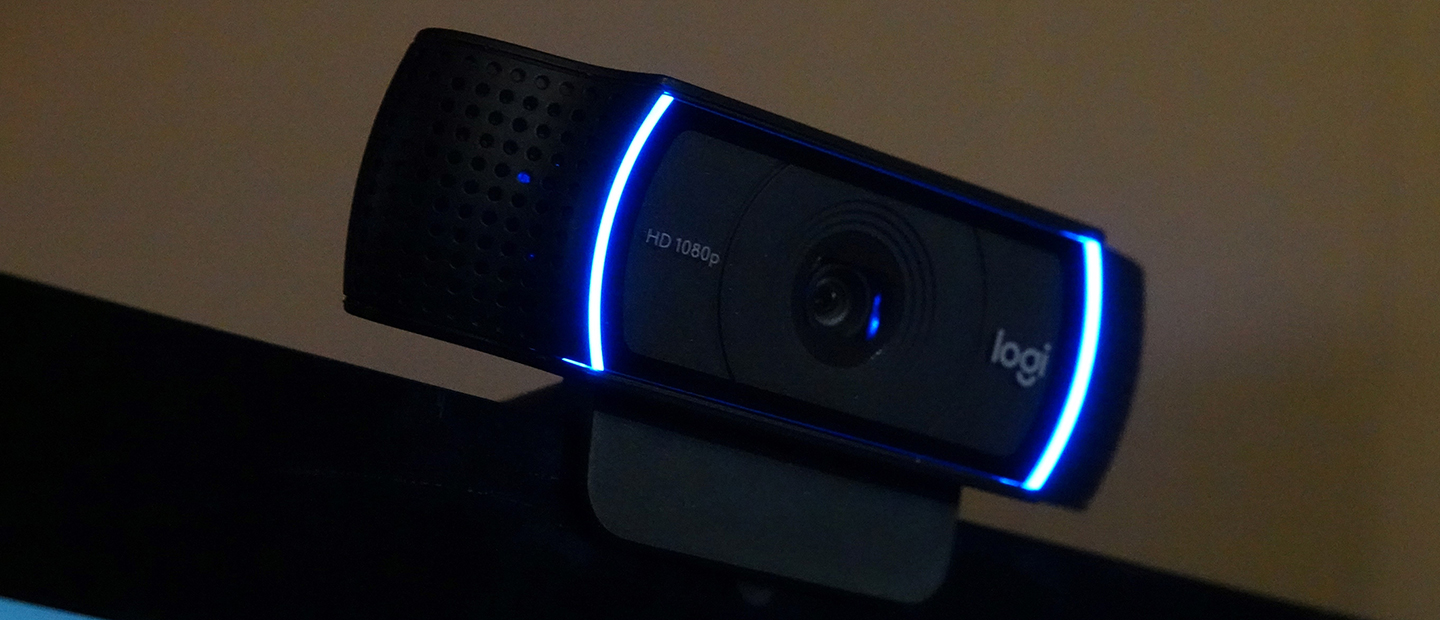
When remote proctoring technologies entered more widespread use at the beginning of the COVID-19 pandemic, many instructors and students experienced these tools for the first time under the stress of emergency remote teaching and learning and an emerging global pandemic. Thus, general concerns that remote proctoring technologies invade student privacy, may not be equally accessible to students with disabilities, and can fail to recognize the faces of students with darker skin were compounded by logistical concerns having to do with remote learning and the pandemic. These included concerns that students may not have access to laptop computers, webcams, or quiet places to take remotely proctored exams, and that students would need to install remote proctoring software on their own private devices.
Whether you are an individual instructor, departmental or disciplinary leader, or administrator, these harms and hurdles might be enough to make you consider limiting or completely rejecting remote proctoring, a step several institutions have taken. In this post, I summarize the University of Michigan, Dearborn’s decision early in the pandemic to discourage remote proctoring altogether and instead invest in faculty development and encourage alternative assessments, offering suggestions for those who would like to take a similar approach.
When the Provost office and deans at UMD jointly made the decision to strongly discourage remote proctoring in March 2020, their top concerns were related to budgeting and equity: Since individual colleges did not have their own online learning budgets, students would likely have needed to pay to use the proctoring services themselves, an unfair burden on students. The Detroit area was an early hotspot for COVID infections, and many Dearborn students are parents and essential workers - the administration felt that it is was not appropriate to introduce the additional stress and invasion of privacy associated with remote proctoring on top of all the other demands of life during a pandemic. While this decision was well-founded for the above reasons, the administration also knew that instructors would need support to move away from proctored assessments.
Investments in Faculty Development
Alongside the campus decision to recommend against remote proctoring, UM Dearborn made several investments in faculty development designed to help instructors transition away from timed, proctored exams. One of these investments was hiring two additional instructional designers at the Hub for Teaching and Learning Services (UMD’s teaching and learning center), doubling the number of instructional designers on staff. These positions were paid for with CARES act funds, as were part-time “grader” positions to support instructors teaching larger classes with high grading burdens.
Alternative Assessments
Increased capacity at the “Hub” (and additional financial support from the CARES act) enabled faculty development programming to help instructors transition to alternative assessments. The two alternative assessments that instructors primarily used were “authentic assessments” (such as case studies, portfolios, reflections, or projects) and open-book exams which students completed online without any proctoring. Instructors received support in redesigning their assessments through one-on-one consultations with instructional designers, a virtual guest speaker on authentic assessments in STEM, and week-long cohort-based faculty development experiences delivered online in an asynchronous format.
What Faculty Can Do
U-M Dearborn’s story shows the impact of unified institutional decisions around teaching and learning ethics. In a time when exhausted faculty are expected to do more and more, this story can provide lessons and tips for what individual faculty can do to make assessments more authentic and less harmful:
- Evaluate and reframe current assessments. Why do you use the assessments you use? Are they measuring learning effectively? Which elements seem to work well, and which fall short? In asking questions like this, you may pinpoint specific assessment designs are not intentional or effective, which can open up curiosity for what else might be possible or worth considering a change. In our past CETL Teaching Tip on proctoring and pedagogical choices, OU faculty shared how they made tweaks in their remote exam design to remove some of the potential harms of remote proctoring.
- Work with available faculty development support, such as CETL’s consultations and e-LIS’ instructional design appointments. They can provide resources and direct building of activities that better measure student learning. Additional support may be available through CETL’s Teaching Grant or the Educational Development Grant.
- Shift to open-book exams. Much of our professional work is in an “open book” world: more than recalling the facts, consider assessments that require students to analyze and apply knowledge. Such exam design may take some redesign, but could save time otherwise taken to investigate dozens of e-proctoring flags and processing potential cheating instances.
- Talk with departments and schools about discipline-specific needs. If more support is needed beyond what your institution offers, ask the department chair or dean what additional supports may be available beyond remote proctoring, such as graders or guest speakers/consultants. Such action shows your support for better assessment design without shouldering all of the labor required.
Conclusion
One key lesson from UMD’s experience is that shifting away from timed, proctored assessments is likely to require considerable support for instructors. Fortunately, moving away from remote proctoring (which is expensive) can help save money and support staff bandwidth that can be used for other faculty support efforts. While individual departments may not have the budget to hire new staff, lower-cost faculty support measures can be implemented to support alternative assessments such as a virtual guest speaker or reading group on assessment redesign. A further lesson learned is that while fully redesigned “authentic assessments” will not be attractive to many faculty, small adjustments such as making exams “open book” are within reach for many more, reducing or eliminating the harms and costs of remote proctoring. Despite the challenges, our recommendation against remote proctoring is still in place two years later and alternative assessments remain popular for our online instructors. We hope our experience will inspire other educators to consider rejecting remote proctoring in favor of alternative assessments.
References and Resources
Mueller, J (2018) Authentic Assessment Toolbox. North Central College, IL
Silverman, S., Caines, A., Casey, C., Garcia de Hurtado, B., Riviere, J., Sintjago, A., & Vecchiola, C. (2021). What Happens When You Close the Door on Remote Proctoring? Moving Toward Authentic Assessments with a People-Centered Approach. To Improve the Academy: A Journal of Educational Development, 39(3). https://doi.org/10.3998/tia.17063888.0039.308
Wiggins, G. (1990). The case for authentic assessment. Practical Assessment, Research, and Evaluation, 2(1), Article 2. https://doi.org/10.7275/ffb1-mm19
Save and adapt a Google Doc version of this teaching tip.
About the Authors
Sarah Silverman is an instructional designer at the Hub for Teaching and Learning Resources at University of Michigan, Dearborn. Sarah is passionate about Universal Design for Learning and critical approaches to educational technology. This post is adapted from the article “What happens when you close the door on remote proctoring?” which Sarah coauthored with her colleagues from the Hub. You can find Sarah on Twitter @sarahesilverman.
Christina Moore is the virtual faculty developer at the Center for Excellence in Teaching and Learning at Oakland University.
Others may share and adapt under Creative Commons License CC BY-NC. View all CETL Weekly Teaching Tips. Follow these and more on Facebook, Twitter, and LinkedIn.

Sharing Your Vision Through a Syllabus Letter
I have read and written a lot of teaching tips on sending early messages to students and preparing an effective syllabus, so when I came across this one from the author’s Learning That Matters Resources webpage, I was delighted at its fresh approach. In it I found useful ways to reflect on our choices on how we make a first impression on our students. This teaching tip reminds us of the underlying messages in the syllabus and advises us on things to include or exclude in our first class messages to set the right tone and prepare students for an exciting semester. - Christina Moore, CETL associate director and editor of this CETL Teaching Tips Blog.
The Syllabus Letter and Introductory Video
I don’t know about you, but in my institution, syllabi have become fairly drab, filled with loads of verbiage we are required to cut and paste into it. Add to that the fact that most students don’t read the syllabus or only read a few select parts, and you’ll find that the syllabus itself isn’t doing anything terribly meaningful, although that isn’t to say that we shouldn’t try to make them more invitational. Many years ago I decided to experiment with something I dubbed the syllabus letter. I quickly discovered that students were remarkably interested in reading such a letter, and it gave me the opportunity to give a positive first impression of myself and the course. Your best bet is going to be to look at a few examples first before you read on, just to get a sense of what these look like. Visit the Learning That Matters: Resources page, and scroll down to “Portable Outcomes: Ch. 4.”
A note on an introductory video
Consider both a letter and an introductory video. The video will be more about introducing YOU while the letter will introduce the course. Both should focus on giving students a great first impression: that you are an interesting person who is passionate about work and life, that your goal is to help them learn as much as possible, and that the course will be fascinating and meaningful.
Underlying messages
We know from research that students learn best in an environment where they feel the environment is welcoming, the material is seen as having utility value, the student believes they are capable of succeeding, and the teacher is credible (cares about them, knows their subject, knows how to teach their subject). Therefore, you can get them on the right track by finding ways to send the following messages:
- I care about you as a person and a learner
- I know my subject well, I am passionate about it, and I’m good at helping people learn it
- This isn’t a class designed around weeding people out; my goal is to do whatever I can to help you succeed
- You will be able to succeed in this class by working hard, applying the feedback you receive, and utilizing evidence-based learning methods; a special talent for the subject is not required. (If a student can’t succeed without a certain level of prior knowledge and skill then those should be prerequisites for the course.)
- This course will be useful to you.
- You belong in this course. People like you have had success in this field.
Topics to consider for your letter
The main goal of your letter should be to share your vision of what this course could ideally be. So mostly just focus on that. Below are questions that should definitely be answered somewhere at some point. Think about which you want to include in your letter and which you may want to briefly discuss during the first week or two of class.
- Let me tell you about how I hope you will be different as a result of taking this course and what I hope you will be able to do with what you learn years from now - what students can expect to get out of the course, including what students have said they gained from it in the past
- This is why I love teaching this particular class
- Here is why this content matters
- Let me explain how this content relates to other fields and other courses you have taken or may take
- This is the primary transferable essential skill I will help you develop
- Here is what you can expect from me
- These are some things about this class that are unusual with an explanation of why I am doing them
- This is how the course is structured and why - ungraded
Topics you may want to exclude
Don’t go too deep into the weeds with expectations, or the letter will move from being inspirational to preachy. But do choose one or two expectations that are both very important to you and that can be stated in a way that is positive and encourages students to be their best selves. Most of the topics listed here are important, but they should be discussed one by one over time so they don’t get lost in the shuffle or feel overwhelming.
- Expectations for communicating with you and with one another
- Expectations related to level of participation in class
- Expectations about the quantity and quality of work you expect from your students
- Expectations related to working in teams
Topics to definitely exclude
These are topics that are important but dull. They should be in your actual syllabus on in a “getting started” document.
- What technology students will need for the course, how to obtain any needed technology they don’t already have, and how to get technical support if needed
- Policies specific to your course (as opposed to policies required in the syllabus) such as your policy for late work, missing class, etc.
- Expectations related to the use of cell phones, laptops, etc.
Shooting an introductory video
The video would focus on four things: a. your professional interests (what you love about your field, how you got into it, what you love about teaching this particular class), b. your personal interests (family, hobbies, travel, where you are from, etc.), c. what makes you credible, and d) helping students feel welcomed and supported.
- The video should be two minutes or less and very informal. Students are accustomed to informal videos shot on the fly and they like them. Do not go to great lengths to make your video great
- Lay your phone sideways on a steady surface somewhere with a pleasant background and no noise.
- You’ll want filtered light shining on you, not behind you.
- Have someone help you sit or stand so that your torso fills the screen. The other person can tilt the camera if needed as long as it stays on the surface.
- Use the other person’s phone so you can see a timer, and then just talk naturally to the other person (who should have their face right behind the camera).
- If you make a significant mistake, have your assistant stop the camera and start over from the beginning, but don’t stop if you make the kind of mistake people naturally make in conversations. Keep going until you have two or three takes with no stops.
Send the letter and the video to the class a day or two prior to the course beginning if possible. Also, post the letter and the video in your course LMS so that if students want to look at them again later, they can.
I would love to hear how this goes for you or see what your letter looks like. Please consider sharing your experience with me at [email protected]
Save and adapt a Google Doc version of this teaching tip.
About the Author
Dr. Cynthia J. Alby is one of the authors of Learning that matters: A field guide to course design for transformative education. Dr. Alby is a Professor of Teacher Education at Georgia College. She is also the Lead Developer for Georgia’s “Governor’s Teaching Fellows Program” at the Institute of Higher Education at the University of Georgia. Her primary research question is, “How might we re-enchant learning in order to help faculty and students flourish?’ Cynthia and her husband, Charlie, live on a farm called “Shangri-Baa” where they raise a critically endangered breed of sheep and livestock guardian dogs.
Others may share and adapt under Creative Commons License CC BY-NC. View all CETL Weekly Teaching Tips.
Using Self and Peer Evaluation as Alternative Grading Approaches
Bridget Kies is an Assistant Professor of Film Studies and Production at Oakland University. This piece is part of a series of OU faculty sharing alternative grading approaches.
Faculty often lament the amount of time spent providing feedback compared to the amount of time students spend reviewing that feedback. In the age of learning management systems like Moodle, the student can simply log in and see a grade, without bothering to read the feedback or to download a carefully marked-up assignment the faculty member has thoughtfully attached. In the pre-digital homework era, my colleagues and I joked about spending hours adding comments to an essay, only to watch the student immediately flip to the last page to see the grade.
Faculty frustration at feedback has existed for years, long before the age of Moodle, but the problem isn’t always reticent students. A 2016 study on undergraduate psychology students, for instance, found that students were appreciative of faculty feedback but lacked an understanding of how to implement it - when they even understood it in the first place. Many of the students in the study expressed that the language faculty used was “posh” and inaccessible and that references like “weak paragraph structure” were too abstract to be of use.
Because of findings in studies like this, scholars of pedagogy have suggested faculty shift their mindsets about qualitative feedback. David Nicol argues that faculty think of feedback as yet another lecture opportunity - a monologue at the students - and advocated instead for a dialogue-focused process in which both students and faculty share their feedback on a project. The recent rise in popularity of alternative grading makes it timely to revisit the idea of dialogic feedback.
Instead of faculty spending hours producing feedback, a more effective model is one in which students evaluate themselves and their peers first, before faculty even touch their work. Not only does this save faculty time and labor, but it is better for students because it gives them an opportunity to critically examine their work and that of peers and to provide evaluation in terms they and their peers understand. In this teaching tip, I outline some of the strategies I use for self and peer evaluation as an alternative to traditional faculty-driven feedback and grading.
Self Evaluation
Prior to a major assignment, such as a long essay or presentation, I work with students to review the assignment prompt and course learning outcomes. I ask students to think about what is reasonable to evaluate in the assignment based on these items. For example, if the learning outcome for the course says students will know how to correctly use technical film terminology, should we expect a student to use specific terms like long shot in their presentation? If they use general language (the camera is far away) or use terms incorrectly, do we consider that a weakness in the presentation? Together we formulate a rubric for evaluation. This rubric is then used by the students to evaluate their own work. Often we also include questions that give students a chance to expand on their evaluation: What do you think was the strength of your project? What do you think was your project’s greatest weakness? With more time, how would your project have evolved?
My job then becomes telling students whether I agree with their evaluation of themselves and their work, rather than spending hours trying to figure out what pieces of advice to offer each individually. It also helps the student take ownership of the idea of learning and improving because their job is now to identify strengths and weakness and make suggestions for revision, rather than passively receiving my suggestions.
Peer Evaluation
Peer evaluation can also be an effective alternative to grading. Peers can use the same rubric to evaluate each other during projects that are shared in class, such as presentations or essays that are peer-reviewed.
I also solicit peer evaluations for any major project that involves group work. Each member of the group is asked to evaluate everyone in the group - including themselves. This is a chance for them to report any potential problems the group has had (such as one student abandoning all work), but it is also an opportunity for them to think about how the collaborative process has contributed to the assignment outcome. These peer evaluations are never a whole substitute for my grading or feedback, since personal problems that I’m not aware of may skew the evaluations students give each other. But by comparing multiple peer evaluations, I can quickly get a sense of how the students view each other’s work, and in turn students can easily see a weakness in their project is indeed a weakness, agreed upon by many, not just the faculty member’s petty obsession.
Conclusion
Using self and peer evaluation moves the focus away from a top-down model in which students are passive recipients and away from the frustrating tradition of faculty exhausting themselves to provide feedback to students who don’t use it. Self evaluations give students an opportunity to think more critically about their own work; peer evaluations help students stay focused during group projects and allow them to learn by receiving multiple instances of similar feedback. These are just two of the interrelated ways I approach alternatives to traditional grading and feedback.
References
Nicol, David. “From Monologue to Dialogue: Improving Written Feedback Processes in Mass Higher Education.” Assessment & Evaluation in Higher Education 35, no. 5 (2010): 501-517.
Winstone, Naomi E., Robert A. Nash, James Rowntree, and Michael Parker. “‘It’d Be Useful, but I Wouldn’t Use It’: Barriers to University Students’ Feedback Seeking and Recipience.” Studies in Higher Education 42, no. 11 (2017): 2026-2041.
Save and adapt a Google Doc version of this teaching tip.
About the Author
Bridget Kies is an Assistant Professor of Film Studies and Production. She teaches courses on film history and gender/sexuality in film and media. Outside of the classroom, Bridget is co-host of the Cabot Cove Gazette, a weekly podcast about the iconic 80s TV series Murder, She Wrote.
Others may share and adapt under Creative Commons License CC BY-NC. View all CETL Weekly Teaching Tips. Follow these and more on Facebook, Twitter, and LinkedIn.
Center for Excellence in Teaching and Learning
100 Library Drive
Rochester, Michigan 48309-4479
(location map)
(248) 370-2751
[email protected]


Center for Excellence in Teaching and Learning
100 Library Drive
Rochester, Michigan 48309-4479
(location map)
(248) 370-2751
[email protected]