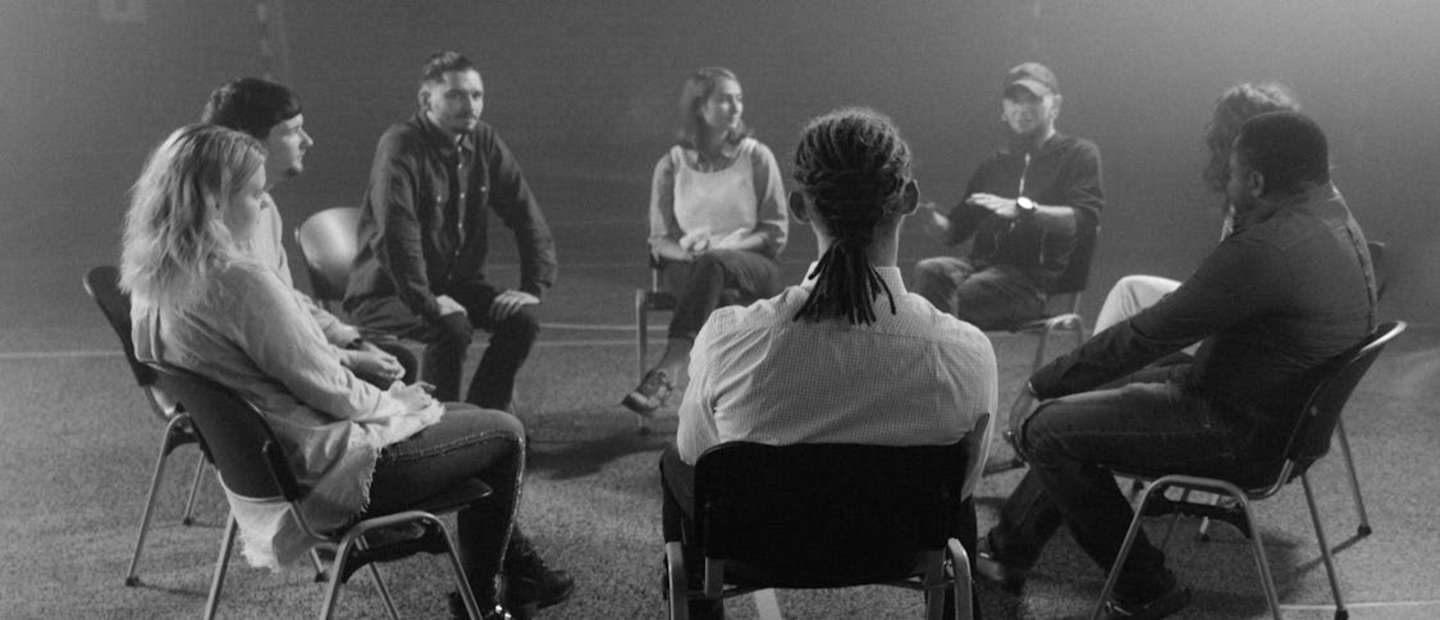
Learning Circles Build Community in Compressed Courses
Accelerated courses present unique challenges with their compressed timeframes. Building a classroom community often becomes an afterthought when one is racing to cover essential content in half the time. Yet research shows that strong learning communities lead to better outcomes, especially in accelerated formats (Brown, 2016; Fisher & Machiori, 2021; hooks, 2003). Learning Circles offer a structured discussion technique that fosters deep connection while engaging with course material, transforming a compressed schedule from obstacle to opportunity.
In learning circles, students alternate between an inner circle of active discussants engaging with course texts and an outer circle of observers tracking conversations. Midway through class, students switch positions, with new discussants building on insights while former speakers become observers. This technique simultaneously fosters community and deepens content understanding by giving all students meaningful opportunities to both contribute to and analyze academic discussions.
How to Implement Learning Circles
Create an Intentional Space
- If meeting on campus, arrange 6-8 chairs in an inner circle with no barriers between participants (Copeland, 2005), and position 10-15 chairs in an outer circle surrounding the inner circle
- Provide observation forms for outer circle participants (more on this in the Structured Observation Form section below)
- For synchronous online courses, create a clear visual representation of the circles by using gallery view and having inner circle participants turn on cameras while outer circle members turn them off
Select Focused Discussion Materials
In preparation for a class meeting, design engaging discussion activities around accessible texts.
- Choose brief readings/recordings/podcast episodes that present multiple viewpoints on a key course concept. In my Introduction to Counseling course, for example, I use a brief case study of a client experiencing depression symptoms along with two contrasting treatment approaches
- Create 3-5 specific questions that prompt analysis rather than recall (Fisher & Machiori, 2021). For example, rather than “Compare and contrast a humanistic-existential approach to a cognitive behavioral approach,” ask "How might a humanistic-existential approach differ from a cognitive-behavioral approach when working with this client's trauma symptoms?"
- For online courses, use digital annotation tools like Perusall or Hypothes.is for collaborative pre-reading to ensure all students engage with materials before discussion. See how other instructors have done this in Increase Reading Motivation and Metacognition with Social Annotation, or meet with an instructional designer to explore options.
Design a Structured Observation Form
- Create a form with specific categories for observers to track
- Include sections for: evidence use, questioning techniques, listening skills, perspective-taking
- Add a reflective component: "What perspective was missing from the discussion?"
- Provide space for observers to note specific statements that deepened, changed, or challenged the conversation
Facilitate with Intentionality
- Begin by framing the purpose: "Today we're exploring multiple theoretical perspectives on depression intervention through dialogue"
- Model the role of guide rather than expert (King, 1993)
- When discussion lags, use prompts like: "How might that approach be received by a client with cultural concerns about mental health treatment?"
- Resist the urge to correct misinformation immediately; allow peers to address gaps first
Structure the Feedback Exchange
- Provide specific language stems for constructive feedback: "I noticed that the discussion seemed to deepen when..."
- Ask outer circle to highlight examples of effective perspective-taking
- Direct feedback toward the collective discussion rather than individual participants
Guide the Transition
- Allow 2-3 minutes for inner circle to document key insights before switching
- Pose a bridging question for the new inner circle: "Building on what you've observed, how might these approaches be integrated in practice?"
- Encourage new inner circle to reference specific points from the first discussion
- Remind former discussants of their new responsibility as observers
Facilitate Meaningful Synthesis
- Create a visual record of key insights (ie., whiteboard, Google shared document)
- Connect discussion to upcoming assignments: "How will today's insights inform your case conceptualization due next week?"
- Prompt each student to identify one new perspective they gained and one question that remains
- In my counseling courses, I conclude by asking: "How has today's discussion shifted your understanding of your role as a counselor?"
Why It Works
Learning Circles embody what bell hooks (2003) describes as a pedagogy of hope where students become co-creators of knowledge rather than passive recipients. This approach shifts the instructor from expert to collaborator (King, 1993), creating space for authentic dialogue. Research demonstrates that this format helps students overcome reluctance to speak publicly while fostering a sense of belonging (Fisher & Machiori, 2021). Its structured nature creates a holistic approach that values student perspectives while maintaining academic rigor (McAuliffe & Eriksen, 2011). By integrating Learning Circles into compressed courses, instructors create environments where community and content reinforce each other, maximizing the unique opportunities that accelerated-course teaching presents.
References and Resources
Brown, A. C. (2016). Classroom community and discourse: How argumentation emerges during a Socratic circle. Dialogic Pedagogy: An International Online Journal, 4, A81-A97.
Copeland, M. (2023). Socratic circles: Fostering critical and creative thinking in middle and high school. Routledge Publishing.
Fisher, R. L., & Machirori, T. L. (2021). Belonging, achievement and student satisfaction with learning: The role of case-based Socratic Circles. Innovations in Education and Teaching International, 58(1), 25-35.
hooks, b. (2003). Teaching community: A pedagogy of hope. Routledge. hook’s Teaching Community available at OU Libraries.
King, A. (1993). From sage on the stage to guide on the side. College Teaching, 41(1), 30-35.
McAuliffe, G., & Eriksen, K. (2011). Handbook of counselor preparation: Constructivist, developmental, and experiential approaches. Sage Publications.
Save and adapt a Google Doc version of this teaching tip.
About the Author
Dr. Clark D. Ausloos is an assistant professor in the counseling department, in the School of Education and Human Services. His teaching philosophy centers on a constructivist, student-centered approach that values developing meaningful connections with students. Beyond teaching, Dr. Ausloos holds licenses as a Clinical Counselor and School Counselor and has received high recognition from students for his engaging and sensitive handling of diverse topics.
Photo by Tima Miroshnichenko on Pexels. Others may share and adapt under Creative Commons License CC BY-NC.
View all CETL Weekly Teaching Tips.
The Link Between Academic and Financial Stress: A Student Perspective
In an ongoing effort to involve students as partners in teaching and learning, CETL Associate Director Christina Moore invited her former student Brendan Danko—a sophomore mechanical engineering major and transfer student from Wayne State—to share OU-specific research he conducted as a part of his WRT 1060 research project on the intersection of academic and financial stress. In this interview, they get specific about the nature of this stress at Oakland University. Brendan draws on his own journey juggling coursework, commuting costs, and living expenses to help us better understand how these dual stressors accumulate over time—and what faculty can do to support students’ success and well-being. Watch the whole video interview.
Insights into the Academic–Financial Stress Connection
Academic and financial stress are deeply intertwined and cumulative.
Students don’t experience course rigors in isolation—every semester’s tuition, fees, and material costs stack up over time. Recognizing this cumulative effect helps faculty understand why a “small” academic setback can trigger major financial anxiety, and vice versa.
Everyday costs can cascade into academic disruption.
Seemingly minor expenses—gas for a commuter’s car, unexpected auto repairs, or the price of course materials—can cause missed classes and falling behind. Faculty should be aware that these “small” barriers often have outsized impacts on student performance.
Messaging and support need to be career-long, not just at enrollment.
While first-year students hear a lot about affordability, financial pressures often peak in junior and senior years as debt accumulates. Faculty can reinforce financial-wellness messages throughout a student’s academic journey—reminding juniors and seniors of ongoing scholarship opportunities, payment-plan options, and budgeting tools.
Low-burden course design tweaks can alleviate stress.
Allowing one or two “drop-lowest” assignments, clearly marking courses or sections as “low-cost/no-cost materials,” and integrating open educational resources can make a tangible difference without overhauling a syllabus.
Built-in flexibility and structured breaks promote resilience.
Embedding a “no-new-content” week for review or academic-support check-ins helps students recover from personal or financial crises. Encouraging “high-quality” breaks—short walks on campus, outdoor study sessions, mindful pauses—boosts mental well-being and keeps momentum going.
Faculty can amplify awareness of campus support.
Regularly remind students about readily available resources—scholarship listings, the Dean of Students’ emergency funds, the campus pantry and clothing program, and academic advising or counseling services—so that students know help exists before they hit crisis point.
References and Resources
- Affordable Course Materials Initiative (ACMI) supports faculty in converting course materials to a low/no-cost model, from stipends to support this transition to how to mark low/no-cost courses courses.
- Students with family incomes up to $70,000 can attend Oakland University tuition free (OU News, 10/20/2023)
- A Look at Reasons Why Freshmen Choose OU, affordability being a significant factor. (Grizz Facts, 09/18/2023)
Save and adapt a Google Doc version of this teaching tip.
About the Author
Brendan Danko is a sophomore with a major in mechanical engineering. At OU he spends his time trying to get work done while also spending time talking with his friends. After graduation, he wants to work in robotics. When he’s not studying, he enjoys snowboarding, basketball, video games, and reading.
Others may share and adapt under Creative Commons License CC BY-NC.
View all CETL Weekly Teaching Tips.

Email Boundaries for a Stress-Free Summer with a Supportive Away Message
During the summer, many instructors look forward to a break from the constant influx of emails and a chance to focus on other priorities - whether that means taking time away from work, catching up on tasks set aside during the academic year, or finally analyzing long-overdue research data. Without clear boundaries around email, it’s easy for these priorities to get pushed aside. One summer, I found myself responding to the same concerns about scheduling, syllabi, and textbooks. Instead of feeling refreshed, I felt tethered to my email worried that students wouldn’t have access to important information.
Setting a summer away message is a simple way to establish boundaries while still providing students with the information they need. Whether an instructor is off contract for the summer, teaching, conducting research, or balancing both, an away message can address common questions and direct students to resources. This approach allows instructors to protect their time and focus on their priorities while empowering students to access the information they need without feeling ignored or left without support.
How to Set Up a Summer Away Message
An away message should set clear expectations for email response times, provide students with key information, and direct urgent matters to the appropriate contacts.
- Specify Availability: Clearly state your availability during the summer. If you will not be checking email at all, state this. If you plan to check sporadically, set expectations for response times.
- Anticipate Common Student Inquiries: Look at past summer emails to identify frequent student questions or requests. For example, perhaps students reach out about textbook information, syllabi, or when course materials will be available online. Addressing these questions in your away message protects your time and prevents unnecessary follow-ups.
- Create a Free Website Using Google Sites: Consider creating a website with frequently asked questions and links to Google Forms for common requests. You can easily create a website using Google Sites with your @oakland.edu email. This website can be linked directly in your away message, providing students with easy access to resources at any time.
- Organize Requests With Google Forms: Using Google Forms to collect information (e.g. letter of recommendation requests) allows you to maintain an organized record in a spreadsheet. When you return from break, you can quickly access important details such as the request deadline, recipient(s), and other relevant information. Here’s an example of my reference letter request form which could be adapted for your needs.
- Provide Resources: Include links to course materials, department websites, and research opportunities to guide them to relevant resources for common requests.
- Offer Alternative Contacts for Urgent Matters: If students need immediate assistance, provide a relevant contact.
Example Summer Away Message
Subject: Out of Office - Summer 2024
I am out of the office from Monday, July 1 until Monday, August 19. I will not be checking email during this time. I will return your email after August 19.
- Course Enrollment: If you are a student requesting to be added to HS 2000 or HS 3500 no override requests will be granted for Fall 2024 or Winter 2025. The best way to get into the course is through the OU Waitlist, which OU students can register for by themselves.
- Course Materials: If you are a student registered for HS 2000 or HS 3500 and are requesting information on the course, the syllabus, course schedule, and required materials will be posted to the Moodle course shell approximately one week before courses begin.
- Research Opportunities:
- Please visit the Health Behavior and Promotion Research Lab website for more information about the lab and complete an interest form.
- To join CHEER Lab for the Fall semester, visit the lab website for more information and complete an interest form. Once you receive permission, you will need to register for IPE 1020. Overrides and permissions to register for IPE 1020 will be processed after August 19.
- Honors College: If you are an Honors College student looking for a mentor, please visit my Student Forms page to fill out an interest form.
- Letters of Recommendation: If you are a student requesting a letter of recommendation, please visit my Student Forms page to fill out a letter request form. If approved, letters of recommendation will be submitted after 8/26.
If you need immediate assistance, please contact the main office for the School of Health Sciences: (248) 370-3562 or [email protected].
Save and adapt a Google Doc version of this teaching tip.
About the Author
Emily Van Wasshenova is an assistant professor in Interdisciplinary Health Sciences within the School of Health Sciences at OU. She has an academic background in Exercise Science and Health Education and her research focuses on health behavior, particularly physical activity and nutrition. Outside of work, you can find Emily exploring trails with her dog, Miles or working on mastering Phantom of the Opera on the piano.
Others may share and adapt under Creative Commons License CC BY-NC.
View all CETL Weekly Teaching Tips.

Leverage the First Assessment to Improve Student Confidence
Concerns around student success and attrition abound today. But what can be done to support students and help prevent them from leaving college before graduation? Supporting students’ confidence in their ability to succeed is one critical step you can take. (Parsons et al., 2009). Beyond improving graduation rates, higher student confidence has a number of benefits such as: greater student participation, goal-seeking, interest in your lessons, and opinion-sharing, as well as lower anxiety levels (Akbari & Sahibzada, 2020). This is particularly important for minoritized students, who already tend to have lower confidence levels (Litzler et al., 2014; Jackson et al., 2020). But what can we do to improve student confidence and help students persist and succeed in college, especially when our schedules are jam-packed already? If you can only make one change, we recommend focusing on the first assessment in your courses.
Why the First Assessment?
The first assessment is the critical point for impacting student attrition (Meer & Chapman, 2014). This assessment therefore has a substantial impact on whether or not students will succeed in a given course. Oftentimes the results of the first assessment push students into one of two cycles. Either the first assessment can spark a cycle of student confidence and lifelong learning (Norman & Hyland, 2003), or it can push students down a path that can lead to failing confidence and worsening educational outcomes. However, simply doing well on the first assessment is not necessarily a condition for developing confidence and proceeding down a more successful path.
What Makes an Effective First Assessment?
Impactful first assessment can be best understood as the first step for students to develop confidence in both the learning process of the course design as well as their own ability to successfully grow to achieve success by the end of that process. There are 6 key components of a first assessment which is effective at instigating student confidence (Meer & Chapman, 2014)
1. Early in the Semester
An early assessment is critical because it gives students ample time to improve and work towards success. If the first assessment is halfway through a semester, then students can feel lost and unsure of what they are and are not supposed to know. This can lead to frustration, disassociation from the class, and a lessening of their confidence.
2. Simplified Task
It is important that the first assessment focuses on more simplified tasks which have clearer instructions and assessment methods. Students need to be able to understand what they are supposed to do. This also allows them to reflect more easily on how they can improve. A task that asks too much or that requires a large amount of information or procedures can leave students confused and feeling as though they cannot succeed, even if they may know the material. Remember, this first assessment is about facilitating confidence for future learning. Build in the complexity throughout the course once they have developed that foundational confidence.
3. Low Stakes (~10-20%)
A low-stakes assessment is important because if a student does not score highly on such a first assessment, they will still have enough opportunities to improve throughout the course to get a higher grade. When the first assessment is worth higher percentages (~40%+), then students will oftentimes feel as though there is nothing they can do to improve their grade. This can lead them to stop trying or to drop the course altogether.
4. Quick Grading Turnaround
This is critical because students need to be able to feel connected to the work they have done. If you wait a week or two, then students will oftentimes already have moved on to the next thing. Additionally, if the course scaffolds, then students may not know they have an incorrect understanding and this can lead them to fall further behind. This sense of being behind can have a huge impact on their confidence and belief that they can catch up and succeed.
5. Written and Oral Feedback
This is critical for two reasons. First, accessibility. Not all students are able to receive written or oral feedback due to a variety of disabilities. Second, providing feedback in multiple formats allows students the ability to engage with the feedback on multiple levels which can help them to grasp the concept more deeply. It also allows for feedback to be more short form and general (such as talking about key points in front of the class), while also being more actionable and tailored to the student via written feedback.
6. Revision Opportunity
Finally, an opportunity for redrafting emphasizes that the point of assessment is primarily for students’ learning and growth. In the real world, people make mistakes and they need to learn from them. Expecting perfect marks at the beginning is unrealistic and antithetical to learning. However, it is important that students have the opportunity to use your feedback on their mistakes to redraft. This emphasizes to students that learning is a process where the goal is to master the material by the end of the course, not the beginning. Additionally, a redraft allows students to engage with their mistakes and, through the help of actionable feedback, improve their understanding. This will support their confidence in their ability to succeed as a result of their continual effort, rather than some instant understanding of the topic.
Related CETL Teaching Tips
- Characteristics of Effective Feedback
- Using Growth Mindset Messaging for First-Generation Student Success
- Normalizing and Promoting Academic Success Support
- Early Feedback Is Crucial: How to Refer Students Quickly and Easily
References
Akbari, O., & Sahibzada, J. (2020). Students’ self-confidence and its impacts on their learning process. American International Journal of Social Science Research, 5(1), 1–15.
Jackson, Z. A., Harvey, I. S., & Sherman, L. D. (2020). The impact of discrimination beyond sense of belonging: Predicting college students’ confidence in their ability to graduate. Journal of College Student Retention Research Theory & Practice, 24(4), 973–987.
Litzler, E., Samuelson, C. C., & Lorah, J. A. (2014). Breaking it down: Engineering student STEM confidence at the intersection of race/ethnicity and gender. Research in Higher Education, 55(8), 810–832.
Meer, N. M., & Chapman, A. (2014). Assessment for confidence: Exploring the impact that low-stakes assessment design has on student retention. The International Journal of Management Education, 12(2), 186–192.
Norman, M., & Hyland, T. (2003). The role of confidence in lifelong learning. Educational Studies, 29(2–3), 261–272.
Parsons, S., Croft, T., & Harrison, M. (2009). Does students’ confidence in their ability in mathematics matter? Teaching mathematics and its applications. An International Journal of the IMA, 28(2), 53–68.
Save and adapt a Google Doc version of this teaching tip.
About the Author
Thomas Baranski is the Educational Development Coordinator at the Center for Excellence in Teaching and Learning. His main research interests lie in sustainability and equity in education, place and informal education, and arts education. When he finds the time, he enjoys playing music, and reading and writing a poem or two.
Others may share and adapt under Creative Commons License CC BY-NC.
View all CETL Weekly Teaching Tips.

Guided Notes for Improving Note-Taking and Retention
Many faculty use presentation slides to structure their lectures, but how they share materials with students can impact their note-taking. Some instructors make their full slides available to students, which may lead them to skip taking their own notes. Others require students to take notes independently, which can be overwhelming, especially for content-heavy courses or for students unfamiliar with effective note-taking strategies.
Active note-taking helps students retain and understand material. Simply listening to a lecture or reading slides is a passive process, which leads to lower recall. So, how can we help students develop stronger note-taking skills and retain information?
One solution is guided notes, a structured approach to note-taking that scaffolds student learning. Guided notes can take many forms, including partially completed PowerPoint slides, fill-in-the blank outlines, and notes with reflective prompts and learning strategies (Biggers & Lou, 2020). By providing structure and prompts, guided notes encourage students to engage with the material while strengthening their note-taking skills.
How to Implement Guided Notes
- Analyze Lecture Content: Identify the key concepts, definitions, figures, and tables that are essential for understanding the topic. Consider where students tend to struggle and use guided notes to highlight those areas.
- Design the Notes: Start with a structured format that provides clear guidance. In my course I do this by creating a partially completed outline of the lecture. As the semester progresses, gradually reduce the structure, allowing students to take more responsibility for their own note-taking. Include guiding questions or prompts to encourage critical thinking, along with fundamental study tips (e.g. “Write down all definitions from the textbook”, “Create a mnemonic device or visual aid to help you remember this concept”). See Figure 1 for a detail and explanation of potential guided notes designs.
- Show Examples of Guided Notes: At the start of the semester, post completed guided notes as an example. In my course, I create these notes as if I were a student by adding questions I might have while listening to the lecture, including textbook definitions from the reading, and highlighting concepts I find unclear. I also include personal examples and reflections. See Figure 2 for an example of what notes might look like in a guided note template.
- Encourage Student Use: Post the guided notes before each class and reference them during lecture. For example, when showing a figure say, “This figure is also included in your guided notes. What trends do you notice about this figure? Write down your thoughts in your guided notes.” At the end of class, you could ask students to identify the most important concept they learned and write a brief summary in their notes.
- Prompt Comparison: If time allows in lecture, consider including activities where students compare their notes and discuss questions they have on the material.
Conclusion
I have used guided notes for two semesters and have observed more students engaging with the lecture material and using the notes during lecture. However, I have noticed that some students still struggle with effectively using the guided notes. To address this, I plan to encourage their use outside of lecture, particularly as a study tool. For example, instead of holding a review season that only consists of answering multiple-choice questions, I could pose questions and ask students to find answers using their guided notes. If a student cannot find the answer within their guided notes, I can encourage them to use the textbook or collaborate with classmates to fill in the gaps. This approach would help students consolidate information into a single document.
For faculty considering guided notes, I recommend starting with a structured approach and gradually reducing the level of support. Less structured notes encourage students to develop note taking skills and provide instructors with the flexibility to make slight changes to lectures without having to completely redo the guided notes.
While I haven’t collected formal data on the outcomes yet, I’m hopeful that these small adjustments to how I facilitate note taking in my classes are helping students build stronger note-taking skills and improve student learning.
Reference
Biggers, Bryan and Luo, Tian. Guiding students to success: A systematic review of research on guided notes as an instructional strategy from 2009-2019, Journal of University Teaching & Learning Practice, 17(3), 2020.
Resources on Guided Notes
- What Makes Note-taking Work? Learning Tip for Students (CETL)
- Engaging Students with Guided Notes
- Guided Notes: Improving the Effectiveness of Your Lectures
- Creating Guided Notes
Save and adapt a Google Doc version of this teaching tip.
About the Author
Emily Van Wasshenova is an assistant professor in Interdisciplinary Health Sciences within the School of Health Sciences at OU. She has an academic background in Exercise Science and Health Education and her research focuses on health behavior, particularly physical activity and nutrition. Outside of work, you can find Emily exploring trails with her dog, Miles or working on mastering Phantom of the Opera on the piano.
Others may share and adapt under Creative Commons License CC BY-NC.