
Why You May Want to Roll the Dice and Introduce Game-based Learning Into Your Course
Games can not only add a fun factor to your course, they can also offer you strategies to strengthen student learning, engagement, and collaboration. Game-based learning (GBL) differs from gamification because instead of adding game design elements to a course, the pedagogy focuses on designing a lesson or an entire course around students playing an actual educational game.
Even though different games create different classroom experiences for students, they all share some common benefits. Some research shows that embedding a game into a course can facilitate interest and motivation and lead to greater engagement for students “both cognitively and emotionally” (Fernández-Raga et al., 2023). For example, including a game that promotes healthy competition, such as Kahoot, can motivate students to grasp difficult concepts. Games like Reacting to the Past that entail role-playing and immerse students in a problem, historical era, or challenging discussion can foster critical thinking, problem solving, collaboration, and communication skills.
Game-time Decisions
Educational games used in a course or a lesson can fuel discovery and the sharing of original ideas; however, finding the right game and creating opportunities for your students to learn and strengthen skills requires some decision-making.
Game Resources
Several game options are available to fit a digital, on-campus, or Hyflex course. Choosing a game that fits your platform requires you to consider how often your students meet, how you want them to interact, and how situating a game in this context will encourage learning. As GBL takes root, more games will hopefully become available to align with your course design.
For now though, you could modify a board game to fit your students’ needs. Faculty have had good success using a modified version of Jeopardy or Bingo to help students master vocabulary, events, concepts, or other course content. Both games work well in large classrooms since students can play individually or be moved into teams to play. For instance, both games were used in an undergraduate Introduction to Statistics course to review key terms and main ideas; students expressed positive feedback about game playing to facilitate their learning (Andersson & Kroisandt, 2018).
You can also create your own activities/games using H5P on Moodle. H5P allows you to create and embed your own interactive content in Moodle, such as the branching scenario tool to create situational dilemmas for your students to navigate. Students choose different pathways, obtain feedback, and earn points as they navigate the game. For example, a group of Canadian faculty developed a simulation game for nursing students. The game assists students in acquiring and applying knowledge and skills related to effective nurse-client relationships and mental health assessment completion.
Course Goals
Determining how to integrate a game into your course is essential. Designing a lesson or an entire course in which to situate a game entails considering learner levels, available technology, interaction levels, game duration and layout, and opportunity for participant feedback and reflection.
Duration
Some instructors find that using a game in a certain lesson fits their students’ needs; others find that embedding one game to use all semester, such as a role-playing game, works well to facilitate an effective course design. For instance, various role playing games that focus on extensive topics, such as climate change, diet and disease, or Athens in 403 B.C.E to study the threshold of democracy, can dovetail nicely into any course and connect lessons to a game’s content.
Interaction
You can find games that enable students to play as a team or independently. However, students may benefit from working together to strengthen their problem-solving, creative, and/or critical thinking skills. In addition, connecting a game to a specific context can also help students with different learning styles and/or different aptitudes learn from their peers. For example, choosing a game that requires students to role-play a historical figure, a company start-up collaborator, or a scientist on a research team can foster interaction with peers as they discuss and strategize.
As a pedagogical approach, implementing GBL can be an effective strategy to blend with traditional content delivery approaches to facilitate knowledge acquisition and skill development. Win, lose, or draw, adding a game to your course might be worthy of your consideration.
References and Resources
Save and adapt a Google Doc version of this teaching tip.
About the Author
Written by Rachel Smydra, Faculty Fellow for the Center for Excellence in Teaching and Learning at Oakland University. Image by Matthias Groenveld. Others may share and adapt under Creative Commons License CC BY-NC.

From a “Student Deficit” to “Course Deficit” Approach to Addressing Equity Gaps
The Student Success and Equity Dashboard shows persistent equity gaps in several of Oakland University’s large, introductory courses. This gap continues to drive two questions: Why does this gap occur, and what can we do about it?
Some attribute equity gaps to students’ challenges with the high school-to-college transition, academic underpreparedness, or the lack of resources required to succeed in their learning. This rationale, known as the student deficit model, asserts that the key to improving student outcomes rests in addressing students’ shortcomings. However, a new study challenges the student deficit model arguing that equity gaps may be, at least in part, explained as course deficit (Cotner & Ballen, 2023).
“Course Deficit” Model: The Beneficial Difference
Course Deficit Example 1: Content Sequence to Contextualize Learning
The course deficit model places more emphasis on how course structure influences student performance, especially in under-represented minorities (URMs). In Webb and Paul’s (2023) study on student learning in introductory physics, the authors compared student achievement on final exams in two different course structures, with no change in content or rigor. The standard course sequence involved teaching each new physics concept along with new calculations as structured in the textbook, chapter by chapter. In the “concepts-first approach,” fundamental concepts were introduced first, followed by the computational skills.
While the standard course structure resulted in a measurable URM equity gap, the authors found that the concepts-first approach removed the gap in student performance on the final exam. This suggests that changing course structure alone can reduce equity gaps. In fact, when applying the course deficit model more broadly, the authors concluded “there needs to be increasing focus on introductory courses, themselves, as the causes of demographic gaps.”
- Student deficit mindset: “These students aren’t prepared to do well in physics.”
- Course deficit mindset: “Students learn more effectively when concepts are taught with calculations.”
- Solution: Introduce fundamental concepts before computational skills.
Course Deficit Example 2: Exam Frequency and Grade Weight
The course deficit model was first named in an earlier study on gender performance gaps. The authors found that women, when compared to men, tended to have lower exam scores in courses where the exams were higher stakes (they counted for a greater percentage of the course grade) versus lower stakes. Thus, the gender performance gaps were more pronounced as the exam grades were a higher portion of the total course grade. This gap was not found in other lower stakes assessments. One explanation for these data is that women performed better on the exams when the perceived risk was lower.
- Student deficit mindset: “These students didn’t study enough.”
- Course deficit mindset: “Anxiety due to high-stakes assessments can make test-taking more difficult.”
- Solution: Use mixed level assessments, with exams a lower percentage of the final grade.
Course Deficit Example 3 (from OU): Prompting Learning Self-Awareness
In an early Teaching Tip, an assessment method called peer-paired problems was introduced as part of a successful course redesign, which ultimately reduced the URM equity gap in introductory biology. In this method, students were challenged daily with problem-solving questions, independently first, and then in pairs. By changing the course structure to include more frequent assessments with real-time feedback, students practiced gauging their own learning process.
- Student deficit mindset: “These students don’t get it.”
- Course deficit mindset: “Students learn more effectively when they test their knowledge frequently over time.”
- Solution: Use low-stakes assessments to provide frequent, consistent feedback.
What This Means for Us
Webb and Paul’s 2023 study adds to the growing body of evidence indicating the pedagogies we chose can influence student performance in a profound way, potentially either increasing or decreasing equity gaps. While active learning and inclusive teaching practices have been emphasized as a critical way we can narrow achievement gaps, we should be aware that additional course structure changes may improve student outcomes as well.
It is important to note that the course deficit model should not be interpreted as an instructor deficit. Individual instructors have varied degrees of autonomy in designing or structuring courses, from texts we use and acceptable assessments to the size of our classes. We can reflect on the agency we do have to create a caring environment and implement strategies that promote belonging. We can also identify issues at the department, school, and discipline level and bring them up to leaders and in committee work.
- Consider your own personal biases and mindset when it comes to student learning. We often inherit these biases, but we can interrupt them. Taking an asset-based approach to minoritized students helps us recognize our students’ strengths and value their cultural backgrounds, experiences and knowledge.
- Inquire into scholarship and practitioner accounts that focus on course deficits, or ways to address disparities at the course design level. Search for these learning opportunities through webinars, conferences, publications, and even popular media like academic podcasts. CETL staff are happy to help in this search.
- Maintain high standards and expectations for all students, with clear direction on the support and scaffolding to reach those high standards.
- Reflect on and revise your course structure. Consider whether there is room to incorporate active learning. For example, replacing lecture time with active problem solving, using interrupted lecturing, or incorporating group work, all increase student engagement. Can you add low-stakes assessments to scaffold the learning process? You can find more ideas on minimizing equity gaps at OU, and CETL staff can talk through this approach.
The Larger Picture of Belonging
While these studies are an inspiration for us to rethink some of our course structure to increase equity in our classes, we must also consider the role of the classroom climate and campus environment. Active learning or assessment changes may not have the impact expected unless we simultaneously approach teaching with empathy, and intentional relationship-building. Our teaching tips on inclusion and teaching presence offer some points of consideration.
References and Resources
Cotner, S., & Ballen C.J. (2017) Can mixed assessment methods make biology classes more equitable? PLoS ONE 12(12): e0189610. https:// doi.org/10.1371/journal.pone.0189610
Webb, D. J., & Paul, C. A. (2023). Attributing equity gaps to course structure in introductory physics. Physical Review Physics Education Research, 19.
Save and adapt a Google Doc version of this teaching tip.
About the Author
Sarah Hosch is the Faculty Director of the Center for Excellence in Teaching and Learning, and a Special Instructor in the Department of Biological Sciences at Oakland University. She teaches all levels of biology coursework and her interests include evidence-based teaching practices to improve student learning gains and reduce equity gaps in gateway course success. Sarah loves exploring nature, cooking, and exercising.
Edited by Rachel Smydra, Center for Excellence in Teaching and Learning Faculty Fellow at Oakland University. Others may share and adapt under Creative Commons License CC BY-NC.
Center for Excellence in Teaching and Learning
100 Library Drive
Rochester, Michigan 48309-4479
(location map)
(248) 370-2751
[email protected]


Center for Excellence in Teaching and Learning
100 Library Drive
Rochester, Michigan 48309-4479
(location map)
(248) 370-2751
[email protected]
Meme-ingful Teaching: Utilizing and Incorporating Memes in the Classroom
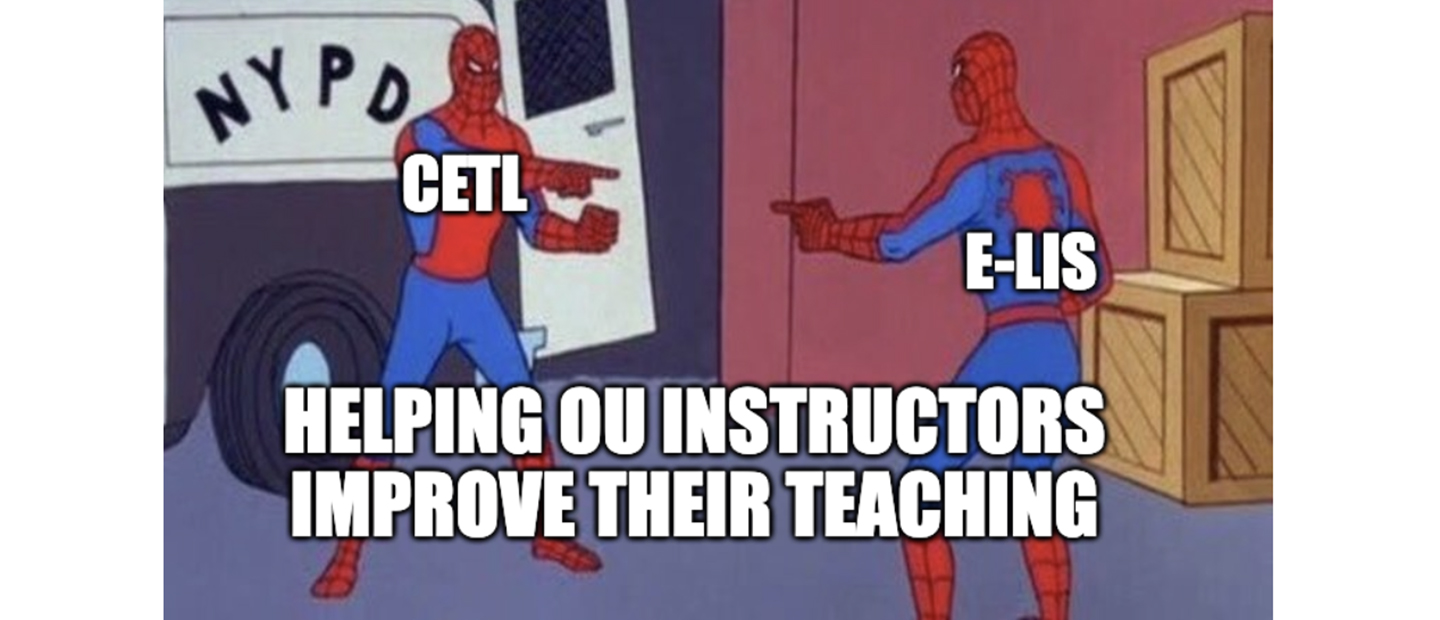
For instructors looking to add some spice and variety to their lectures, memes can be a fun and effective tool to integrate into a course. Memes have the potential to be a pedagogic tool for promoting active participation and engagement. What is a meme? Memes are humorous, viral images with captions that can be useful teaching tools in the classroom. In this teaching tip, let's explore some of the benefits and ways to incorporate memes into your own lessons.
Benefits of Using Memes
Memes are memorable: Using a meme-based approach can enhance student memory. Because memes include images and text in a humorous or relatable way, the content becomes more memorable for students. Connecting information, such as a concept or theory, to a funny, viral, or striking image makes it easier for students to store and recall information.
Simplify concepts: Memes can simplify complex ideas. By presenting complicated ideas or concepts along with a simple image and a short caption, instructors can help students grasp concepts quickly and effectively. These visual aids can lead to a deeper understanding of concepts.
Enhance engagement: Since memes add humor and personality to the learning process, instructors can add variety to traditional lectures and textbooks. When students find humor in their lessons, they are more likely to stay engaged and motivated to learn. Memes give students an opportunity to be creative and have fun while simultaneously learning new concepts or solidifying their knowledge of previous concepts.
Build community: Memes are a popular part of internet culture and when educators incorporate them into their teaching, they tap into a shared cultural experience. Students often enjoy recognizing familiar memes, which can create a sense of community and camaraderie in the classroom. Instructors can post memes in the classroom or on their Moodle course for students to enjoy. They can also include a meme gallery or exhibit to highlight their students' work and creativity.
Promote discussion: Memes are often related to current social and cultural issues, making them excellent conversation starters. To encourage students to think critically and express their opinions, instructors can use memes as a springboard to spark discussions about current events, ethics, and critical thinking.
Example Activities
- Activity 1: Caption your own meme. For this activity, you can either provide an image for students to caption or have your students find their own image to make into a meme. You can have students develop a catchy definition or explanation/summary of a concept or term through a meme.
- Activity 2: Write a story or summarize a process using memes. The instructor chooses images to tell a story or explain a process. For example, in a biology class, an instructor could pick four to five images and add captions to them to make memes that illustrate a process such as photosynthesis. Going one step further, the instructor can ask students to create memes to illustrate a specific process/concept or to narrate a story.
Conclusion
Using memes in teaching offers numerous benefits that enhance the learning experience for both student and instructor. Memes are memorable, engaging, and versatile tools that can simplify concepts, build community, and promote discussion. By embracing memes in education, instructors can effectively reach, teach, and inspire their students. So, the next time you're looking for a creative way to teach, consider adding a dash of memes to your lesson plan—it might just be the missing ingredient for a successful and enjoyable learning experience
References and Resources
Meme Generator
Memes in the Classroom
Using Memes to Teach…Should We? How Much?
Save and adapt a Google Doc version of this teaching tip.
About the Author
Chad Bousley is an Instructional Designer at e-LIS, who helps faculty with online course design, creating interactive activities and implementing online teaching best practices. Outside of the classroom, Chad enjoys learning foreign languages and playing guitar.
Others may share and adapt under Creative Commons License CC BY-NC.
Taking a New Approach to Get Students to Come to Your Office Hours
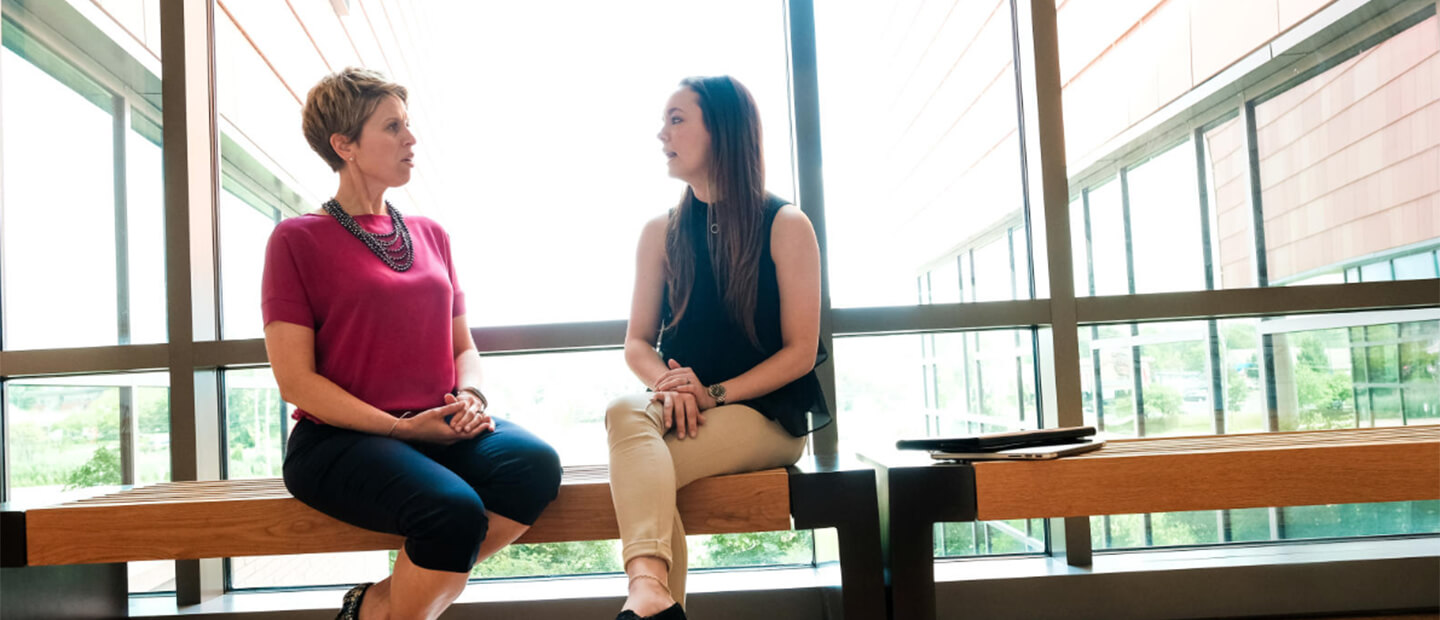
Office hours still serve as an effective way to connect and support students; however, getting students to show up to them can prove challenging. This can be particularly true when it comes to first generation and underrepresented students. However, office hours are vital in not only offering students academic support, but this shared time can also give students the chance to get to know you better while accruing social capital as well.
Studies suggest that students undervalue the opportunities office hours offer them. Therefore, just posting office hours on your course materials doesn’t really teach students about the value of these one-on-one interactions. Changing their mindsets that office hours are “a last resort to pass” requires some rethinking and updating as to how, where, and when you open your door. Putting a new spin on an old practice may help you create better results in connecting with your students.
How to Update Your Office Hours
Some simple solutions to change the way you hold your office hours may have great effects.
Name Change: Consider a name change from Office Hours to something such as Student Hours to make the activity more student-centered and, perhaps, sound less intimidating.
Location and Access Options: Instead of having students come to your office, go to where your students are; for example, the Oakland Center, the library, dorm lobbies, or other shared spaces. You could even create walking hours in the Rec Center and invite students to join you for a lap or two around the track. Even though virtual office hours assist students who have difficulty getting to campus, meeting them in their social media spaces or other platforms that offer private chat rooms, such as a Discourse channel, Slack, or Perusall, might facilitate better interaction.
Marketing Your Hours: Provide students with an infographic and post it on a syllabus or on Moodle and remind students throughout the semester about the benefits of meeting one-on-one. Emphasize in your visual that the interaction allows for deeper discussions, material review, and stronger connections; additionally, indicate that these meetings can also be time spent talking about career-oriented topics, internships, graduate school, and/or research opportunities.
Forging Future Connections: Requiring students to come to office hours once a semester to discuss a project or skill can lead to future meetings, especially if you encourage your students to come back again. These initial visits can be particularly helpful for freshmen and transfer students to assist them in getting over their trepidation of meeting with you one-on-one; however, more importantly, they may change their mindsets about the value these interactions present and as a result, seek them out more frequently in the future.
References and Resources
Supiano, B. (2023, August). The missed opportunity of office hours. Chronicle of Higher Education.
Save and adapt a Google Doc version of this teaching tip.
About the Author
Rachel Smydra is a Faculty Fellow in the Center for Excellence in Teaching and Learning at Oakland University. Photo by Oakland University. Others may share and adapt under Creative Commons License CC BY-NC.

Using a Collaborative Reflection Tool to Guide and Model Group Projects
Gathering the right tools for group critical reflection and introducing those tools through modeled practice has the potential to facilitate mindful collaborative interaction. Such practice can also empower learners by honoring individual voices that contribute to shared learning.
Mapping Participatory Media (MPM) can help students working in groups navigate several issues associated with group work such as managing what may be an unknown research process or addressing challenging conversations. In my work with student researchers, I found this tool beneficial because it addressed so much more than just the idea of, “Okay, let’s work collaboratively".
Mapping Participatory Media Tool
MPM is a collaborative reflection tool that provides a pathway for participants to capture, and make evident, the interactions of everyone involved. By modeling this mapping process with learners, an instructor can guide students, especially those unfamiliar with collaborative research, through the planning and reflective action stages to make each project phase transparent. Media, as used within this tool, is non-prescriptive and embraces any format of data across different projects, processes, and research to tell the story of a group’s interactions.
Benefits of Using MPM
MPM can spark dialogue, exchange, negotiation, and compromise among participants in the planning and reflective phases of a project. The tool can also facilitate the following:
- Collection of data in various formats shared by all participants,
- Representation of participant voices,
- Detailed attention to planning projects and related reflection,
- Transparency in project responsibilities,
- Negotiated space for participant engagement, and
- Narrating the story of a group project.
Implementing MPM
The tool consists of two pathways: planning and reflection. After companion documents are downloaded from the MPM website, the process of collaborative planning can begin.
The planning document considers the elements of a participatory project: the people and processes involved. Ample questions assist participants in identifying aspects of a collaborative project that are often overlooked without a tool like MPM. For example, during planning, the MPM tool asks that participants identify the “power, impact, method, output, and outreach” of an intended group project.
At the project’s end, the collaboration reflection document produces a road map of a group project, initiating similar questions to bookend the project. Reflection, often considered an individual action, is expanded and broadened to include multiple voices integral to the entire project. Participants work together to reflect critically and discuss a project’s overall outcomes.
Conclusion
Overall, I found the MPM tool a resourceful and instructive way to model and guide group projects in my university courses. The template documents produced thoughtful planning opportunities with an attention to mindful collaborative reflection. The MPM website and related tools provide educational guidance for evidencing collaborative interaction and, in the end, revealing the participants' story.
References and Resources
Save and adapt a Google Doc version of this teaching tip.
About the Author
Karen McGarry, PhD, is an Assistant Professor in the Department of Teaching and Learning (DTL) in the School of Education and Human Services (SEHS), Pawley Hall. Dr. McGarry also serves as faculty in the Department of Art & Art History, teaching an art foundations course annually. Her academic and research interests embrace Arts-Based Research (ABR) driving artful qualitative inquiry in teacher education, reflection, social justice art education, DEI concerns as well as access to educational opportunity, and continued studio practice in the visual arts. McGarry enjoys long walks that include slow noticing and stillness - as in being still, yet enduring.
Edited by Rachel Smydra, Center for Excellence in Teaching and Learning Faculty Fellow at Oakland University. Image by Andrew Neel. Others may share and adapt under Creative Commons License CC BY-NC.