
Embracing a Growth Mindset in Teaching
One thing that I have learned in my 30+ years of teaching is that change is always right around the corner. This means that new ways are always emerging for me to improve my course design, delivery, and interactions with students. Navigating the landscape of higher ed has, perhaps, never been more difficult than it is now with so many external forces affecting how we teach our courses and interact with our students. However, in Our Higher Calling: Rebuilding the Partnership Between America and its Colleges and Universities, Thorp and Goldstein (2018) emphasized that “Nothing is closer to the heartbeat of a college or university than teaching….” Seeking to improve our practice can help us create a growth mindset that embraces change and the possibilities that come along with it.
Approaching the possibility of change with a positive attitude can lead to new strategies that engage students. Carving out time to update your course design, embed high impact practices, or take on a new role does take time; however, opening up your teaching to change can let you view your course in new ways and rejuvenate your love for teaching.
Seeking Course Design Updates to Meet Students Needs
Unlike other years, it seems as though the quality of the student-faculty relationship is more important than ever in motivating students to do well and move towards becoming independent learners. Even though studies show that student motivation revolves around how well a student’s basic psychological needs are met (Ryan & Deci, 2017), Leenknecht et al. (2023) indicated that the quality of their relationships with their professors can also motivate them to do well. Strengthening our relationships with our students proves difficult, especially in our online courses, but understanding their needs, challenges, and concerns can definitely help us improve our approaches. With emerging studies, tools, and practices about changing how we teach, I recently read three books that showed me the importance of adopting a growth mindset and striving to improve the instructor-student relationship.. In Mindset: The New Psychology of Success, Dweck (2016) explores how we can fulfill our potential. She stresses that adopting a growth mindset that encourages personal growth, a positive attitude, and the ability to change and improve revolves around these factors: nurture and thoughts and efforts we develop when faced with new challenges.
In Drive: The Surprising Truth about What Motivates Us, Pink (2009) builds on Dweck’s idea about adopting a growth mindset and suggests that what we believe about ourselves will influence what we become. Emphasizing elements of motivation, autonomy, mastery, and purpose, he encourages readers, who might be parents, educators, or CEOs, to focus on motivation as a way to create and shape a culture where people can flourish.
In Mind over Monsters: Supporting Your Mental Health with Compassionate Challenge, Cavanagh (2023) credits the isolation and disruption we experienced during COVID as a driver in the uptick in people seeking access to mental health professionals, especially our young adults. Cavanah suggested committing to a compassion challenge to cultivate learning and living environments that guide students in addressing life experiences. Offering tips to create a course environment that generates “excitement, joy, and pride in learning,” Cavanagh also suggested we look for ways to create more social interaction in our classes and a better sense of purpose and belonging for our students.
Embedding High Impact Practices Using New Modalities/Technology
Since modalities and tech tools emerge and change at a fast and furious pace, keeping up can be challenging indeed. However, researching and incorporating new delivery approaches into your course can pay off for both you and your students. Embedding new teaching tools, such as the two listed below, can give you the opportunity to view your course design with new eyes and students the chance to learn in new ways.
Using Perusall to Create Student Collaboration
Perusall is a social annotation platform that enables students to collaborate by analyzing text together. The free program embedded as an external tool in Moodle offers instructors various upload options (pdfs, videos, audio) and custom design options (grading, groups, annotation guidelines). I have used Perusall for a few years in my general education courses and have found it to be a valuable tool for facilitating knowledge co-construction through a collaborative process. Students not only learn from other students by accessing the annotations, but their ability to add links, images, and hashtags enables them to perform a deep dive to explore cultural, social, and historical connections.
Using a Podcast as a Course Resource
Oslawski-Lopez and Kordsmeier (2021) suggested that students exert more time and effort in a course that uses multimedia over printed text and that these resources can engage them in ways print or lecture-based resources often fail to do. Adding a podcast as a course resource may give students, through the act of listening, better access to voice, tone and content and enhanced opportunities to focus and absorb information (Anderson & Dau, 2020).
Looking for a new way to engage students in my Advanced Critical Writing course, I decided to use a podcast to create a shared learning experience that gave students mutual access to content. Each week, students listened to an episode of the popular series Serial and engaged in various activities related to each episode. You can read more about my students’ experiences in Serial-iously?” Using a Narrative Podcast as a Shared Learning Experience to Facilitate Engagement and Critical Thinking.
Finding a New Role Offers a New Perspective
Taking on the role of a CETL faculty fellow, whether it be one that is focused on AI, mentoring, or mental health, can be transformative for you and your practice. Moving into a new role can provide the opportunity to reconnect with your scholarship, research, and teaching and open your eyes to new and unique ways to engage with your students.
This tip serves as my last as the 2024 CETL faculty fellow for the teaching tip blog. It has been my pleasure to be a CETL insider to see all the good work that these folks do. When the call for new CETL faculty fellows opens, jump in and open yourself up to the possibilities of change.
References and Resources
Andersen, R. H., & Dau, S. (2020, October). The potential of podcasts as a learning medium in higher education. In European Conference on e-Learning (Vol. 2020, pp. 16-22). Academic Conferences and Publishing International.
Leenknecht, M. J. M., Snijders, I., Wijnia, L., Rikers, R. M. J. P., & Loyens, S. M. M. (2023). Building relationships in higher education to support students’ motivation. Teaching in Higher Education, 28(3), 632–653. https://doi.org/10.1080/13562517.2020.1839748
Oslawski-Lopez, J., & Kordsmeier, G. (2021). “Being Able to Listen Makes Me Feel More Engaged”: Best Practices for Using Podcasts as Readings. Teaching Sociology, 49(4), 335-347. https://doi.org/10.1177/0092055X211017197
Ryan, R. M., & Deci, E. L. (2017). Self-determination theory: Basic psychological needs in motivation, development, and wellness. Guilford publications.
Save and adapt a Google Doc version of this teaching tip.
About the Author
Written by Rachel Smydra, Associate Professor in the Department of English at Oakland University and Faculty Fellow in the the Center for Excellence in Teaching and Learning at Oakland University. Others may share and adapt under Creative Commons License CC BY-NC. View all CETL Weekly Teaching Tips. Follow these and more on Facebook, Twitter, and LinkedIn.
Student Perspectives on Collaborating with Professors
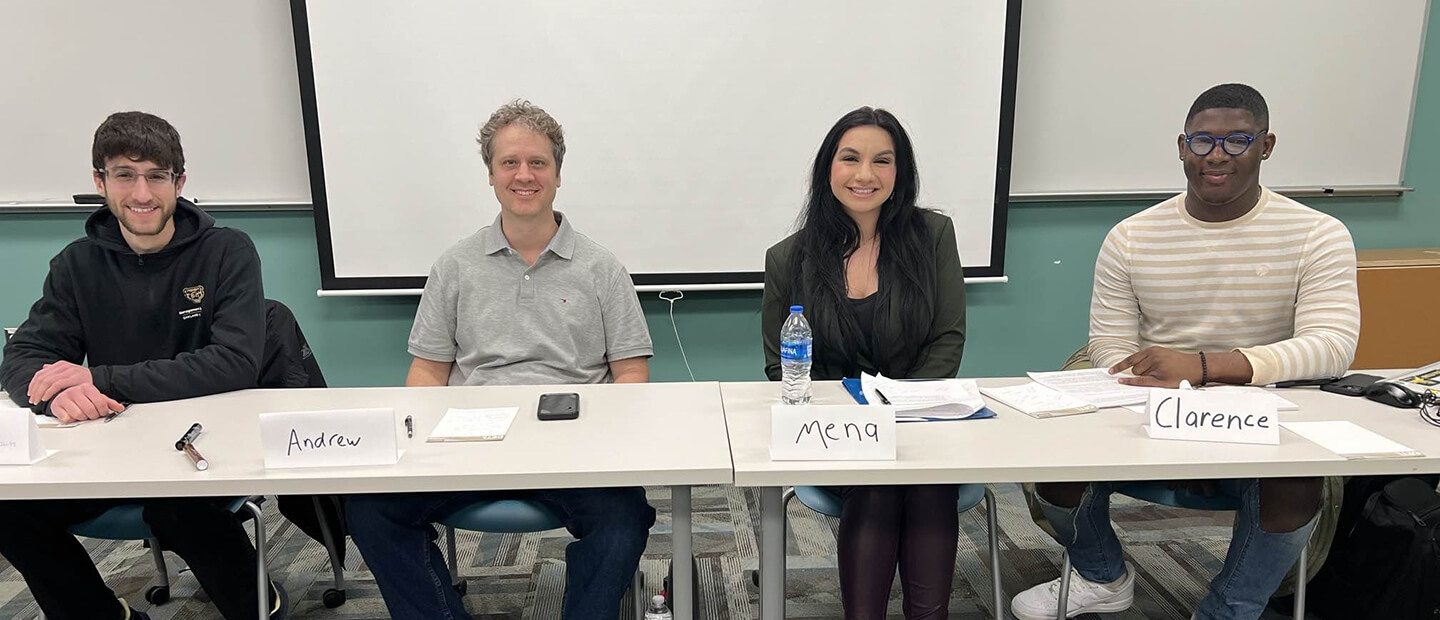
In an ongoing student engagement collaboration with OU Student Congress’ Lance Markowitz, we hosted the second annual student panel, this year’s theme being “collaborative classrooms.” As an extension of this event, we invited the panelists to share their takeaways, key ideas, and hopes for the future as far as student engagement in the classroom. See the entire panel event, and sign up to hear future efforts on cultivating student-faculty collaborations in teaching and learning.
Facilitating Connection through Transparency
Lance Markowitz, Junior majoring in Spanish and General Management, Commuter Chairperson of Student Congress
Active learning promotes so much more than critical thinking in the classroom. Group/partner work, review games, and class discussions help foster a culture that increases student connection, in opposition to lecture-heavy classes, where students rarely learn their peers' names. Active learning also helps make faculty more approachable as it creates a classroom environment that feels less hierarchical than class-long lectures.
Transparency is crucial, however, in ensuring the effectiveness of active learning. One Harvard study (which is congruent with anecdotal evidence of OU faculty), found that students' reported learning more when lectured to, in contrast to their tests which revealed that active learning led to higher scores (Deslauriers et al., 2019). It is paramount that students understand this phenomenon to reduce unnecessary pushback.
Growth in the Classroom through Human Connection
Andrew Cadotte, MBA, class of summer 2025; Graduate Research Assistant, President of Graduate Business Leaders, member of the newly formed Graduate Student Advisory Council, member of OASIS.
What are we looking for as students? Obviously, we want to receive that piece of paper upon graduation; however, on the way to that end, what do we want? Personally, I want to grow, to be inspired, to learn about the many amazing career opportunities that are out there. A significant amount of our time spent as students is either in the classroom or doing class related activities. Therefore, our professors have a tremendous opportunity to impact our lives. Yes, there is a certain amount of material that must be covered, but is that everything? Are we there just to tick the boxes of what we learned? Unfortunately, the classroom and related activities are often among the most dry and lifeless aspects of our college experience. As a result, many of us approach it with a just-get-it-over-with approach. Is there nothing more to college than this?
Professors who invested years of their lives in their studies and in their professions should be like goldmines for knowledge hungry students. So where is the gap? In addition to ticking the boxes of material that must be covered, how to foster human connection in the classroom? In my experience, whenever I feel connected to the people around me, I am in the most conducive state to learn and grow. I think that each professor has to experiment, to explore and discover how best they can foster such connections, both among students and between students and professor.
Strengthening Engagement through Student-Instructor Relationships
Mena Hannakachl, Professional and Digital Writing major senior, Embedded Writing Specialist, Peer Mentor, and an Admissions Ambassador
Fostering a student-instructor connection that extends beyond class material and content can be beneficial in increasing student engagement. When students are more connected to their instructors, they tend to be more motivated and interested in their learning, which often leads to mentorship and collaboration. Moreover, focusing on relationships in the classroom can also foster connections among students. Instructors assigning assignments that involve their peers can promote community building, where students know each other. This can lead to better student engagement and a strong sense of belonging.
Additionally, rethinking grading methods and assessment can make a difference in student engagement. Providing a space where students aren't overly concerned with their grades creates a better learning environment. For example, implementing “low stakes” assignments can invite students to attend class, seek help, and offer feedback to their instructors.
Save and adapt a Google Doc version of this teaching tip.
Others may share and adapt under Creative Commons License CC BY-NC. View all CETL Weekly Teaching Tips. Follow these and more on Facebook, Twitter, and LinkedIn.

Building Generative AI Literacy: First Steps for Faculty
I just returned from a NEH-funded workshop in NYC where a dozen leaders from language, literature, and writing organizations were charged to create guidance on Critical AI Literacies for students, educators, departments, and institutions. Fortuitously, I was assigned to the team who drafted advice for faculty. Our working paper 3 won’t be released until Summer 2024, but you will find working papers 1 and 2 and other resources by visiting the MLA-CCCC Joint Task Force on Writing and AI.
Learners are privy to increasingly sophisticated technology like generative AI (GAI), and they will be expected to employ these tools in their professional lives. Within this quickly evolving context, our move is to shape how we and our students understand and use GAI by modeling curiosity and experimenting. Cultivating our own critical GAI literacy can help us prepare for the changing landscape GAI brings with it.
Conceding the Challenges
Before I articulate specific strides faculty can take to move from fear or frustration to the familiarity necessary to create coherent classroom practices and institutional policies about generative AI, I must concede that the challenges are real and fall disproportionately upon individual educators, most of whom are not AI experts.
- We are playing catch up in a fast-moving tech arena most of us did not choose to enter.
- The cognitive load–and let’s not even discuss the jargon– is high.
- The stress is real, as some see generative AI as a challenge to our values and viability.
- AI detection alone is not an easy fix. While these tools “present a main bias towards classifying the output as human-written rather than detecting AI-generated content” (Weber-Wuff et al, 2023), errors occur in both directions and have weighty consequences. If you suspect AI use, talk to your student, ask questions about the process, etc. For more on how one such tool works, see e-LIS’ Copyleaks and AI Content Detection FAQs.
- Institutions are slow to provide guidelines to support instructors in adapting to the GAI world (Moorhouse et al., 2023, p. 8).
Strengthening Your Own Critical GAI Literacy
Even though we are playing catch up in the generative AI (GAI) arena, we can strengthen our knowledge of these quickly changing tools. Articulating what you know and what you are curious about discovering is a good first step and can help you consider ways you can experiment with GAI as an individual user and as an educator.
Be Curious about GAI
Understanding how GAI works is paramount. Basically, GAI “refers to a class of AI models that generate seemingly new content in the form of text, images, or other media” (Susarla et al., 2023). As deep language learning models (LLMs), they are trained to simulate human language based upon patterns across the training data. More simply, GAI doesn't think and it isn’t good at filtering bias or determining quality in the face of quantity, but it does address some ideas better than others. Reading questions and answers other faculty have asked and responded to may help answer some of your questions and clarify key terms and issues about usage.
Design Effective Prompts
Finding ways to get the desired search outcomes requires some thought about how to phrase your search question. More simply, the output that you receive really depends on the terms you type into the search bar. The input quality, just like in any field, dictates the output quality. GAIs may also not be able to provide current information, so this may influence how you design assignments or choose current topics for research.
For example, I had my first year writers pose their research questions to ChatGPT and compare the results to what they’ve learned. Each student interviewed an expert and reviewed scholarly discussions of such topics as how the NCAA’s 2021 interim policy on name, image, and likeness (NIL) has affected college sports, particularly here at OU. What happened? Students experienced different findings. One student received results for NIL that were incomplete because ChatGPT is about a year behind (the cutoff is April 2023) and this rather new policy is still evolving. Moreover, the chatbots cannot address OU phenom Jack Gohlke and his NIL deals, so students will have to tailor their own topic to an OU context.
Think of GAI as an intern who needs specific instructions to net the desired outcomes.
If you want a summary instead of an outline, including that info in the chat box is essential. Other good suggestions for improving your prompt include the following (Arizona State Universities Libraries):
- Give detailed instructions and state format, length, tone, etc…
- Provide some context (i.e., time period, conditions, higher education)
- Add a role (i.e., community director, biology professor, researcher)
- Keep refining your phrasing after a reply asking the system to revise for more specifics
Example
Initial Reply: Please act as an expert academic librarian. I am writing a paper about climate change and am looking for 10 resources about Lake Michigan pollution levels during the 1970s-1980s. Follow-up Reply: Great. Now provide me with 20 key words or phrases that I can use to look in library databases and/or through a Google search.
Note on Student GAI Use:Before asking students to use GAI, please caution them not only about the extent to which they can appropriately use GAI and the potential for inaccurate or biased results. Students need to understand that the companies that own the tech are collecting information on users and that the information added to a chat exchange may become part of the LLM’s training set.
Experiment with GAI
Becoming GAI literate involves more than honing your basic understanding of how it works and examining research studies on different aspects of its use. Becoming a user—if only for research purposes–is an important step in building your ethos.
People have mixed feelings about AI usage with regard to comfort, need, and/or understanding. Some just aren’t curious about how GAI can save labor or help with writing better assignments. However, in the absence of first hand knowledge, we tend to draw inferences that may or may not be true. If we are going to hold students accountable for ethical uses of GAI, we have to consider how it works, how students can use it, and ethical issues that come into play.
Some educators have already started experimenting with GAI in their courses. On the MLA-CCCC Joint Task Force on Writing and AI website, you can find a community collection of teaching reflections that show how faculty are experimenting with embedding GAI. One researcher investigated how GAI can assist with writing literature reviews; others explored plagiarism issues, institutional policies, teaching voice and tone, and co-learning opportunities. Experiment with a program below by using it yourself or embedding it in a course and then reflect on your findings to help you pinpoint strengths, flaws, and the possibilities of using GAI in your own courses.
Concluding Thoughts
Increasing our knowledge of GAI, posing questions to a chatbot, and resisting quick fixes do not equate to a policy, but these steps will position us to frame the dialogue about Critical AI. And, they just might improve our blood pressure!
References and Resources
Generative AI in Academic Writing (A resource from my colleagues at UNC that you could share with your students or tailor to your own needs.)
Generative AI tools and assessment: Guidelines of the World’s Top-Ranking Universities (Weber-Wulff et al., 2023)
The Janus Effect of Generative AI: Charting the Path for Responsible Conduct of Scholarly Activities in Information Systems (This article by Sursarla et al. (2023) also addresses the role that GAI might play in the academic research process.)
MLA-CCCC Joint Task Force on Writing and AI
Testing of Detection Tools for AI-Generated Text (Moorhouse et al., 2023)
Save and adapt a Google Doc version of this teaching tip.
About the Author
Sherry Wynn Perdue is the Director of the Writing Center at OU and President of the International Writing Centers Association. Her research publications address dissertation supervision, graduate research support, and RAD research. When not teaching, consulting, or writing, Sherry enjoys hiking with her husband Don and their Standard Poodle Pike, both who admittedly spend too much time waiting for her to finish a sentence or a paragraph.
Edited by Rachel Smydra, Faculty Fellow in the Center for Excellence in Teaching and Learning at Oakland University. Others may share and adapt under Creative Commons License CC BY-NC.
View all CETL Weekly Teaching Tips. Follow these and more on Facebook and LinkedIn.
Center for Excellence in Teaching and Learning
100 Library Drive
Rochester, Michigan 48309-4479
(location map)
(248) 370-2751
[email protected]


Center for Excellence in Teaching and Learning
100 Library Drive
Rochester, Michigan 48309-4479
(location map)
(248) 370-2751
[email protected]