Success Stories
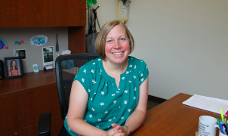 |
Sara Webb, Senior Director, First Year Success, gets real about fitting in fitness. Sara's story
For many on the journey to wellness, there is usually some big motivator keeping them on the path. But for Sara Webb, most of what she does comes from discipline, not motivation. Her physical health journey began when she started running in college. When she had kids she found it hard to continue with that path until Becky Lewis, Associate Director of Programs and Administration for Rec Well, introduced her to Beachbody. She even still uses it today — now just called BODi — but without her discipline and the routine she has it would be much harder. “This is just what I do. So there isn't an excuse or a reason not to, it's like my alarm goes off at five I get up and I do it,” Webb says. “And so that discipline is just a really important part of how you keep a habit like this going. Because if it was about motivation, I would have stopped a long time ago.” For Webb, this routine includes getting up at 5 a.m. Monday through Friday to workout and then walking on the weekends. Working out at home, she uses the BODi app which includes a mix of cardio, strength training and yoga. A big part of working out at home for Webb is less distractions, waking up at 5 a.m. simply because no one else is up. She is able to knock out her workout and then get on with her day at work, which she keeps separate from her home life. “Home is home. I really try to break down that barrier. When I leave the office, it stays in the office and it'll wait for tomorrow when I come back,” Webb says. “And that I think just helps balance your life in general and the different components of your life that don't always have to necessarily mix together,” she adds. It does help that at work Webb does feel great with the people she works with and the culture of her department. The team comes together to support each other and care about the work they do, and while home is separate she says it does feel like home too. |
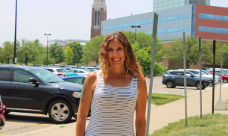 |
Lauryn Miceli, Web Architect, Communications & Marketing, from a Couch to 5k program to completing over 10 marathons. Lauryn's story
While she may have always been an active person, it was during college where Lauryn Miceli picked up a hobby that would follow her the rest of her life: running. What started as a couch to 5k program during college has turned into over 10 marathons up to this point. She’s currently training for the Chicago Marathon, where her regimen involves running six days a week with one long run (which is about 21 to 22 miles). The goal wasn’t always to run marathons, as Miceli initially started running to lose weight in college. “I remember the first time I ran an hour I was so excited. It was just on the track and I just ran in circles for an hour but I remember calling my mom,” Miceli recalls. “I was so happy and then I started thinking about races and the first one I did was just a 5k that wasn’t timed or anything.” Now it not only is something she enjoys but she feels the positive effects it has on her health. “I can feel a difference if I’m not running or if I'm not eating well… I just like the way I feel and I want to continue to be able to do these things,” she says. “A big part of why I continue to exercise is to manage stress. Running, in particular, has always helped me to relieve stress. It can be meditative as well, a time when I can clear my head,” she adds. Part of the fun of running for Miceli is the fact she is able to be social and run with people she knows. During COVID-19, most group runs were canceled and it was hard to stay motivated so Miceli took it into her own hands to create her own race for her and her friends. “I've always wanted to run my birthday years in miles and this is the time to do it,” she says. “[It gave] me something to train for and then I won't be so disappointed that everything is canceled.” Nowadays she runs right on campus the days she is here, but her favorite is the dirt roads close to where she lives. |
 |
Khalil Roy, Pre-Med Student, self reflection is key Khalil's story
Two priorities for pre-med student, Khalil Roy, are his mental and physical well-being. Through clubs like ECLIPSE (Explorations in Collaborative Leadership and InterProfessional Education) and the men’s volleyball club, he is able to regularly work on these areas of his well-being. He has been in ECLIPSE since he was a freshman and has played volleyball since he was a sophomore. When it comes to his physical health, one of Roy’s main motivators is the future and wanting to be mobile and active later in life. He has seen firsthand how hard it is for loved ones to lose their mobility when they get older which is why eating right and being active now is necessary. When it comes to his mental health, Roy practices mindfulness throughout the week by self reflection and journaling with an emphasis on consistency. One of the biggest things that Roy works on is acknowledging the low points that he has and using them as stepping stones to achieve the greatness he has set himself up for. “Recently I started therapy, just to like, try to unpack some things that happened in the past,” he says. “It wasn't what I thought it would be. But it was good that I went anyway… I had a skewed mindset about a lot of things.” |
 |
David Pitts, Assistant Director of Membership and Facilities, balance among many hats David's story
When working in a Recreation setting, one would think being able to stay active and well would be relatively simple. But in reality, it takes hard work and dedication to do what you love, just ask David Pitts. Pitts stays busy at his role with OU Recreation and Well-Being, but that isn’t all. He likes to say that he has three full-time jobs; his position at Rec Well, a photographer and being a father. “I like to differentiate throughout the day. I think change is good. So I have my Rec hat on throughout the day, and then I'm able to do something else,” he says. “I think that allows me to continue to do this job, allows me to refresh.” Luckily for Pitts, he loves doing what he does and his positive energy and productivity are what enables him to continue to feel great at work. The noises of the basketballs bouncing and patrons laughing are essential to him. Working at the Rec was something Pitts was chasing his entire professional career, whether he knew it or not. He cites that whenever he has been around the Rec Center, as both a student and staff member, he has been in his peak physical and mental shape. “The entire time I was gone, I remember always comparing where I worked to Oakland,” he says. The Rec provides Pitts with plenty of opportunities to pursue his wellness alongside doing what he loves. He highlights the employee wellness programs, like pickleball and a golfing event, as well as the freedom to go on a jog or walk to refresh the mind and body. He believes in a work-life balance and that well-being is a combination of being whole, whether that comes from physical stimulation from things like hockey or mental stimulation with his drawing or photography. He is able to do it with precise scheduling and recognizes his wife who is a support system for him. “I’m very much a free spirit… but as I matured in life, I had kids and I’m married, I realized that it’s not just my schedule,” Pitts says. “You just have to have a good support system and balance.” And with that, a majority of his motivation comes from his kids. He wants to be able to stay active and do things with his two boys and eventually with his grandchildren. For him, it’s all about being a good father. “I measure my success in life by how good of a father I am, not money, not jobs. And I think because I had a really good father,” Pitts explains. “My father was a very athletic person, but he had dealt with addiction in various ways. And so later in his life, he was unable to do a lot of the things that he wanted to do.” “That is a motivator for me to not do that. Love my father very much but he had his demons and I don't want my children to see that. That's why I get up every day. That's why I do what I do.” |
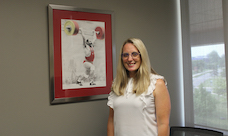 |
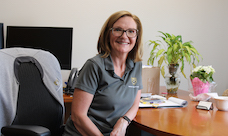
Elise Brown, Associate Professor, Wellness & Health Promotion, an everlasting journey Elise's story
One of the hardest things people struggle with when it comes to wellness is being able to define it. But for Dr. Elise Brown, it comes second nature with her background in exercise science, psychology, health promotion and even competing in weightlifting. “I really just think of it as a general feeling of overall health and happiness and having a higher quality of life,” Brown says. “Some people view it as being a state that you try to achieve, but most researchers view it as a verb like wellness behavior. So it's just a process rather than actually a state.” For Brown, there was never a career in mind but rather just an area of study she was interested in. That took her through multiple different opportunities like personal training right out of her bachelor’s degree, interning and competing with LSU Shreveport and starting her own YouTube channel The Diabetes Resistance. “It's been an interesting journey and I'm thankful for all the experiences and the mentorship that I've gotten along the way,” she says. On this journey, she never lost sight of her own personal wellness and goals. Her motivation is simple; she knows that she has to be functioning at a high capacity and take care of herself in order to achieve all of her goals. Taking care of her well-being comes in many shapes and sizes, going beyond just the physical, although she is a little biased towards the exercise side of things. “I think with exercise it does play a role with body image, it plays a role in my confidence, and then I also know what motivates me to keep doing that is also that effective stress reduction,” Brown says. Working around the wellness wheel, exercise has always been ingrained in her with high energy on her side. She does a balanced variety of exercises, and even crosses over into her intellectual wellness when learning new sports like pickleball and snowboarding. She also tries to eat a balanced diet, with one vegan, one vegetarian and one meat meal a day. Tying in with nutrition, she is a social person who goes out to eat with friends during the week, and emotionally keeps stress low with exercise and helpful mental check-ups throughout the day. “Breathing exercises have helped out quite a bit. I have reminders on my phone set throughout the day, just to remind me just to take a few breaths, check in with how I'm feeling,” Brown says. “That's probably the area that I need to do a better job of, like really ingraining it into a routine.” Even though she is an expert who has studied the area almost her whole life, there are still areas she feels she needs to work on, thus supporting her definition of wellness being a journey and not a state. |
 |
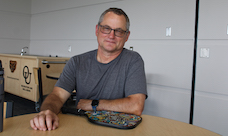
Lisa Rhoades, Coordinator for Veterans Support Services, working with a great philosophy Lisa's story
While some need a spark to ignite their passion for well-being, for Lisa Rhoades it has always been that way, pursuing not only quantity of life but good quality of life. Rhoades, the coordinator of Veteran Support Services at OU, is an avid runner who has been walking and taking aerobics classes since as early as her 20s. When it comes to OU’s employee programs, Rhoades likes the “Rec Well philosophy.” “I love that it's there for me. I did a ‘Couch to 5k’ last year, even though I run half marathons, I just needed something different. And I wanted to run with other people and get to know other runners on campus,” she says. “It made me a stronger, better runner and honestly I was really surprised by that. Because I've been running for 15 years, but I needed to do something different and I'm so glad I did. I've increased my pace, I can run longer for stretches because I'm an interval runner,” Rhoades adds. Rhoades also participates in the Annual Poker Walks, as well as the pick-up Pickleball games that are offered by OU Rec Well. Aside from physical well-being, Rhoades believes that well-being is an all-encompassing part of your life including spiritual, emotional, physical, and even relationships. When it comes to the mental and emotional side of it, she is able to feel great from her work. “There's just a real positive, caring group of people and that makes me want to come to work every day,” she says. |
 |
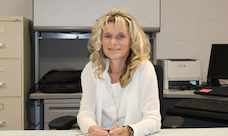
Joel Norgaard, Structural Manager, Operations and Maintenance, exploring well-being with friends and for family Joel's story
In the life of operations and maintenance, you have to be able to stay on your feet for long hours and be ready for physical labor at all times. But that doesn’t mean the physical work has to interfere with the physical play, and for Joel Norgaard he is able to get his fix of both at OU. Norgaard is a regular for the employee wellness programs, his main thing lately being pickleball. What started only a couple of years ago has turned into part of his regular routine, playing it during his breaks over the summer whenever he gets the chance. In the past, he didn’t need to worry about his balance or coordination. He is used to walking up roofs and walls all the time, but as he has gotten older, he has noticed a shift. Luckily for him, pickleball has helped him stay light on his feet. “I truly have noticed that my agility and coordination has come back a bit, because you're running, you’re stopping, you’re hitting,” he says. Norgaard doesn’t play alone, citing other facilities management members as reasons he is so involved. For him it’s a social thing, to be able to play a sport with your friends, but also to be known and recognized by people on campus so they know who is fixing things around OU and that he is available to reach out to. The people he works with help him feel great at work, and the things they all do together contribute to the cause. Things like lunches, barbecues and retirement parties, Norgaard takes it all in and sees it as a family. “It's kind of a family thing. Like once you get to know everybody, it would be heartbreaking to take another job,” he says. “And our shops are very tight. There’s 35 of us and we have cookouts and different things like that. So that would be hard.” He tries to stay involved with everything that Rec Well has going on like the cornhole tournament and the Poker Walk, despite challenges with schedules. He even hopes to see more things added like bigger team sports such as volleyball to try and get more people involved. With all these, Norgaard has his motivators, with his biggest being his new granddaughter a year ago that inspires him to stay healthy and eat well. So whether it be walking to his job site or playing pickleball with friends, there’s no doubt you will see him staying active. |
 |
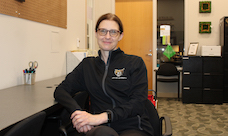
Lisa Hutchins, Senior Internal Auditor, work-life balance and learning new things Lisa's story
Nowadays it can be hard to remain active or awake at work when staring at a computer all day. But for Lisa Hutchins, moving around and staying well is just a part of her job as Senior Auditor at OU. Her main goal is creating a healthy work-life balance, which started about seven years ago when she began working out and doing more activities with her husband like writing together, cycling and going to local parks like Stoney Creek. Her husband used to do triathlons and even though he has retired from that, Hutchins has recently completed her first marathon in April. “Another thing I do is I challenge myself. I have this motto to chase meaning, so find something that's important to you and go after it,” she says. “Keep it as a goal in the back of your head. And it's going to be hard. It might be stressful, hard to accomplish, but in the end it will be worth it.” Of course everyone has their motivation, and for Hutchins it comes down to family and just generally feeling better with her healthy lifestyle. She feels more tired and lazy when she doesn’t exercise or stays active, so she is taking any chance she can to move. “So staying healthy for them, taking care of others and then it all falls into balance with the work-life balance,” she says. “You're better at work. You're able to focus more when you're healthier.” Looking at the work aspect of work-life balance, Hutchins takes advantage of her lunch break to utilize the Group X classes and be generally active during that time. Some classes include the cycle class, arms and abs but she also partakes in the webinars and uses the Rec Center routinely. Her main thing with that is trying to get away from her desk, something she did not always do. Her boss sparked the change, going on his lunch break to do things like play racquetball, and now with the Rec being free for Hutchins she tries to use it as much as possible. These programs are just part of what makes her feel so great at work, in addition to constantly learning new things and the variety of work that she does. “I think that’s part of the well-being; keeping your mind going, learning new stuff. When we do audits they are never the same,” Hutchins says. “I'm all over campus meeting different people. There's nothing routine about the job, we never do the same thing over and over. So that I think makes my job very interesting and challenging.” |
 |
Elizabeth Adams, ESL Coordinator and International Advisor, finding harmony among all aspects of life Elizabeth's story
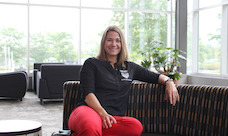
Merriam-Webster defines harmony as a pleasing arrangement of parts, and for Elizabeth Adams, that harmony is a big part of what well-being means to her. To Adams, well-being is a peace of mind where there is a give-and-take in someone’s work life, home life and outside interests. The pursuit of harmony comes in working out seven days a week, walking every day and taking advantage of the Rec Center using the stairmaster. The physical aspect helps clear her mind and think about what she has going on during the day. “I come here during my lunch hour every day, and that helps me process problems, student concerns, in my mind while I'm here.” she says. “Walk in strong, walk out stronger.” At home, Adams focuses on self-care whether that be walking the dog to relieve stress and reflect on her day or meditating and stretching before bed. She cites these as helping her keep harmony in her life. “Harmony is key to reenergizing me and fueling my mind and body with positive energy so I can feel renewed to face the challenges at work and provide the most positive assistance to students and team members,” she adds. Back at OU, she finds her motivation when working out next to the students as they remind her of why she is doing what she does. Asides from general working out, she will also participate in classes at Rec Well where she can relax and refresh from the problems she solves at work and will even brainstorm ideas when taking classes with colleagues. Some of the classes Adams has been involved in are the cycle class, yoga, body blast, shred class and bootcamp classes. Starting with the CARROT app, it would include rewards and added motivation and she’s stuck with it since. This wellness journey has always been a part of her lifestyle, running in high school and actually being an instructor at Bally Total Fitness. She has always been inspired by fitness and also finds inspiration at work through the success of others. “Just seeing how things work out, accomplishing things, even small things. That inspires me that we can make a difference on campus,” Adams says. |
 |
Sarah Jahimiak, Assistant Director for Advising, Interdisciplinary Studies, pursuing wellness but doing so together Sarah's story
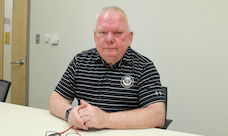
For Sarah Jahimiak, whether it is helping organize for others or doing her own workouts, she tries to bring wellness into the world and the people of interdisciplinary studies. For example, she was on the committee a few years ago to help organize the Matilda Walk. With the programs she helps organize, she tries to get a blend of activity and awareness that students and staff can interact with. For her own well-being, she believes it is a combination of mind, body and spirit that she actively pursues each day. “I try to eat the right things, I try to get up and exercise and get out there, but sometimes it's hard right? So I think you have to give ourselves that reprieve if our body really needs it,” Jahimiak says. “Just engaging with friends, family and having just an overall good life. Whatever it looks like for everybody, so do things that make you happy.” For Jahimiak, that primarily looks like weight training and running at home. Whatever the situation, she has a goal and feels better when she does it, but also doesn’t get down on herself on the days it’s a bit harder. “The days that I reset that alarm, I don't think I feel bad about it but I just know I feel like I can accomplish something today,” she says. While she primarily does her workouts at home, one of the things she has done in the past that she would like to see back is more involvement with the CARROT app. The wellness app would help track fitness and would have challenges that Jahimiak feels could bring people together. That togetherness is part of what makes her feel great at work, doing things on campus with students and staff. While her office is small, she is eager to team up with other groups on campus, possibly with the CARROT app, to engage in wellness. And for her and the staff, the biggest contributor is seeing the students succeed and that sense of accomplishment for helping them get to where they are. “Commencement is our favorite time with us and our students because they've done it and it's been really cool to walk with them on their journey to completion,” she says. |
 |
Terry Dibble, Coordinator and Special Instructor, Exercise Science, understanding the challenge and finding what works for you Terry's story
Walking, meditation and laughter; these are just some of the ways Terry Dibble pursues his well-being at OU. As the coordinator of the exercise science internships as well as being a special lecturer, Dibble finds time for his well-being in order to spend time with his grandkids. “I have grandkids so being able to hang out with them and play with them and just be able to do daily activities and not have to worry about it. That's kind of the main push for me,” he says. For as long as he can remember, Dibble has been meditating practically every day to relieve stress, clear his mind and envision how the day will go. Whether it be at work or at home, he tries to take 30 minutes out of his day to meditate and wishes students would buy into the idea. Meditation, along with his other activities like walking on campus and biking the Macomb Orchard Trail, is how he makes his well-being a priority. Dibble understands that it can be challenging when it comes to working on all the different dimensions of your well-being — emotional, physical, spiritual, occupational, intellectual, financial, social and environmental. “As long as you’re hitting most of them at a high level and some of them it may be a lower level, I think that’s what well-being is,” he explains. Dibble has been working at OU since 2001, and through changing positions, he says he enjoys where he works and being able to talk with students and staff is beneficial to him in achieving high levels of multiple dimensions. Something that has helped him with his quest for well-being has been having the Rec Center available, along with the employee programs. Dibble has hosted several stress management sessions with Rec Well in the past, as well as teaching a course called “Laughter as a Therapeutic Modality,” which is offered to OU students. “I think laughter is one of the key things that I enjoy too, I like to laugh, I like to make people laugh,” he says. |
 |
Lexus Finegan and DaVante Montgomery, OU Credit Union Financial Educators, sharing tips and tricks to manage financial well-being Lexus and DaVante's stories
To find out more about financial wellness and what OU has to offer, two financial educators at OU Credit Union — DaVante Montgomery and Lexus Finegan — share their thoughts on what it all means. “I think financial well being is when you can get to the point where you are comfortable making financial decisions, ‘I know if I make this financial decision, I know that it's going to impact my financial wellness,’” Montgomery says. “Understanding your why, I think that's like the pinnacle of financial well-being because you're comfortable in how you're making those decisions. It doesn't mean that you won't feel discomfort, but that you have the tools to navigate that,” he adds. It can be easy for people to give advice out to anyone, but being able to practice what they preach is a whole different ballpark. But for Montgomery and Finegan, that just comes with the job and experience. In Montgomery’s case, he is an avid believer of writing things down and keeping different labels on his money in terms of how much gets spent on what. He also has learned to not feel guilty for not sharing his wealth and understanding his own limits. For Finegan, it is about establishing different financial goals both short and long term, things like affording trips at the end of the year or establishing a cushion of funds for her family and baby. She also navigates this by taking into account her husband’s financial situation and using them to structure these goals. Each has their own motivation for their journey, Finegan’s being her family and where she grew up — Detroit — and wanting to bring her knowledge to other generations. She will talk to not only her younger cousins and siblings, but also her aunts and uncles to help them understand different aspects of finances. “To be able to go back and let the generation behind me be able to be ahead and have a step ahead of me of where I was at. Makes me feel good. I get endorphins from it,” she says. She will also go back to her high school to inform students on what she did not understand such as the choices you have like paying interest back on your loans while in college. Family is a common motivator and that stays true to Montgomery who wants to stay on the path to financial wellness so he can avoid experiences he had overcome in his youth. With his mom having 12 children, seven of them obtained a college degree and used that precedent and determination to achieve his degree. Financial wellness tips and advice After talking about their personal connection to financial wellness, Montgomery and Finegan wanted to provide some tips when it comes to financial wellness. To start, they broke down the different spending behaviors people can have, such as a giver, a separatist or a YOLO person. The most dangerous of these would be the YOLO person, someone who spends their money too freely without thinking of the consequences of those actions. This is not to say you can’t spend your money, but making sure you are being smart about it. A good way to approach this is to allow yourself a set amount of money each month to spend on the finer things in life. Another important step is thinking about your emotions and how they can alter your spending habits. A general tip Finegan offered for not only financial wellness but life in general was to ask as many questions as possible. Even if you are unsure if the person you are asking has the answer, they may have additional resources that can help. The OU Credit Union has a feature called “Ask an Educator” on their Financial 4.0 website where general questions can be answered. Another piece of advice Montgomery has is to allow yourself grace as the information may not have always been available. “It's okay if you made a mistake or you felt like ‘Hey, I didn't do this right.’... be a lifelong learner,” he says. There are other programs that OU Credit Union offers, like their seminar series, which are geared towards employees and teaches things like navigating Social Security. They have programs on the aforementioned Financial 4.0 website, geared towards college students with online presentations. The last bit of advice is understanding that being financially well does not necessarily mean being wealthy. Finegan highlights that just because someone makes a large amount of money, it does not mean they have anything to show for it if they are constantly spending money. “It comes down to what you're doing with your funds, which makes you financially wealthy,” she says. Montgomery emphasizes that 98% of people one comes in contact with are not rich, but it does not mean they don’t feel financially well. He references a documentary on Netflix called “Living Your Rich Life” where living this life is defined as doing what you want with it. “You can be well and not make a bunch, you can be unwell and make a bunch of money. Understanding that that's why we call it financial wellness, not financially wealthy,” he says. |