‘Success is our collective vision’
OUWB event aims to provide families with greater understanding of medical school experience
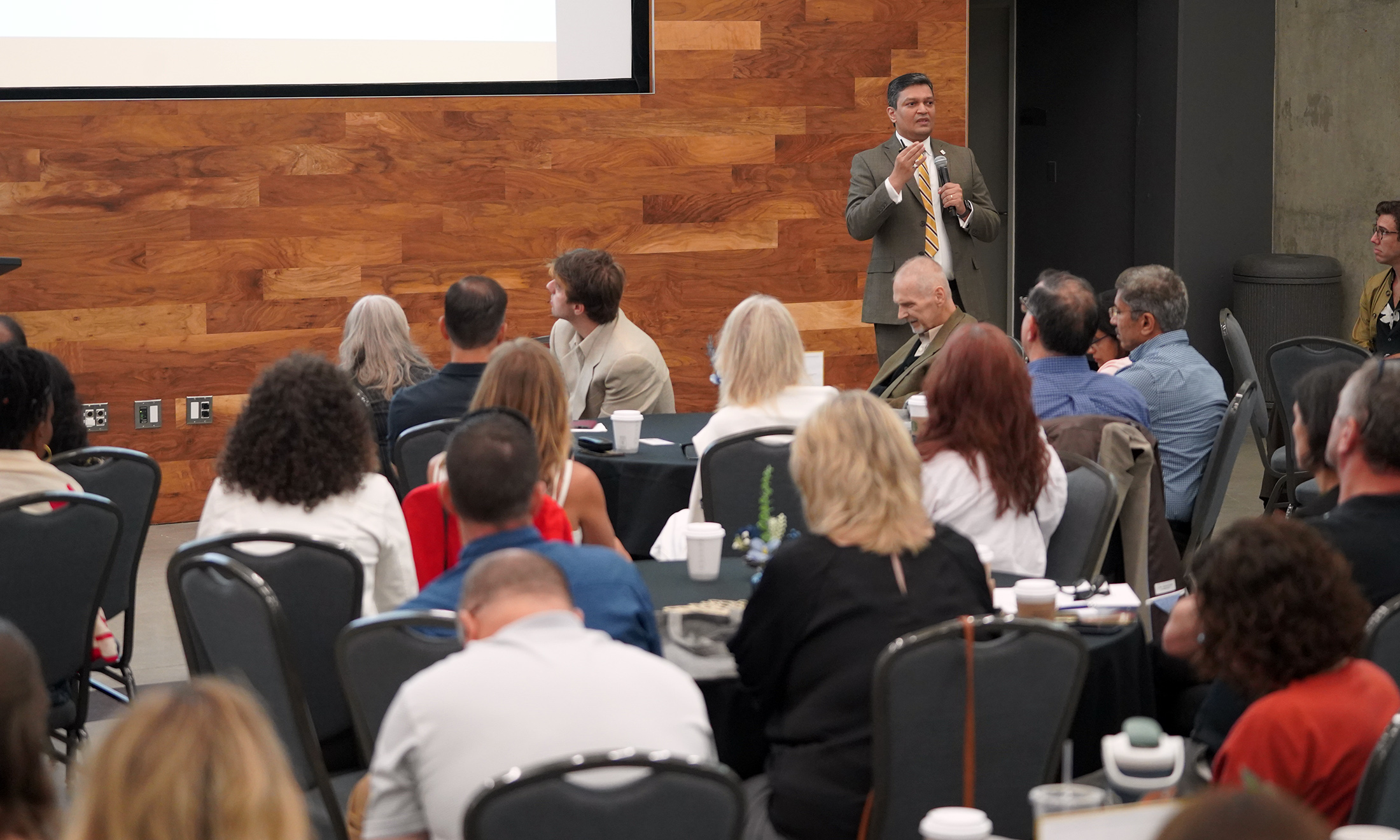
Malli Barremkala, M.D., associate professor, Department of Foundational Medical Studies, and director, OUWB Body Donation Program, talked about the school's anatomy lab and Body Donation Program.
Events
 November 09, 2026
 By Andrew Dietderich
Several hours before her son participated in the 2026 OUWB White Coat Ceremony, Dawn Hanson breathed a sigh of relief knowing her son, Matthew, would be in good hands.
She knew the school would foster a sense of compassion that reflects the kind of person her son wants to be.
She knew more about OUWB’s curriculum and the kind of clinical training Matthew would receive.
And most important for the first-time parent of a medical student, Dawn Hanson knew that the school would support her son.
“Nobody more than a parent wants somebody to have the best interests of their child in mind,” she said. “And I felt that today … it made me feel very comfortable about where Matthew is going to end up four years from now.”
Hanson said she felt all of this after participating in OUWB: The Next Four Years. The event was held Aug. 7 in Oakland University’s Oakland Center, and coincided with the end of orientation for the OUWB Class of 2030. About 200 people attended.
The intent was to welcome families to the OUWB community and to provide a clear picture of what the school’s newest class can expect over the next four years.
OUWB leadership was on hand to talk curriculum, clinical training, financial services, the school’s anatomy lab and Body Donation Program, student affairs, and more.
The OUWB Parent & Family Program organized the event.
“We want to give attendees very transparent information and ideas of what they are to expect for their children and how they can support them best during those next four years at OUWB,” said Claus Weimann, senior director, Philanthropy, OUWB.
“We’re a young medical school and depend on our community a lot … and these parents and family members are our community so we want them to understand what their kids are about to go through.”
‘Our collective vision’
OUWB: The Next Four Years has been a longstanding tradition for the school, though the program has evolved since inception. Originally, it was called Mini-Medical School and parents wore white coats, participated in a team-based learning activity, and even read the Oath of Geneva at the beginning of the day.
Because school officials wanted to deliver more information from an increased number of sources, the program has evolved to what it is today.
Christopher Carpenter, M.D., Stephan Sharf Dean, OUWB, welcomed attendees, and explained how staff, faculty, and leadership from OUWB would talk about how they work to support OUWB students.
“Let me assure you, every one of these individuals you’ll hear from today is not only an expert in their field, but also deeply committed to guiding your students to become competent and compassionate physicians,” he said.
“Their success is our collective vision.”
‘One thing to read about it …’
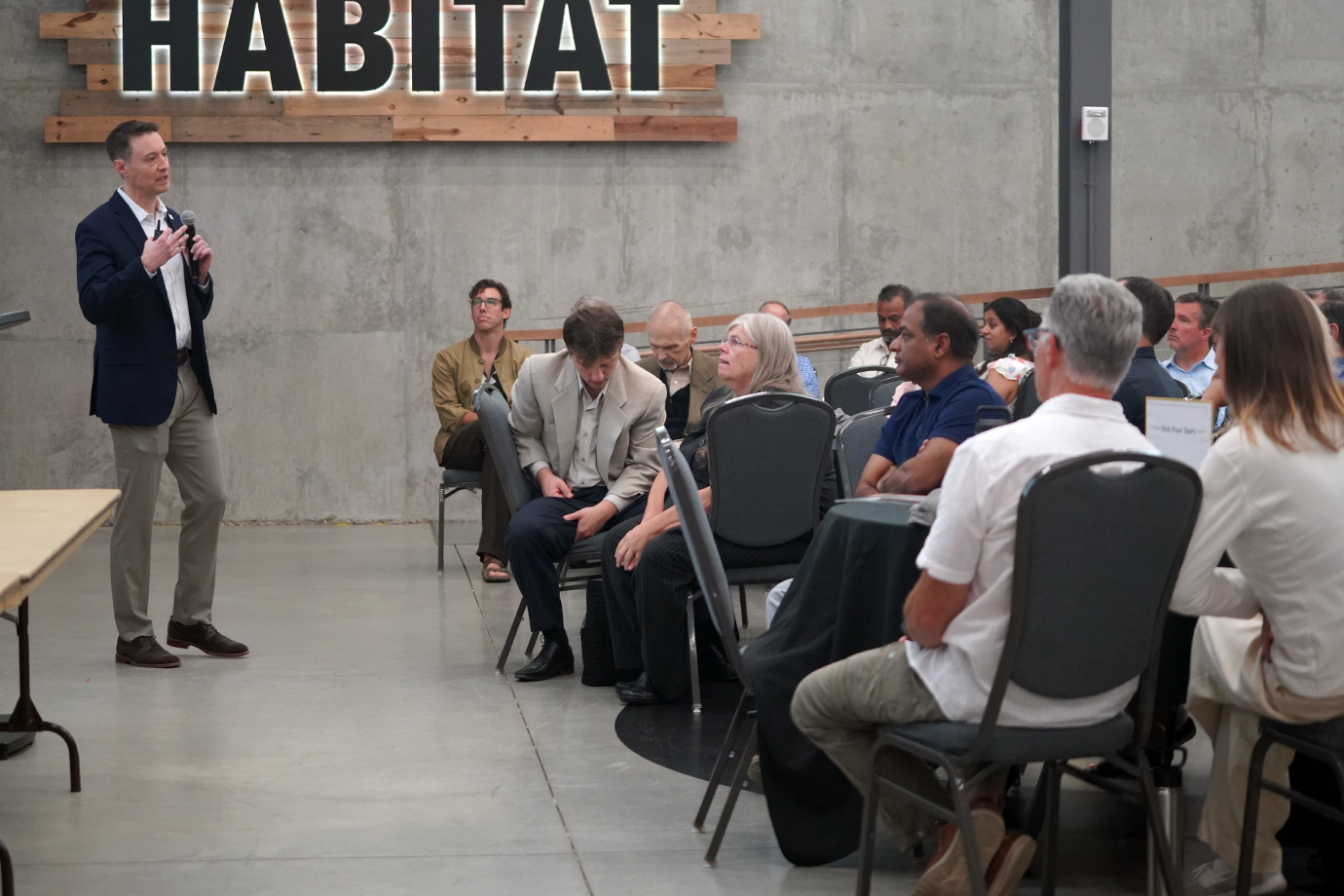
David Thomas, Ph.D., associate dean, Preclinical Education, provided an overview of OUWB’s teaching methods and integrated four-year medical curriculum.
He explained that in years one and two at OUWB, students study foundational sciences and organ systems while taking longitudinal courses in doctoring, ethics, health promotion, research, and professionalism. Clinical integration also provides opportunities to meet health care professionals.
In their third year, students rotate through clinical clerkships on different tracks, including internal medicine, pediatrics, surgery, family medicine, psychiatry, OB-GYN, ophthalmology, and urology. Assembly Days help students reconnect.
In their final year at OUWB, students complete required rotations, including emergency medicine, anesthesiology and pain medicine, diagnostic medicine, and a sub-internship. They also have 16 weeks of electives to shape toward their interests.
After the event, Thomas said it goes a long way towards putting parents’ and loved ones’ minds at east.
“It’s one thing to read about it … but to hear it from people directly, I think, matters more,” he said. “Hearing it from the people who are responsible for the oversight of their students and their experiences is very comforting.”
‘Beautiful and wonderful’
Stephanie Marcincavage, director, Clinical Skills Training & Simulation Center (CSC), and Katie Weyand, assistant director, CSC, talked about the center and how it provides a safe, hands-on place where students build and practice clinical skills and learn to care for patients.
Weyand, for example, explained how students begin using the CSC early in medical school as part of the Art and Practice of Medicine course. The CSC has 16 equipped exam rooms, classrooms, and observation spaces, and that simulation equipment and standardized patients (SPs) help students practice in realistic and supportive situations.
“We’re trying to create a non-judgmental, safe space for students to come in, learn, and receive feedback,” said Marcincavage.
“This is where your students will begin to develop the mindset, habits, and instincts of a thoughtful and capable physician through experiences that feel real,” said Weyand.
They were followed by Abhinav Krishnan, Ph.D., associate dean, Student Affairs and Enrollment Management. He described OUWB’s student affairs as a whole-person support system that guides students from enrollment through graduation. That includes academic and career advising, test prep, wellness support, financial services, mental health, and more.
To round out the event, attendees heard from representatives of OUWB’s financial services, Body Donation Program, and biomedical ethics faculty.
George Xenos, father of first-year medical student Christina Xenos, said he “loved it.”
“I didn’t realize until this event what a tight community OUWB is … that was a very pleasant surprise,” he said. “I am astounded by the amount of support students receive.”
Xenos added that he felt “relieved, for sure” at the thought of his daughter receiving her education from OUWB.
“It’s beautiful and wonderful,” he said.
More from inMedicine