Spicer-Moehring goes to D.C.
How persistence has continually paid off for one OUWB ’22 alumnus
Alumni
 November 09, 2026
 By Andrew Dietderich
For anyone seeking a perfect example of how persistence pays off, they need not look much further than Pamela Spicer-Moehring, M.D.
The OUWB Class of 2022 alumnus was persistent in applying to medical school – it took her three times.
She was persistent in becoming a radiologist – despite what she calls a “bumpy” journey, she stuck with it and is expected to complete her radiology residency next June. She’ll then begin a pediatric radiology fellowship.
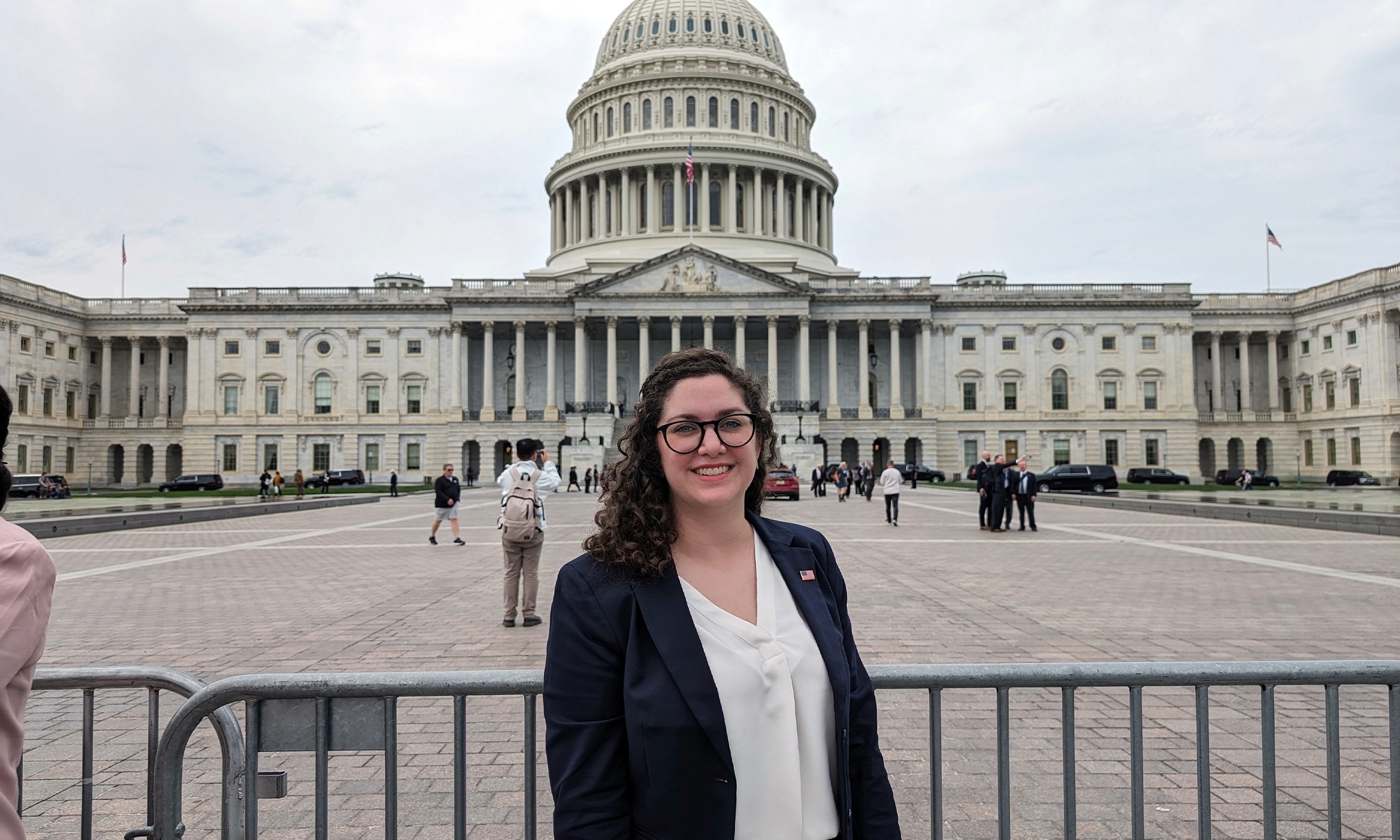
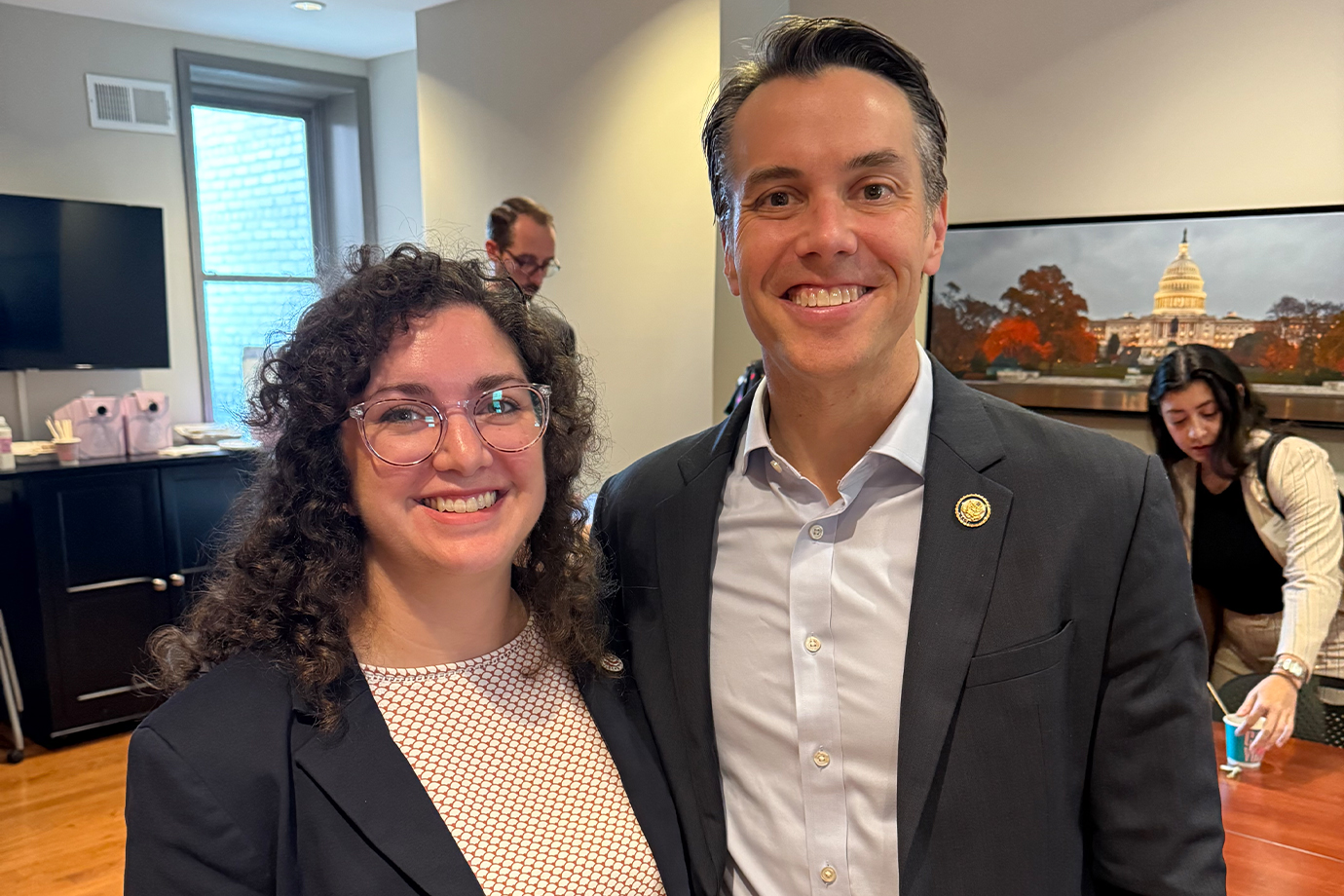
And her persistence as an advocate for radiology-related policy priorities has taken her all the way to Washington, D.C., where she has met with lawmakers on Capitol Hill.
“I feel very validated,” she says. “For always sticking to my guns.”
‘The perfect fit’
Spicer-Moehring grew up in Orlando, Florida. She attended Olympia High School, where she loved studying subjects like biology, physiology, and anatomy.
She considered going into nursing and teaching before her grandfather suggested she think about becoming a doctor.
It didn’t take Spicer-Moehring long to learn about radiology and what radiologists do and “fall in love” with the specialty.
“I was like ‘That sounds amazing, I want to do that,’” she says.
The love was further solidified while working on her bachelor’s degree in biology from the University of South Florida.
As a volunteer at Orlando Regional Health Hospital, Spicer-Moehring ended up helping the X-ray technicians. She mentioned her interest in medicine and was taken to the radiology reading room and was able to meet the radiologists.
“I really like that fact that (radiologists) have their hands in almost every facet of medicine,” she says. “And the longer I’ve been in radiology, the more I’ve realized how vital it is to so many specialties … they really rely on what you’re telling them in your radiology report.”
First, however, she had to get into medical school. She describes the process as “bumpy,” and notes that the first two times she applied to medical school she didn’t get in and attributes it primarily to not applying to enough places. OUWB came onto her radar when she decided to cast a wider net and apply to a greater number of medical schools.
Spicer-Moehring says she was “really grateful” that OUWB gave her the chance to interview.
“It was the perfect fit for me because (OUWB) is more holistic in its application process and I think that helps people who have had a less traditional path or don’t come from a family (who works in) medicine,” she says.
In August 2018, Spicer-Moehring began medical school as part of OUWB’s Class of 2022.
Persistence pays, again
She fondly recalls feeling supported as she transitioned to medical school.
“(OUWB) really tries to build a sense of community right away with your class,” she says. “They want to make sure that your transition into medical school is as smooth as possible.”
That led to some of her favorite OUWB memories – meeting her best friend and forming a close-knit group through anatomy lab.
She also was involved with the Radiology and Radiation Oncology Student Advocacy Group at OUWB and eventually served as vice chair. In 2020 and 2021, Spicer-Moehring received an OUWB Clinical Faculty Scholarship.
She also valued OUWB’s emphasis on service and took advantage of opportunities to volunteer in the community at places like the HOPE Center in Pontiac and at events such as the American Foundation for Suicide Prevention Out of the Darkness Walk and the Amyotrophic Lateral Sclerosis Association’s Walk to Defeat ALS.
Still, she describes her transition to residency as another “bumpy” endeavor. She didn’t match into an advanced radiology on her first attempt and instead served a transitional year at St. Mary Mercy Hospital in Livonia.
She ran into a similar roadblock on her second attempt at matching, but was undeterred with her mission to become a radiologist.
“I was pretty upset and didn’t know what to do. I was kind of faced with this decision of pivoting and going into a completely different specialty or to keep trying,” she says. “I tripled down and said, ‘No, I want nothing else. I only want radiology.’”
“How could I give up on something I’ve been working toward for (almost) 15 years at that point?”
She joined “the unknown of the scramble” and was invited to interview at Jefferson-Einstein Montgomery Hospital in Pennsylvania. She was offered the position – she would be a radiologist like she had dreamt since high school.
Spicer-Moehring says she’s enjoyed the residency experience, especially the range of cases she sees from both urban and suburban patient populations.
She expects to complete residency in June 2027. And she already has a pediatric radiology fellowship lined up at Children’s Hospital of Philadelphia.
‘I never really imagined’
Spicer-Moehring’s involvement in D.C. traces to her transitional year after graduating from OUWB. That’s when she attended the American College of Radiology’s (ACR) annual meeting and learned about “a whole different world of medicine” that one can be involved in.
She took in lectures on topics like malpractice, job contracts and how to negotiate them, and ways to get involved in advocacy. Her interest was piqued and when the opportunity arose to be a resident liaison with the Pennsylvania Radiological Society (PARAD) (the state chapter of ACR), Spicer-Moehring jumped at it.
Her first big project in the role was creating a medical student section of the society, and then she went to Capitol Hill as part of an advocacy day. There, she met with legislators and aides to advocate for issues like increased federal funding for Graduate Medical Education positions, and more.
By 2024, Spicer-Moehring has been named vice chair of the resident and fellow section of the PARAD. Her experience and accomplishments in the position continually grew and in June 2026 she was awarded a scholarship to participate in the ACR’s Rutherford-Lavanty Fellowship in Government Relations.
The fellowship is a one-week, hands-on leadership program based in D.C. and intended to give radiology residents direct exposure to federal and state legislative processes, regulatory agencies, PAC fundraising, and health policy advocacy that could all shape the future of radiology.
“The stuff that I’ve been doing, I never really imagined,” she says with a smile.
Spicer-Moehring says she finds it especially rewarding to help her co-residents understand how they might get involved, too.
“So many things are happening at the federal government level that affects (residents),” she says. “This is all about providing them with the right tools in their toolbox so that they can be aware and if needed, help stop it, start it, or change it.”
Spicer-Moehring says she plans to continue seeking out such leadership positions, and advises current medical students to learn about how they can get involved, too – and to be persistent in what they decide to take on.
“You can affect more change than you think you can,” she says. “Don’t be afraid to try. What’s the worst thing that could happen? You’re told ‘no?’”
More from inMedicine