
Community Engagement|
 October 20, 2025
 By Emily Morris
Counseling Carried into the Community
The counseling program capstone course spreads OU skills throughout the community


Robert Hall
From the course to career, Counseling 6950 Internship in Counseling carries classroom concepts into action with a tailored internship experience. Taught by Rebecca Vannest, Ph.D., along with the Internship Coordinator Hayley Ostlund and other counseling professionals, the capstone course guides students in choosing an internship location, such as local schools, hospitals, nonprofits, private practices and more — honing their craft to specific fields and focuses.
Each placement pieces together specific community needs and the students’ individual strengths, choosing between nearly 150 locations. “Sites will reach out to me because I try to have an active community presence,” Dr. Vannest says. “At the same time, I’m hearing from students, and I’m happy to help make connections.” Students dedicate 600 hours to their internship sites, which both equips them for their careers and supports diverse counseling throughout surrounding communities.
“By the time they’re beginning their internship, students already have approximately seven years of training between their undergraduate and graduate courses,” Vannest says. “They have something to offer, and the sites really value their presence, being able to confidently hand off needed projects and meet client needs.”
 |
|---|
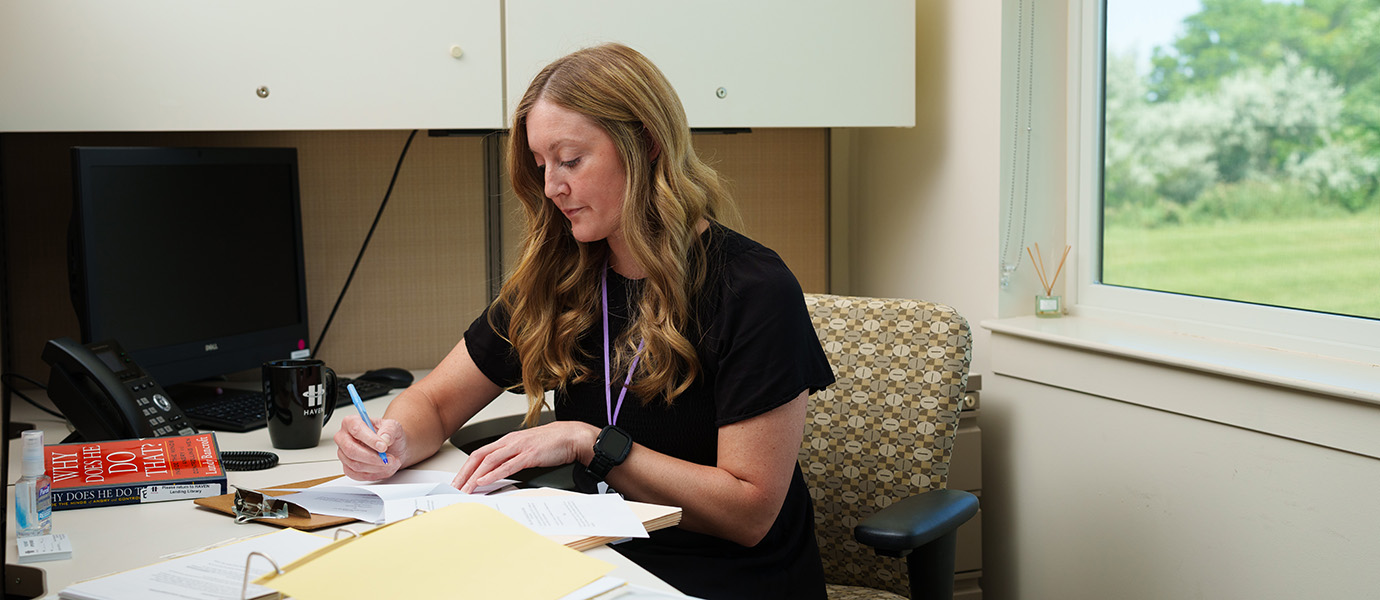
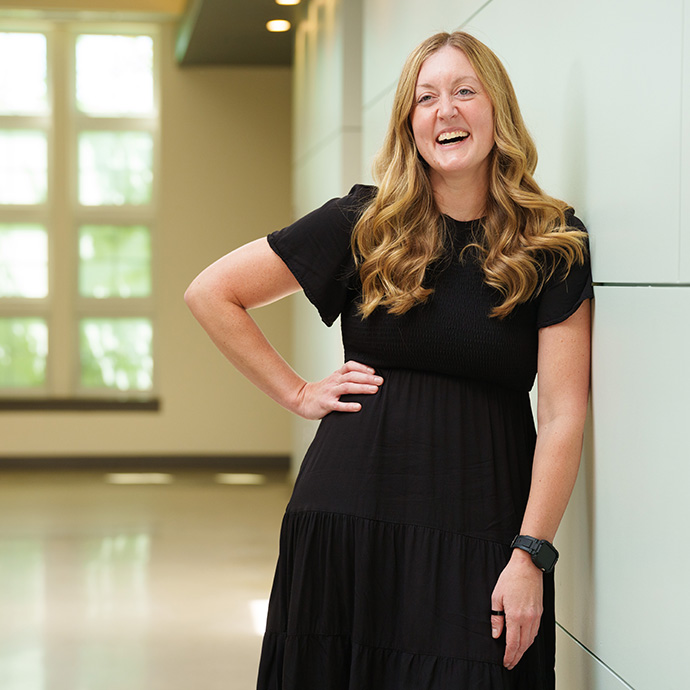
| During her Internship in Counseling course, Alex Wenson dedicated her hours to Haven, a nationally recognized nonprofit leader that provides comprehensive programs to promote violence-free homes and communities. |
Honing the 600 Hours
Approaching capstone studies, counseling student Alex Wenson felt an initial pull toward addiction care. “All through my program I was leaning toward specializing in addiction,” Wenson says. “But I ended up going down a path that I didn’t expect to go down, all for the better.”
 |
|---|
| Counseling major Alex Wenson interning at Haven's Pontiac office. |
Through various mentor conversations, students choose their internships through advice and their unique attributes. Wenson’s compassion and skills lend to an excellent fit with Haven, a nonprofit organization that specializes in domestic violence survivors. “I was not sure if I wanted the same direction for my internship," she says. “But I was so lucky throughout this process; my practicum supervisor specifically really guided the next direction for me, which was Haven.”
Before considering an internship, Wenson completed many supervised therapy hours, always reviewed by a licensed, practicing counselor, who also served as her practicum supervisor. In this process, Wenson’s strengths and compassions were revealed in the details of her client sessions. Ultimately, when internship choices were her next step, her practicum supervisor was primed to guide her seamlessly.
“At the end of my practicum she said, ‘Have you heard of Haven? It would fit well with your style,’” Wenson recalls. “So I applied, and she was right.”
Throughout Counseling 6950, students find their unique callings and build additional counseling connections. Moreover, students develop a dynamic understanding of the overall needs in their locations first, but also the broader community. “But just the structure of the class is especially helpful,” Wenson explains. “There are multiple internships happening at the same time and you get to hear about so many different experiences, on top of your own.”
Helping Haven
In Wenson’s experience, she found a combination of practices helpful, including talk therapy, group work, learning about trauma responses and psychological education, not only working through experiences but also understanding the brain chemistry involved.
 |
|---|
| Alex Wenson chatting with Haven's Director of Counseling Marcia Scott. |
“Our talk therapy really shines in our curriculum,” Vannest says. “Our students tend to have good communication and excellent people skills. They focus on the ability to talk with people, set goals and help them with the problems that they're having. I know that really shines on site.”
Wenson’s career choice clicked while at Haven. Her skills from the curriculum took on a different tone in practice. “Every client I’ve come in contact with, I’m just in awe of their strength and resilience.” The clients she’s connected with solidified her specialization choice.
Haven offered a scope of services that Wenson appreciated. She contributes with various therapy methods, but is supported through a variety of additional aids, even pet care for survivors.
Through the internship capstone course, students are trained to be malleable with transferable skills for any counseling site, and with well-rounded skills, the internship process is tailored to match their passion, wherever it may be.
“In my career, now I know I want to incorporate trauma-informed care, and focus on empowerment for my clients,” she says. “This wasn’t a path that I thought I’d go down, but I’m so thankful I did. I absolutely love it, and look forward to the future.”
Full Circle Counseling
 |
|---|
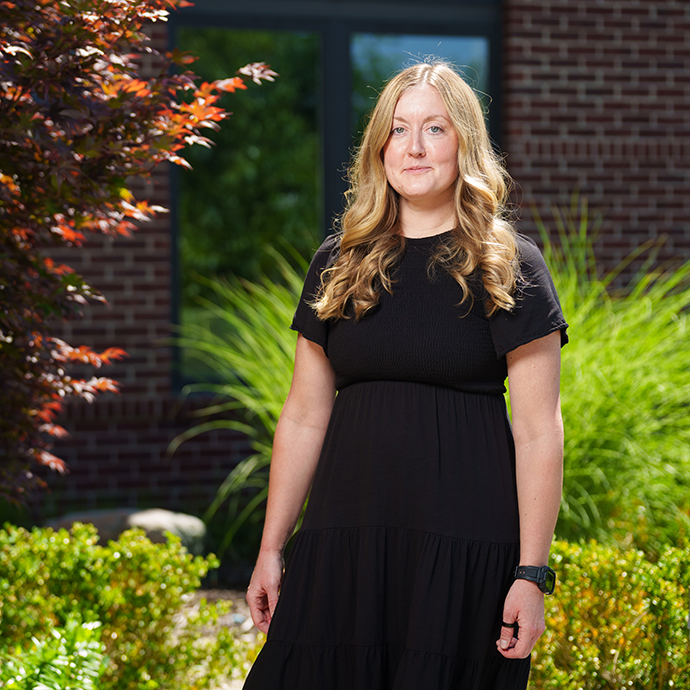
| "Every client I’ve come in contact with, I’m just in awe of their strength and resilience," says Alex Wenson. |
Wenson’s counseling career is derived from a tried-and-true system that curates local counseling and cares for the community: A puzzle of interconnected people. Often students are able to work with graduates of the counseling program too, creating OU's web of relationships that dates back decades.
“We’ve seen some site supervisors that were graduates of OU’s counseling program 15 years ago, and they reach out wanting to guide and give back to current students,” Vannest says.
Years of support in OU’s counseling program create an environment for students to find their path, care for the community and give back to new cohorts of counselors. “I’ve learned this from other counselors and my clients,” Wenson says. “Finding your path is about following intuition and really trusting yourself, your core values, your beliefs — support around you will give you reassurance, and then choices will fall into place.”
“[Our students] have something to offer, and the sites really value their presence, being able to confidently hand off needed projects and meet client needs.”
Rebecca Vannest, Assistant Professor of Counseling
Robert Hall


©2025 Oakland University William Beaumont School of Medicine✎