
Alumni Voices|
 March 23, 2026
 By Emily Morris
Creative Counseling
Rebecca Vannest found inspiration in foundational faculty, and now she’s training the next generation, too


Photo by Robert Hall
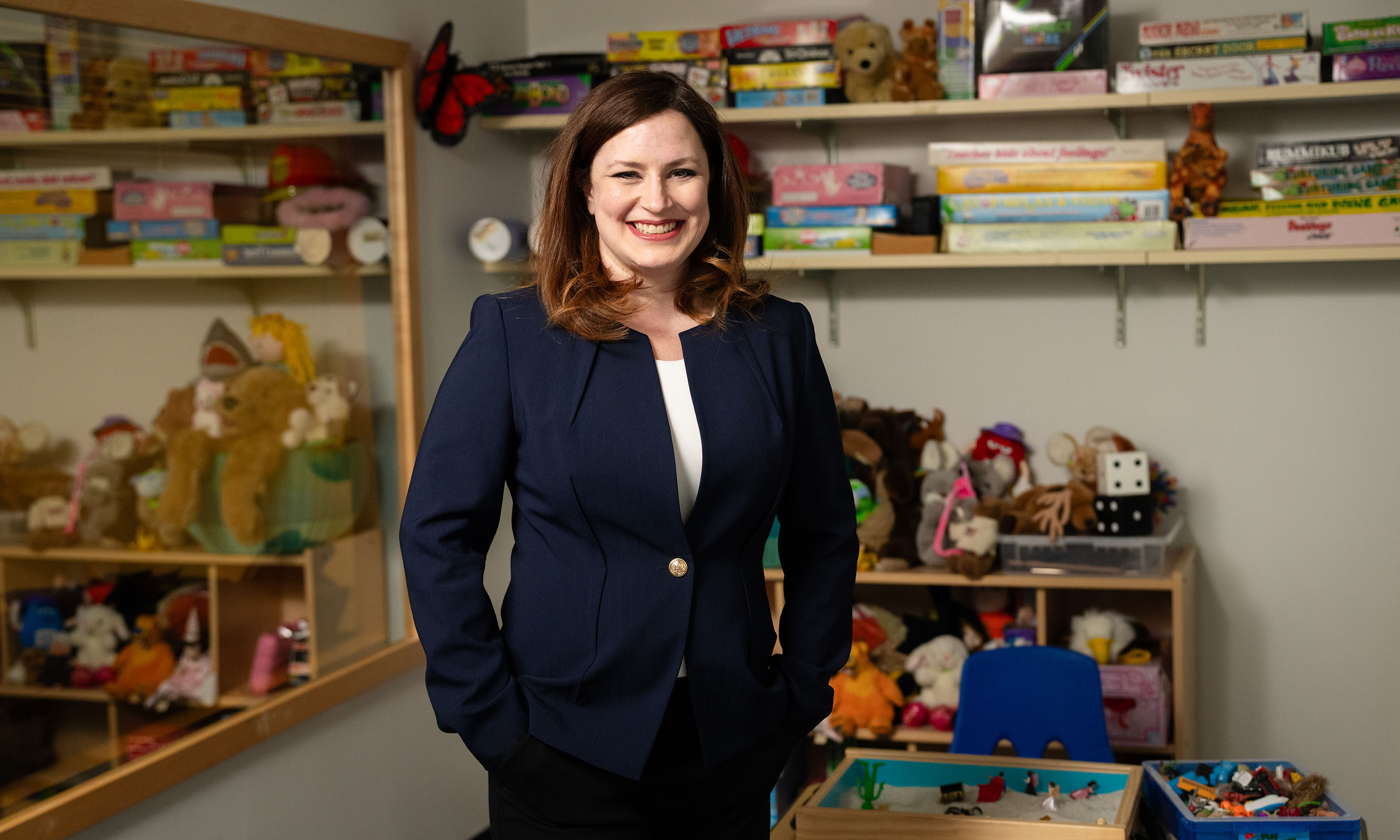
Gritty ripples surrounding small figurines and toy sets littered in a sand box: This is a scene from many backyards, but Assistant Professor Rebbeca Vannest, Ph.D., CAS ’17, uses these everyday objects to pioneer play therapy. Traditionally, counseling can be more conversational rather than creative; play therapy is opening new approachable avenues for children and adolescents to confront traumas in a comfortable, familiar format.
“When working with kids that may have a hard time expressing themselves to get their needs met, they can use miniatures to recreate daily life experiences and process traumatic events,” Dr. Vannest explains. “While they may not be able to verbalize their inner world, play therapy allows them to receive some genuine help and relief from a therapist that’s meeting them where they’re at.”
 |
|---|
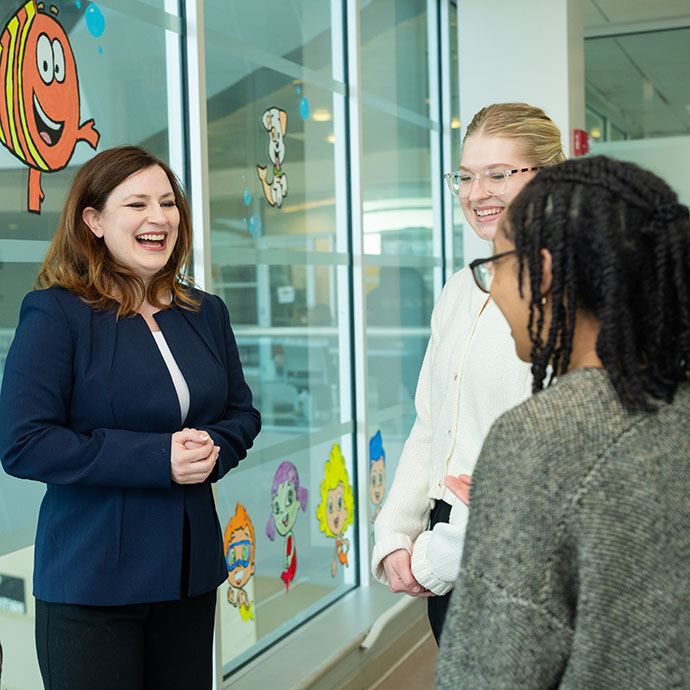
Initially, connecting with children firsthand as a middle and high school counselor, Vannest developed a keen understanding of children’s counseling and the connection that was lacking from some traditional talk methods. In turn, striving to expand her expertise, Vannest pursued a child and adolescent specialization in postmaster’s studies at Oakland University, led by Counseling Professor Emeritus Robert Fink, Ph.D.
During her studies, Dr. Fink noticed Vannest’s quiet, creative contributions to the field through her career but also saw an emerging spark that could flourish further at OU. “He pulled me aside and explained, ‘you really have a talent that could be applied in doctoral work,’” she says. “I was dumbfounded because I just hadn’t seen myself in that light before.”
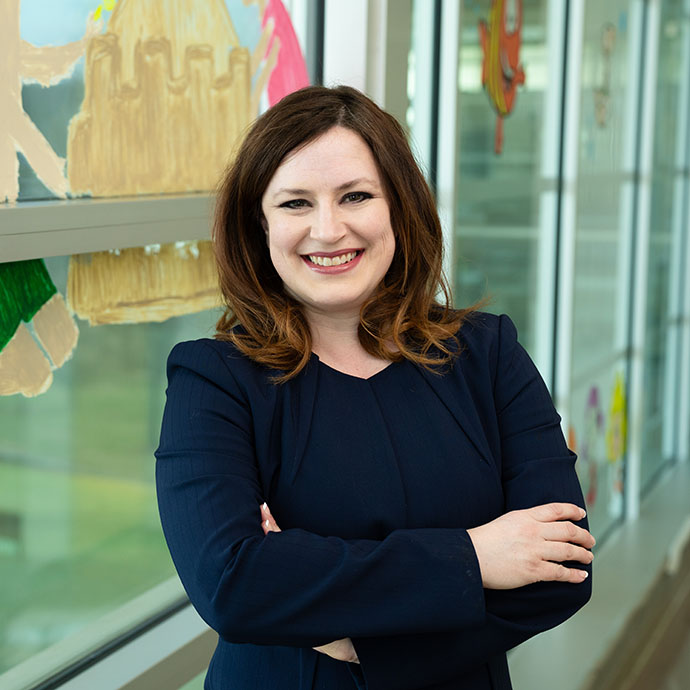
Ruminating on his recommendation solidified her decision to expand her hands-on counseling work by pursuing a doctorate in counseling. Vannest balanced night classes with her counseling career during the day, alternating between theory and application. “I still didn’t fully grasp what I would do next,” Vannest explains. “I knew it was the right time for me, though, and as I was working in the schools and supervising other individuals clinically, I started to have a desire for more systematic change and a louder voice.” The answer had been with her all along: Shifting her career to the university level could provide Vannest the opportunity to impact the next generation of counselors.
 |
|---|
Simultaneously, her mentor, Fink, began to round out his 45-year career at Oakland University, specializing in cutting-edge children’s counseling methodology that initially drew Vannest to OU as a student. Their time at OU overlapped in a seamless handoff, and Vannest transitioned her career to an assistant professor, continuing the impact Fink had on her and many others. “He had an incredible, transformational career,” she says. “While I cannot directly carry on the legacy of his impact, just being mentored by him, taking things forward and putting my own spin on things now — which he’s really encouraged me to do — is really exciting.”
Fink had developed a play therapy program in conjunction with the original Child and Adolescent Play Therapy Program in 1997. Vannest has pushed the program to its current credentials as the Child and Adolescent Graduate Certificate in Play Therapy Program, which was made possible in part by a philanthropic donation made by Fink and his wife, Eileen. “It’s great to see that same passion that was so motivating in developing and running the specialization and to see it going forward,” Fink says.
Vannest continues to develop play therapy with the foundation that Fink formed in the new “Robert S. Fink Play Therapy Room” in Pawley Hall, which opened in 2024.
“I just hope I’m building creativity and openness in the field,” Vannest says. “I’m training the next generation with creative options, and I hope that eventually, they build upon those and pass them on too.”
To support the play therapy progress, please visit OU Play Therapy Fund.
More Like This |


©2025 Oakland University William Beaumont School of Medicine✎