Spreading the love
Meet the first-year OUWB medical student behind a nonprofit that’s already raised $200K for patients in need

Emaad Khan (center), M1, OUWB, started Spread the Love Projects as an undergrad. At the third annual gala in 2025, the organization raised more than $50,000.
Student Success
 March 20, 2026
 By Andrew Dietderich
As a volunteer EMT, Emaad Khan saw a lot of things, but it was one car crash in particular that he just couldn’t seem to let go.
It wasn’t necessarily the severity of the crash — rather, it was how some of the people involved were terrified of being transported to the hospital because of the costs involved.
“I was like, ‘What is happening?’” says the first-year OUWB medical student. “It just didn’t make sense to me. That’s when I started realizing that this is a real struggle for some people.”
So, he did something about it. Specifically, he started a nonprofit.
Called Spread the Love Projects (STLP), the organization is “committed to closing the health care equity gap by providing financial support, essential resources, and preventative care to vulnerable families, with a. particular focus on those facing pediatric health challenges, to improve the quality of life for their children.”
Started in 2022, the nonprofit already has raised more than $208,000. That includes about $103,000 raised in 2025.
The organization also recently announced a partnership with Michigan Medicine’s C.S. Mott Children’s Hospital.
“A large part of it is standing for something that’s bigger than yourself,” he says
‘Scary places’
Khan was born in Pakistan. In 2010, his family moved to Pittsburgh, drawn by a business opportunity for his father.
It wasn’t easy. There were financial hardships, including times when the family had to go without health insurance.
The limited exposure the family had to health care was less than ideal. For example, Khan recalls having to go to federally funded community vaccination centers.
He remembers them as “scary places.” It became his entire association with the doctor’s office. Medicine, in his mind and his family’s, wasn’t about prevention — it was where you went only when something was seriously wrong.
“I never had a pediatrician, never had a doctor … my parents didn’t either,” he says. “If you went to the hospital, you were like terminally ill.”
These experiences shaped Khan’s understanding of how intimidating and unwelcoming the health care system can feel for low-income and immigrant families.
Those feelings were amplified when Khan started volunteering as an EMT as an undergraduate at University of Pittsburgh.
Khan says he volunteered during the COVID-19 almost on a whim and because he “thought it might be a cool way” to help the community when life had slowed down and all he could really do was study.
It turned out to be a life-changing decision.
First, it ignited his interest in medicine. It gave him structure and purpose at a time when he says he hadn’t been very invested in school.
And when he went on runs like the one involving the family in the car crash, it put him face-to-face with families in crisis. He connected those scenes with his own upbringing.
Khan had found his why.
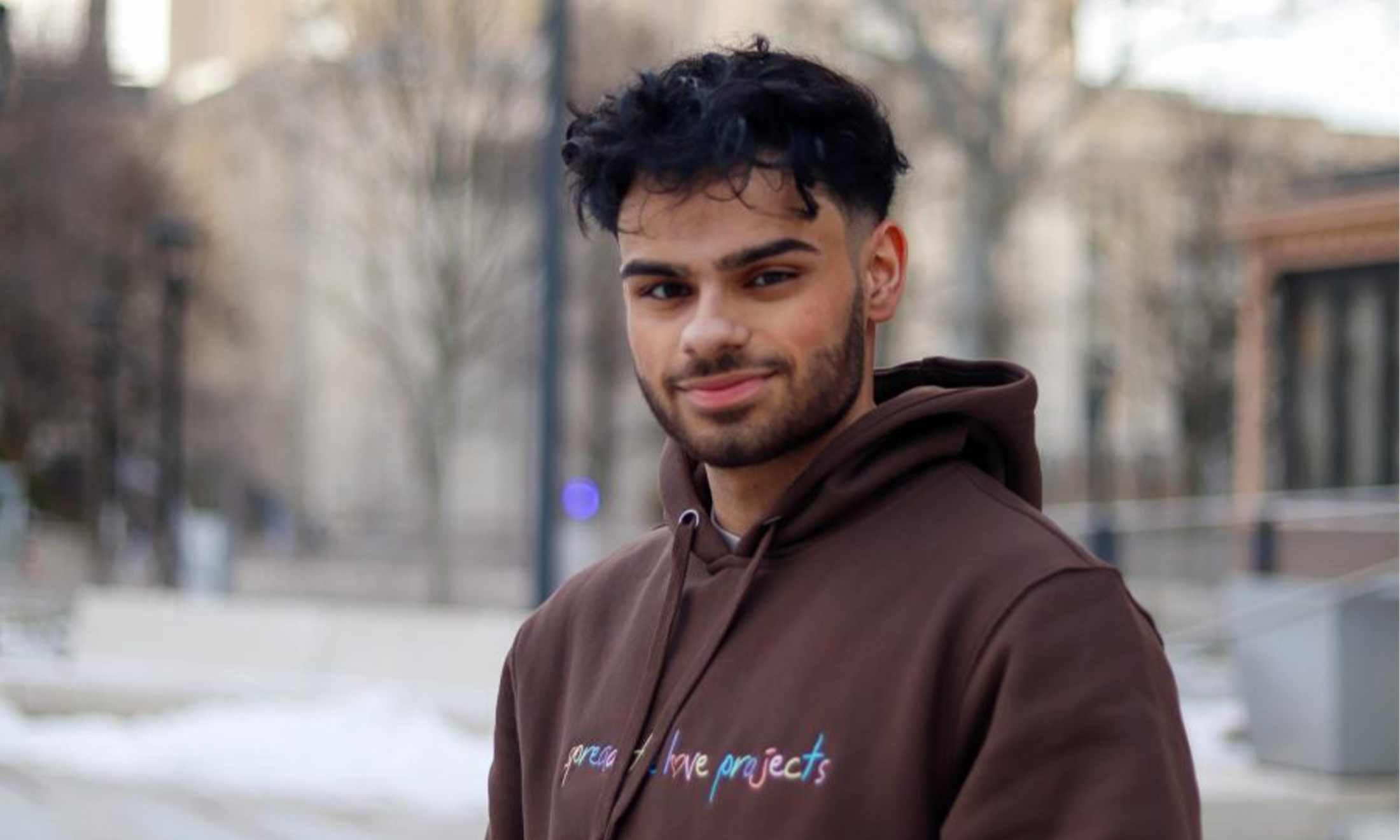 The idea for STLP came to Khan in 2020, but it would take two years before operations began. The idea for STLP came to Khan in 2020, but it would take two years before operations began. |
|---|
‘Someone’s going to bite’
The idea for STLP came to Khan in 2020, but it would take two years before operations began.
Starting from scratch, Khan says he had to learn everything on his own: how to register as a 501(c)(3); how to comply with state solicitation rules; how to deal with basics like tax receipts and donor documentation; and how to effectively reach out to organizations to talk about potential partnerships.
He also had to learn how to deal with rejection. A lot of rejections, in fact.
“I would not get any responses, or they would tell me they didn’t think it was worth the time and that I should shift my focus elsewhere,” says Khan. “It was very frustrating, but I also understand it … I was very young and going into it very ambitiously.”
Eventually, the ambition yielded results.
One day, he made a cold call to the billing line of University of Pittsburgh Medical Center (UPMC) Children’s Hospital. It turned out to be a “big break.”
“The person answered and asked if I needed to pay a bill,” he says. “I told them no and that I was trying to start this project. They actually put me in touch with the right people.”
Khan says hospital representatives “treated me like an adult” and took seriously what he was trying to do.
“That’s when I realized I’m never waiting around for people anymore … you might as well just go do it,” he said. “As long as you have something to offer, someone’s going to bite.”
‘So emotional’
STLP formally partnered with UPMC Children’s Hospital. Today, the partnership remains: STLP works with the community health team to identify those in need and the nonprofit provides financial support so that they can pay for things like rent, utilities, transportation, and more.
So far, STLP has donated $10,000 through the partnership.
It also opened the door for STLP to form other partnerships.
Since 2022, STLP has helped more than 1,500 families, donated more than 1,000 meals, purchased seven vehicles for those in need, paid about $20,000 in rent and utilities, and about $40,000 for basic care needs, such as hygiene products.
“I had just finished my midterm (at OUWB), and I came home and was calculating the numbers and I got so emotional,” he says.
The organization has grown, too. Today, a group of 18 “core individuals” meet regularly and handle day-to-day operations. It’s entirely volunteer-run, which means no one takes a salary, says Khan.
And there are no signs of STLP slowing down.
On Jan. 8, STLP announced a new partnership with C.S. Mott Children’s Hospital. Through this partnership STLP will:
- Support pediatric patients and families facing financial and social hardship.
- Collaborate directly with hospital leadership to identify where community-based support can make the greatest impact.
- Uphold the highest standards of integrity, transparency, and respect for frontline care teams.
“This partnership represents more than an expansion — it’s an opportunity to recreate the same joy, trust, and community that STLP has built over the years in Pittsburgh, now here in Michigan,” Khan said in the announcement. “I’m deeply thankful for the people who made this possible and committed to doing this work the right way.”
More from inMedicine