Creating Community Health Impact
2026 CHIP Projects in ECLIPSE program tackle topics of intercultural palliative care and opioid overdose
InHealth
 July 16, 2026
 By Jillian Wolf
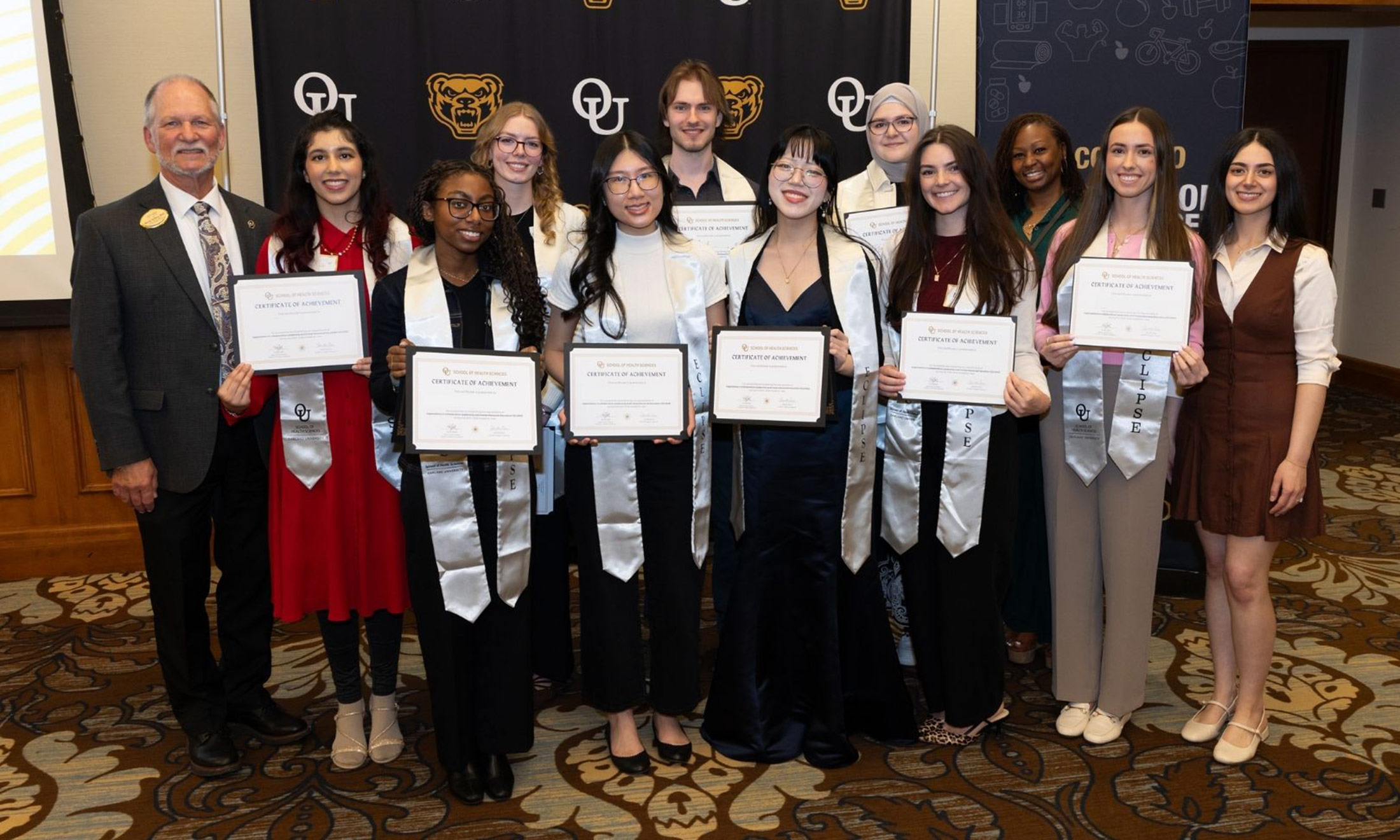
Explorations in Collaborative Leadership and Interprofessional Education, better known as the ECLIPSE program, is a professional development experience for undergraduate students that aims to develop health professionals who impact individuals and populations of people through the power of interprofessional work and collaborative leadership.
During their final year in the program, students complete a Community Health Impact Project (CHIP). CHIP Projects unite a group of students from different health majors, in partnership with a health-focused community organization, to work collaboratively and interprofessionally to solve a problem or create an initiative.
“The Community Health Impact Project is very similar to a capstone experience for our ECLIPSE students,” said Janelle Zora, MPH, ECLIPSE director and School of Health Sciences assistant director for student services, leadership and engagement. “Not only does this opportunity strengthen their career preparation, but it also provides students with the opportunity to apply the skills they've built during the program in a real-world setting and address genuine health concerns that actually matter to the community.”
CHIP Projects inspire students to not just improve health outcomes, but they challenge them to engage in difficult topics to find solutions.
Community Health Worker Training
ECLIPSE students Kinda Al-Sanouri, Thy Hoang, Noah Schepke and Sakina Tirmizi collaborated with MedNetOne Health Solutions to create educational training modules for community health workers (CHWs) working in palliative care.
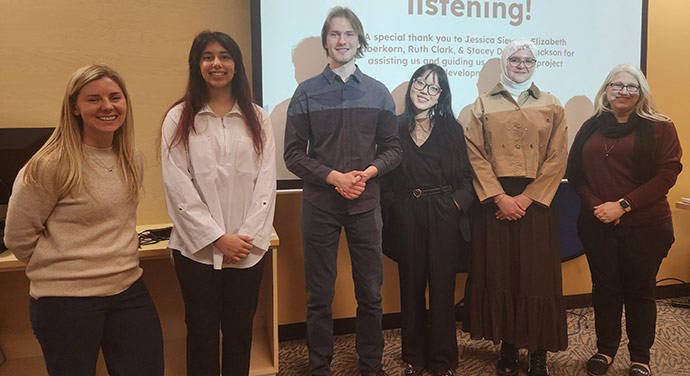
The project trained CHWs on best practices for connecting with patients that speak a language other than English, providing insights into intercultural palliative care and ensuring that social determinants of health are considered when providing quality services. Schepke said, “We hope our work will contribute to a better understanding of cultural beliefs that may impact health decision making and lead to improved health outcomes via trained CHWs.”
After creating the training modules, the students presented their work at MedNetOne’s corporate headquarters. The modules will be used to train all CHWs across Michigan for the foreseeable future.
“It was a pleasure working with the students on a Palliative Care project that focused on culture and religion,” said Ruth Clark, RN, BSN, MPA, instructional designer and faculty member at the Practice Transformation Institute who mentored their project. “They were thoroughly engaged, researched concepts I shared with them after we met and put together an excellent presentation. As a "seasoned" health care professional, I was very encouraged by the caliber of students and their enthusiasm. Our future is in excellent hands.”
While contributing to the community, the students undoubtedly learned lessons that they will carry with them for their future health careers. “I learned about different ethnic groups, how they perceive health care and how they communicate,” said Tirmizi. “I think this will be an eye opener for other people in the community, especially the health care workers, to know how to communicate with people with different backgrounds.” Schepke added, “This project enhanced my abilities in navigating health research, communicating in a professional setting and coordinating with a team. I hope to employ and improve these skills as a future doctor.”
Narcan Training
ECLIPSE students A'Miya Dural, Erin Flynn, Natalie Nguyen, Carmen Peterson, Zoe Paxton and Jessica Smakaj collaborated with Oakland University Housing to provide Narcan information and administration training to students living in OU’s dorms. As part of the training, OU students were provided resources that included kits to carry in the event they can save a life.
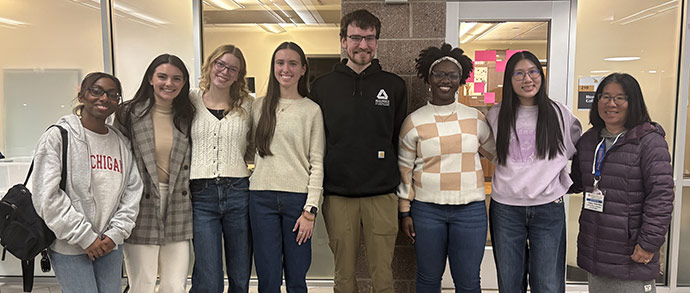
“In the United States, the opioid crisis is more relevant now than ever with the prevalence of synthetic opioids and counterfeit drugs,” Peterson said. “Our CHIP project focused on increasing awareness and access to resources, such as Narcan, so that students are equipped with the knowledge and confidence to help others in life-threatening moments and potentially save lives.” Dural added, “It is very important for students to understand the signs of overdose, see the difference in opioid pills, and know the steps that can be taken to help. The training allowed students to learn about this and gain confidence in handling potential overdose situations.”
The team found it incredibly rewarding to see the event come to fruition. “Many students stated in the post-survey that they learned a lot from the event,” Nguyen said. Peterson added, “I loved seeing students actively engaging and expressing interest in the material presented. This project reminded me that even small educational initiatives can have an impact in a community.”
“Community partnerships empower students, as it helps them realize that as future medical professionals, they are part of the solution,” said Shelly Najor, Ph.D., director of community outreach for the Rochester/Auburn Hills Community Coalition. “The Coalition enjoys working each year with these passionate students who we know will go out and make needed change and advancements in community health.”
The ECLIPSE students will carry what they learned with them in their future health careers — not only about Narcan and opioids, but also about the impact of education on community health. “The CHIP project made me more aware of the serious issues of overdose all around,” Dural said. “It will help me as a future physician assistant so I can notice the different signs of addiction or use.”
Nguyen added, “As a future physician assistant, I hope to continue educating the community about different health topics and providing free resources.” Peterson, also a future physician assistant, said, “This experience reinforced the importance of patient education and providing patients with clear information in a supportive and nonjudgemental manner so that they are well-equipped to make informed decisions.”
Visit the ECLIPSE website to learn more about the program.
More from InHealth