Rocks and Locks
Environmental Science students learn in the field during 10-day trip to Upper Peninsula and Canada
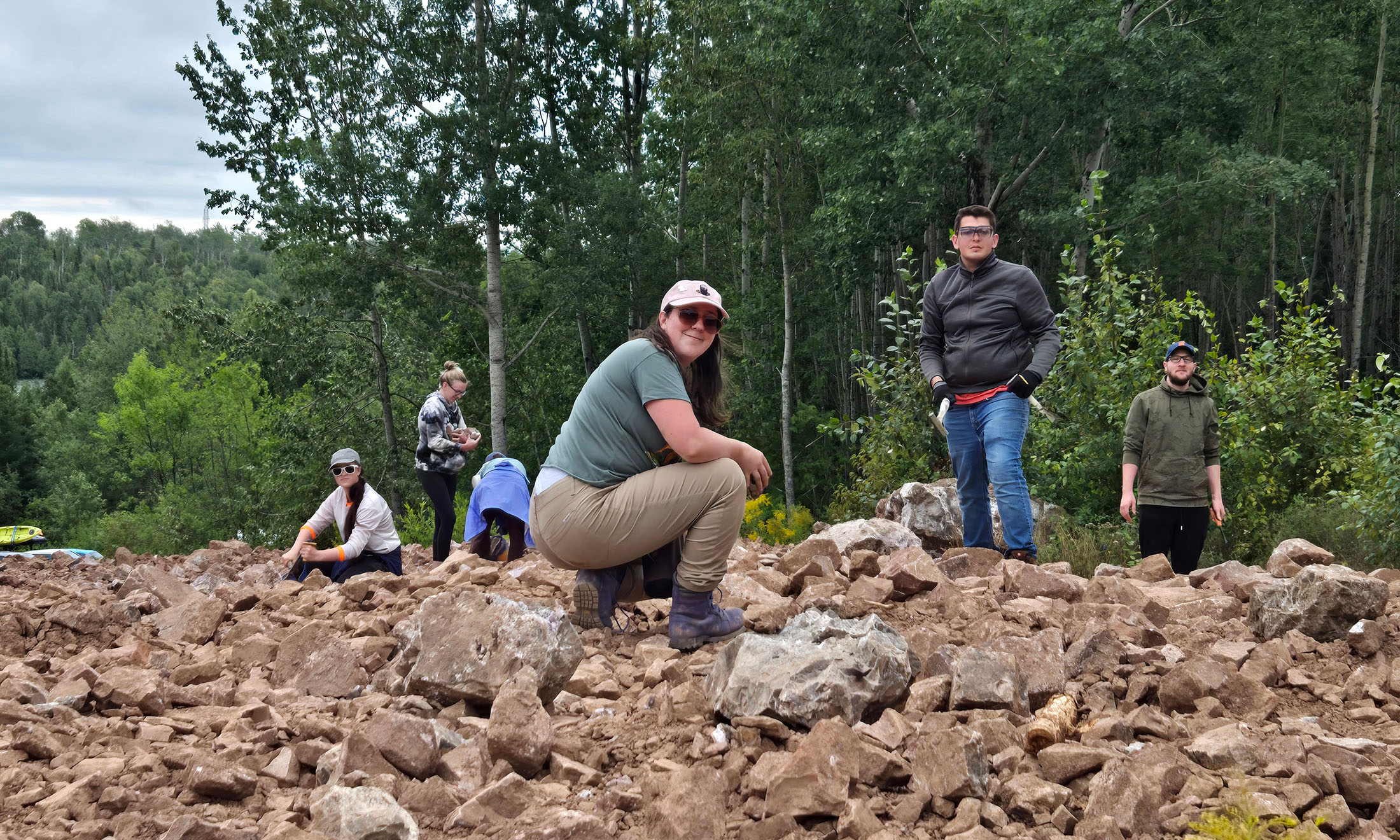
This summer, a group of Oakland Environmental Science students went on a 10-day trip around Lake Superior, which included stops in the Upper Peninsula and Canada.
 October 24, 2025
 By Dave Pemberton
Certain disciplines are easier to learn in the field than in a classroom. Oakland University Environmental Science Special Instructor Dr. Ed van Hees believes this the case with geology and environmental sciences, which is why he has organized field trips for his students throughout his career.
This summer, van Hees took a group of Oakland students on a 10-day trip around Lake Superior, which included stops in the Upper Peninsula and Canada.
“The problem with geology is, it's really hard to learn just from a textbook, so I take people to places where you can see things and appreciate their enormous scale,” van Hees said. “During my education, I went on a lot of field trips, and I can still tell you all the details about those trips and all the people who were on them.”
van Hees said students not only learn about environmental science on the trip, but they also learn about themselves and each other.
“The students who leave Rochester and the ones who came back a week and a half later are a completely different group,” van Hees said. “They are a strongly bonded group. The students become a cohort. They didn't know each other at the start of the trip, and then by sharing accommodations, cooking meals together, being in the field, looking at rocks, and collecting samples, they bonded.”
 |
|---|
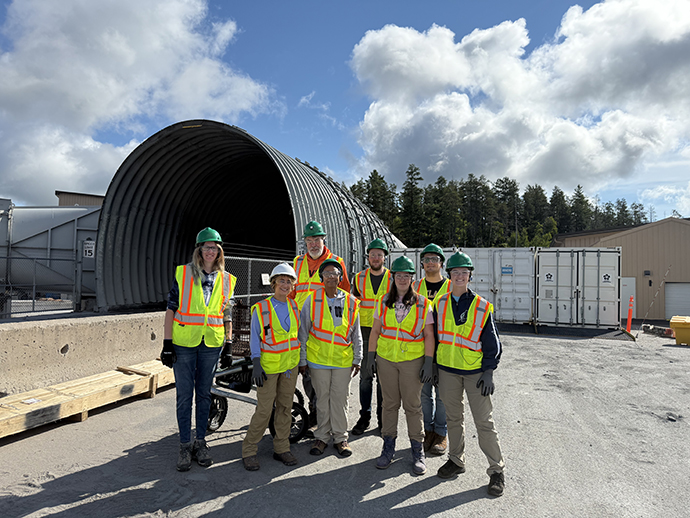
| Oakland Environmental Science students and Environmental Science Special Instructor Ed van Hees (back row, left) stand in front of the portal to the Eagle Mine. |
Junior Ren Dean, who is majoring in environmental health and sustainability, went on the trip and agreed with van Hees that she now has a strong bond with the other students who went.
“We’ve kind of built our own little network and help each other out with studying or if someone doesn’t understand something,” Dean said. “I would have never had these relationships without the trip. I think all of us have slightly different majors, but I could potentially see myself working with them in the future once we all graduate.”
van Hees said the first stops on the trip were at the Sault Ste. Marie Locks. They had a tour of the new Soo Lock construction site, the Lake Superior State University fish hatchery, and did a boat trip through the Sault Ste. Marie Locks.
“My favorite part was probably the Soo Locks because we got to be really up close to them,” Dean said. “I was having fun just learning about all the engineering that's going into building the new lock, and the importance of it, what they're shipping, and how that is affecting everything in tech, in the industry. It was just really awesome.”
The group then did several geology and environmental tours, including the Wawa Iron Mine, Jackpot Lithium Pegmatite prospect, A.E. Seaman Mineral Museum at Michigan Tech University, underground in the historic Delaware Copper Mine, and the ore and water handling facilities on surface at the Eagle Minesite near Marquette.
“At the Delaware Copper Mine, we got to go down like 100 feet and look at this mine shaft,” Dean said. “We learned about the mine, and that the area was mined for thousands of years by indigenous people.”
 |
|---|
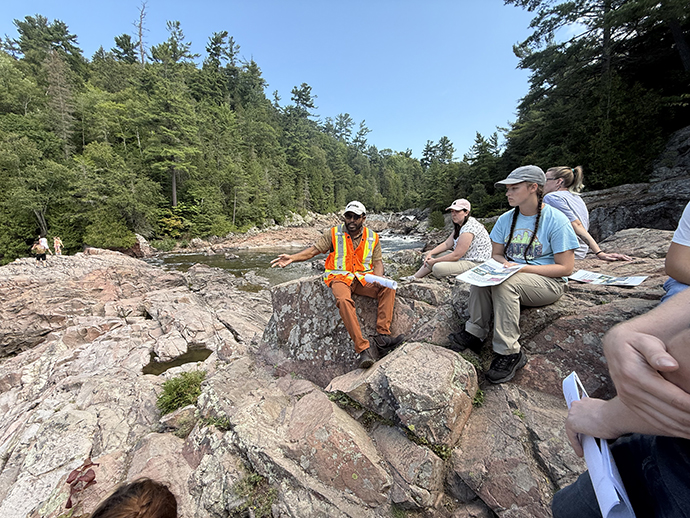
| Students listen to an expert at Chippewa Falls. |
Senior Trevor Arneil went on the trip and said he really enjoyed learning in the field rather than from a book.
“I'm more of a hands-on person, so seeing and being able to touch the minerals and experience it that way, is a lot better than just learning words from a textbook or listening to a lecture,” Arneil said. “There are a lot of minerals that are really useful, and we learned how important they are in modern life, and how much effort it takes in order to get the minerals out of the ground, then shipped and processed.”
Arneil said he enjoyed van Hees’ class, so that’s what prompted him to go on the trip, and being in the field with van Hees on the trip was even more exciting than his class.
“He makes class fun and exciting to learn,” Arneil said. “He's got a lot of experience, and it's amazing hearing about his experiences. Then just seeing him in action and being able to talk about the minerals at certain sites that we went to was great. It was nice to be able to learn and build a strong connection with my professor that I normally wouldn’t have.”
van Hees said he lines up experts to show the students around the various stops because it gives the students a chance to learn details about the sites that are not available to the average tourist, and also to network with professionals.
“Getting to know people that are already in the fields that you could potentially be going into is kind of like getting your foot in the door, and I think that's really awesome,” Dean said. “Sometimes networking events can feel impersonal. Whereas I was sharing a tent with Yale professor Dr. Ruth Blake and sharing dinner. We were going on all these field trips together, and now I have Ruth’s number saved in my phone. I wouldn’t have acquired that any other way.
“I just think it's really cool that I was able to do this, and I'm proud of myself that I got to know more people, my fellow peers and potential future colleagues.”
van Hees said he will continue to take students on field trips. They were able to take this trip because of student fundraising through bake sales and the help of a donor. The fundraising covered 50 percent of the total trip cost, making it affordable for all students.
“The logic behind a field trip like this is just to get out there,” van Hees said. “It's not attached to any course, so there's no stress on people having to learn and then they have to take a test and all that. This is just learning without any strings attached. I have a few more trips I’m planning.”
To learn more about Oakland's Environmental Science program please visit oakland.edu/chemistry/undergraduate-programs/environmental-science/