Partners in Progress
Collaboration rewrites first-generation success
 By Catherine Ticer
When philanthropy, nonprofit innovation and higher education align, transformational change becomes possible. At Oakland University, a visionary two-year donor-funded pilot program called the DREAM Initiative — Determination and Resilience through Education, Achievement and Motivation — planted the seeds for something much bigger. Now, thanks to a $482,000 Michigan Lifelong Education, Advancement, and Potential (MiLEAP) Student Success Go Big Grant from the State of Michigan, Oakland University is scaling those efforts to support every incoming first-generation student by Fall 2026.
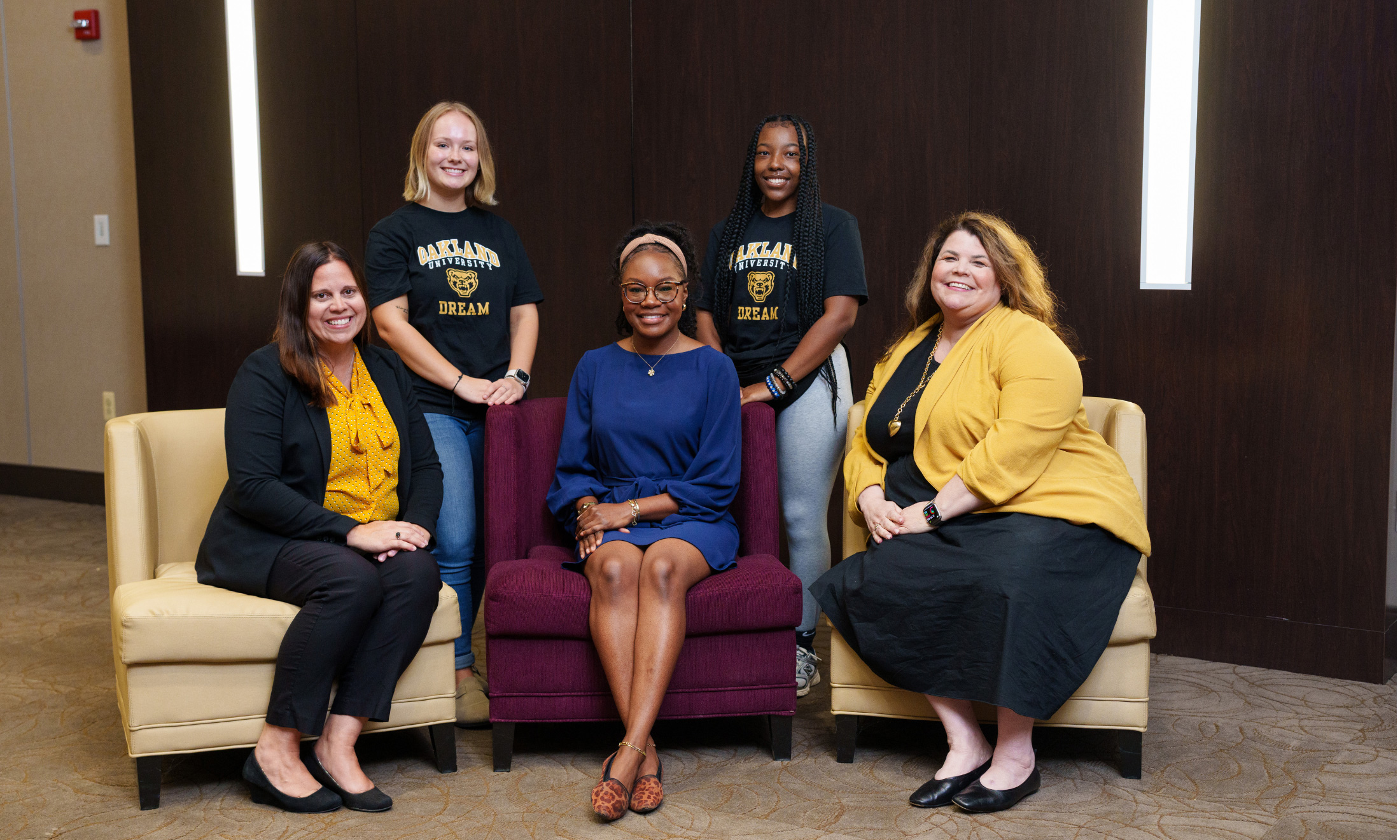
The impact of DREAM was immediate and personal. Through mentorship, early alerts and individualized financial aid counseling, first-generation students in the program not only persisted in school at higher rates but also built a sense of belonging. “I felt like I had someone guiding me,” says Taylor Bauer, a first-generation OU student and DREAM participant. “You can’t always go to your parents for help when they’ve never been through college. This program helped me find my footing and a community.”
Bri'Shona Washington, another DREAM participant and first-generation student, echoed that sense of belonging. “Dream gave me a community, especially during the summer program when we stayed for a week,” she says. “It was mainly Detroit students. We had all heard of each other’s schools but had never met. That week helped us put faces to names and created a bond that carried into the school year.”
The DREAM Initiative was codesigned in 2021 by Oakland University and the Diploma Equity Project, a Michigan nonprofit focused on eliminating college completion gaps for first-generation students. Using human-centered design to better understand barriers, the team conducted in-depth interviews with students who had dropped out of college. From there, they built a support model rooted in this feedback with personal coaching, proactive intervention and individualized financial aid advising support.
Melissa Hamann, executive director of the Diploma Equity Project, believes this partnership exemplifies what is possible when institutions listen to their students. “Oakland was one of our first partners because of their unwavering commitment to first-generation student success. We weren’t just implementing a program — we were designing a better system, together,” she says.
In 2022, Oakland University launched the DREAM Initiative with 47 first-generation students, primarily from Detroit. A second cohort of 25 first-generation students followed. Students were paired with Asia Bennett, a dedicated success coach and given early access to a summer bridge program. In addition, they received support from specialized financial aid advisers and were invited to workshops on time management, financial literacy and study strategies.
Washington notes that the support from the coordinators was critical. “They were always there to help, whether it was about classes or just needing someone to talk to. They weren’t trying to be second parents; they were adults we could go to with open arms. That kind of support kept me on my toes and motivated.”
The results were compelling. In the first year, the program saw 100% of its students continue from fall to winter semester. DREAM students significantly outperformed their peers from similar backgrounds in both continuing their education and credit accumulation metrics, making major strides toward OU’s campus-wide averages.
The pilot was made possible by early philanthropic investments from the Ballmer Group and the Rocket Community Fund, which provided $200,000 and $230,000, respectively, through grants awarded to the Diploma Equity Project. The Diploma Equity Project subgranted those funds and also contributed. “Ballmer and Rocket saw that this was a blueprint for systemic change,” says Hamann. “Their early investment helped Oakland University test, iterate and prove that a more supportive model works.”
Dawn Aubry, OU’s vice president for Enrollment Management and herself a first-generation college graduate, has been a driving force behind the project from the start. “We knew our students needed more than just financial aid — they needed relationships, community and a clear road map to graduation,” says Aubry. “The DREAM Initiative gave us the chance to rethink how we support first-generation students, and the MiLEAP grant is allowing us to take those lessons to scale.”
That scale is ambitious. Oakland serves roughly 900 first-generation first-year students each year, and the MiLEAP grant, which ends in July of 2027, will enable the university to embed DREAM’s core principles across all of them by Fall 2026. The grant is part of Michigan’s broader “Sixty by 30” goal to ensure that 60% of working-age adults hold a degree or certificate by the year 2030.
Scaling DREAM is more than expanding a program — it’s about reimagining what support looks like for first-generation students and making that vision permanent. A new first-generation scaling manager, Brittany Miller, has been hired through the MiLEAP grant, and cross-campus design teams are now building infrastructure to ensure every first-generation student has access to the wraparound support that proved successful in the pilot phase.
As Bauer puts it, “Everything is scary when you’re the first in your family to do something. But this program reminded me that I wasn’t alone and that someone believed I could do it.”
Washington is already thinking ahead. She’s on track to graduate early and is planning to pursue juvenile law. She credits the DREAM Initiative with helping her stay focused and aligned with her goals.
In a time when first-generation students often face hidden hurdles, navigating unfamiliar financial aid processes, academic isolation and a lack of guidance, Oakland University has shown that change is not only possible but scalable. It just takes listening, commitment and the right partners at the table.
And thanks to the DREAM Initiative and the generosity of Ballmer, Rocket, the Diploma Equity Project and the State of Michigan, a better future is no longer a dream for OU’s first-generation students — it’s a plan in motion.
More from Advancing Oakland