
OU researcher explores new ways to protect vision in people with diabetes
Mohamed Moustafa is investigating biological processes that contribute to retinal damage, research that could lead to new approaches for protecting sight
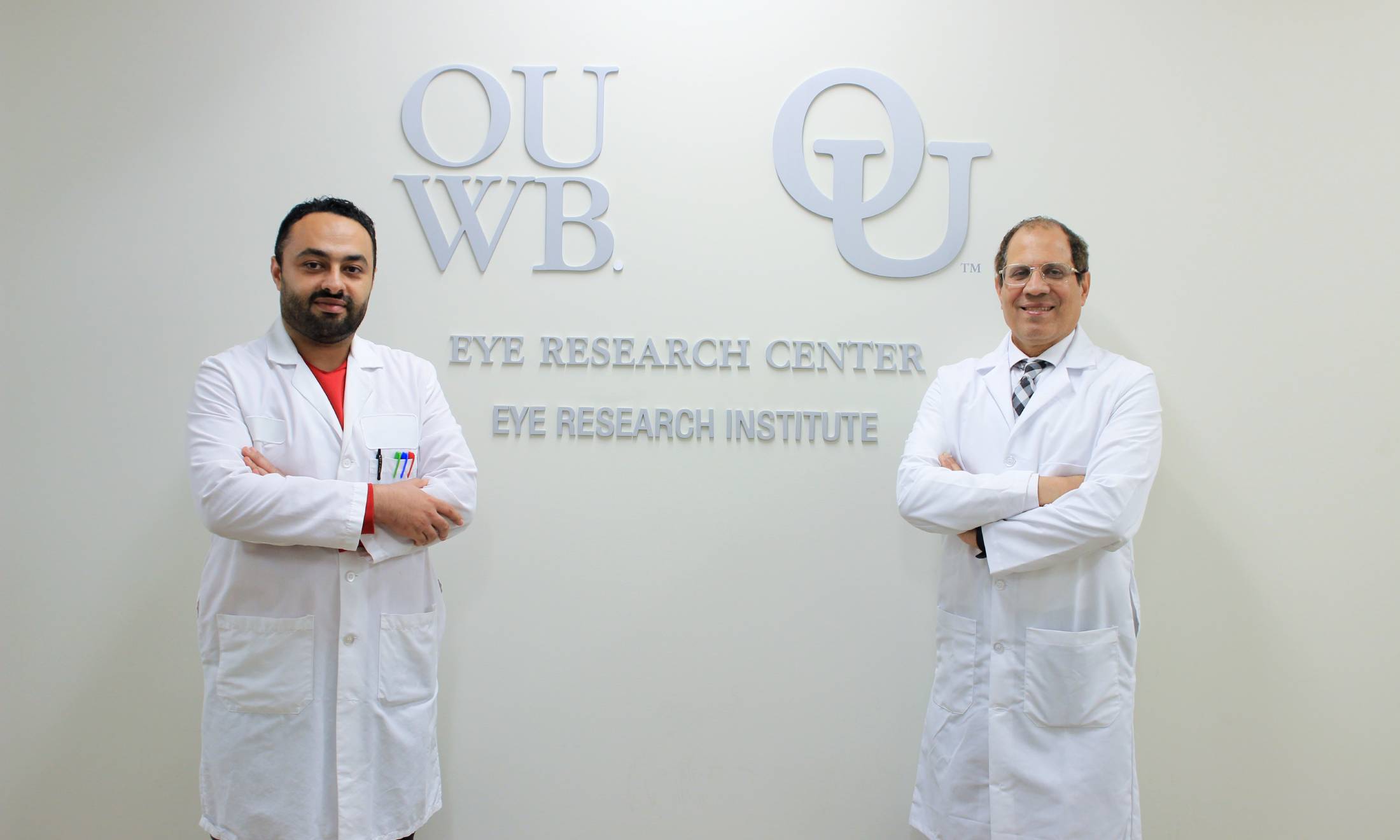
Ph.D. Candidate Mohamed Moustafa (left) is pictured with his mentor, Eye Research Institute Director Mohamed Al-Shabrawey, M.D., Ph.D.
Student Spotlight
 November 03, 2026
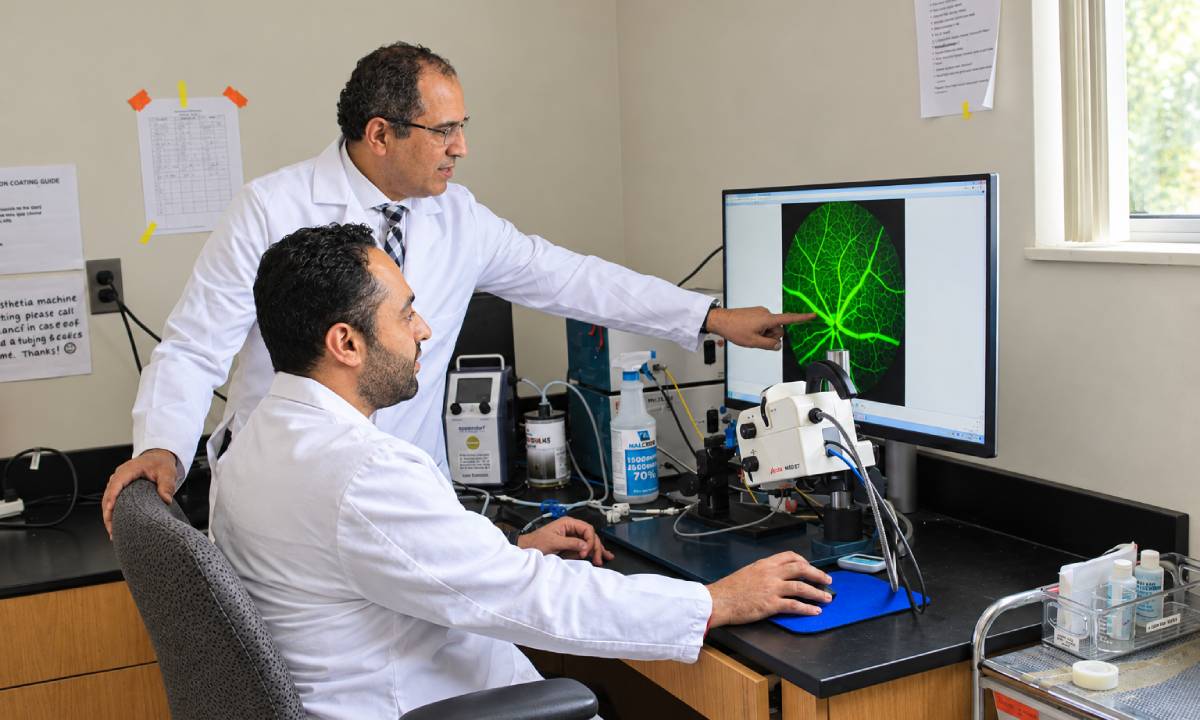
The ability to see clearly affects nearly every aspect of daily life. For Mohamed Moustafa, understanding how diseases threaten vision — and finding ways to protect it — is what drives his research.
“I was drawn to eye research because vision has such a profound impact on a person’s independence and quality of life,” said Moustafa, a Ph.D. candidate in biology and biomedical sciences.
At Oakland University’s Eye Research Institute (ERI), Moustafa is investigating the biological processes that contribute to diabetic retinopathy, a serious complication of diabetes that damages the retina, the part of the eye that detects light. The condition affects roughly 10 million people in the United States and can lead to vision loss.
Moustafa's interest in the disease stems in part from its complexity. Diabetic retinopathy damages not only the retina's blood vessels but also its nerve cells, making it challenging to find treatments that address both types of injury.
His research focuses on an enzyme called 12/15-lipoxygenase, which produces fat molecules that can contribute to inflammation and damage in the retina. By understanding how these molecules affect retinal cells, Moustafa hopes to identify new targets for treatments that could help preserve vision.
That work recently led to a study published in Diabetes, a leading journal in diabetes research, with Moustafa serving as lead author. Conducted with colleagues at the Eye Research Institute, the study examined whether removing the enzyme could protect the retina from diabetes-related damage.
“Because diabetic retinopathy harms both retinal nerve cells and blood vessels, our research has focused on finding a new target that can protect against both vascular and neuronal damage,” said Mohamed Al-Shabrawey, M.D., Ph.D., director of OU's Eye Research Institute and the study's principal investigator.
Building on earlier findings that linked 12/15-lipoxygenase to damage in retinal blood vessels, the team investigated whether the enzyme also contributes to injury in retinal nerve cells.
To answer this question, researchers studied diabetic mice genetically modified to lack the enzyme. They found that removing it helped preserve the retina's thickness and function. It also helped restore certain changes in microRNAs, small molecules that regulate gene activity and play a role in maintaining healthy vision.
Together with the team's previous findings, the results suggest that targeting 12/15-lipoxygenase could offer a way to protect both the blood vessels and nerve cells of the retina.
Although more research is needed to determine whether this approach could lead to effective treatments, the findings offer promising insights into potential ways to prevent vision loss.
Moustafa's path to eye research began with a Doctor of Pharmacy degree from Mansoura University in Egypt. His pharmacy education gave him a foundation in how medications work and sparked his interest in understanding the biological processes behind disease.
That background continues to shape his approach to research. He is now examining how fat molecules produced by 12/15-lipoxygenase activate specific cell receptors, potentially triggering inflammation and damage to retinal blood vessels and nerve cells.
Al-Shabrawey said Moustafa's pharmacy background has been valuable to the research team, helping him connect laboratory discoveries with their potential applications in patient care.
“Mentoring Mohamed Moustafa has been a rewarding experience,” Al-Shabrawey said. “What has impressed me most is his scientific curiosity, dedication and enthusiasm for research.”
Moustafa said his doctoral training has strengthened his ability to think critically, solve research challenges, collaborate with scientists from different backgrounds and communicate scientific findings.
“One of the most rewarding parts has been seeing my research develop from an initial question into a larger story that could potentially contribute to our understanding and treatment of retinal disease,” he said.