
OU research aims to make drug detection faster and safer for first responders
Research and Discovery
 November 25, 2026
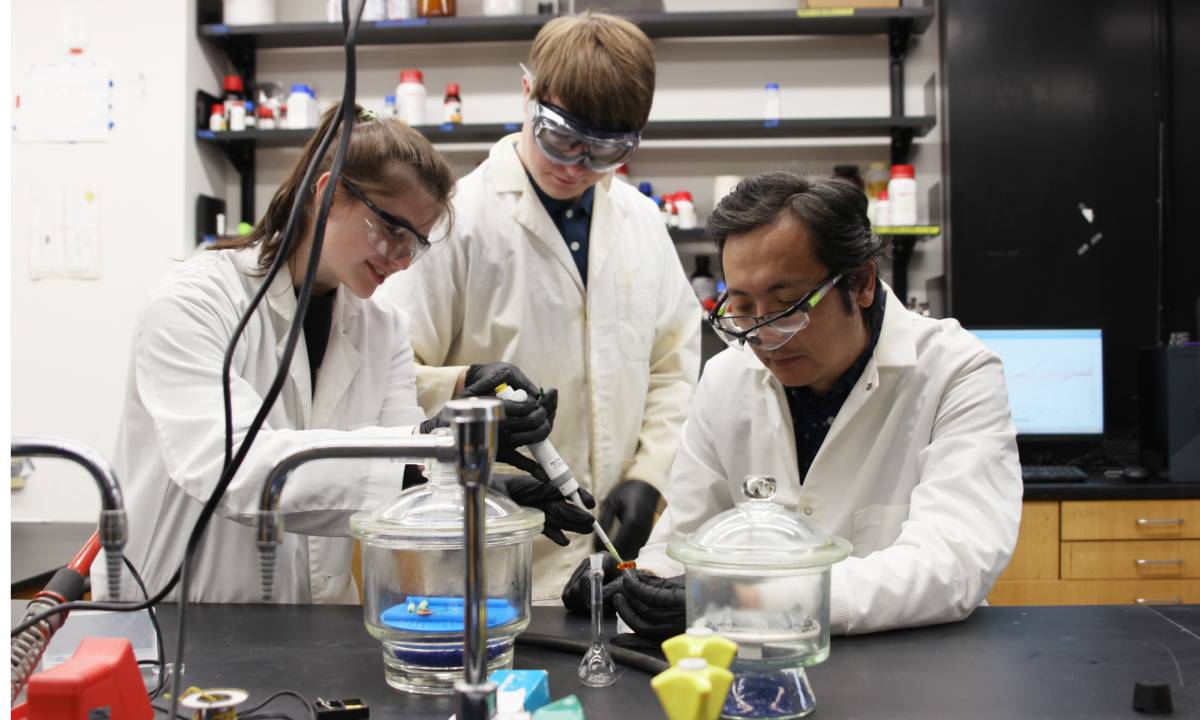
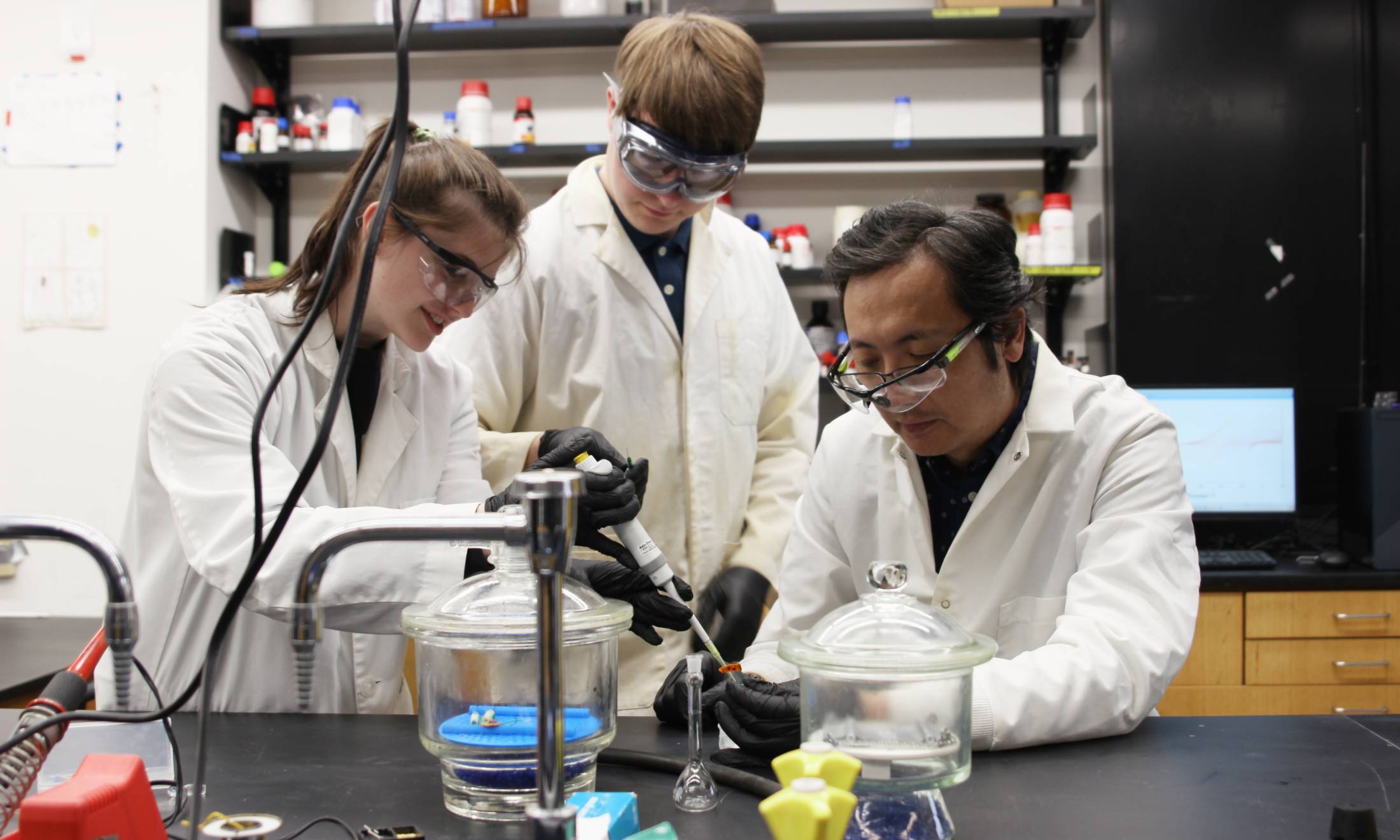
Oakland University researchers are developing a portable device designed to help first responders quickly identify dangerous drugs such as fentanyl, methamphetamine and heroin while reducing exposure risks.
Professor Zhe Wang and students Ethan Burcar and Megan Dougherty
Led by Zhe Wang, Ph.D., associate professor in OU's Department of Chemistry, the eNarc Portable Detection Platform is being developed with support from the university's Community Changemaker Challenge Grant program, which sponsors collaborative projects that engage OU students and faculty.
“We’re working on a portable, low-cost device that first responders can use on-site to identify unknown substances,” Wang said. “They don’t need to touch the substance. They can get results quickly and minimize the risk of direct contact with potentially dangerous drugs.”
First responders use a disposable probe to test substances without directly handling them. The device delivers results within two to three minutes, helping emergency medical services personnel and law enforcement officers make informed decisions in suspected overdose situations.
Ethan Burcar
Roughly the size of a cellphone, the device uses a sensor designed to mimic the brain's natural opioid receptors. Chemistry Ph.D. student Ethan Burcar has helped evaluate its performance using drug samples obtained through a collaboration with Michigan State University's forensic laboratory. His research has provided valuable hands-on experience while reinforcing his interest in using science to improve people’s lives.
“I’ve always enjoyed helping others, and working on a project that helps keep people safe is deeply rewarding,” Burcar said. “It makes it easy to commit to this type of work, knowing all the effort is going toward a good cause.”
Chemistry master's student Megan Dougherty has focused on testing how temperature affects sensor performance, an important consideration for a device that may be stored in first responders' vehicles through hot summers and cold Michigan winters.
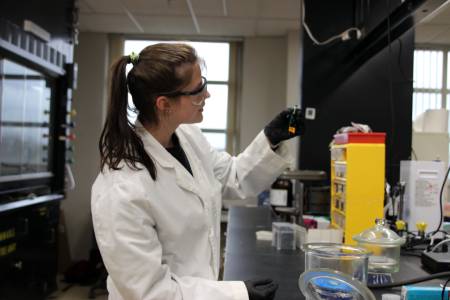
Megan Dougherty
With several family members in law enforcement, Dougherty has a personal interest in the technology's potential to protect first responders and the communities they serve. Her involvement in the project, which began through OU's Summer Undergraduate Research Program, has also strengthened her interest in pursuing a career in forensic toxicology.
“I want to be the person in the lab who law enforcement sends samples to analyze,” she said. “I really like the science behind it. That's what drew me to forensics and to this project.”
The research also could have applications in clinical settings. Preliminary data generated with support from the Changemaker grant helped the research team secure a National Institutes of Health Small Business Innovation Research award in collaboration with a Michigan-based small business and Corewell Health.
The award supports development of a wearable skin patch designed to monitor fentanyl and morphine metabolism. The technology could lead to sensing tools that help anesthesiologists monitor medication dosages during surgery and clinicians track drug metabolism in patients receiving substance use disorder treatment.
The eNarc Portable Detection Platform project is supported by the Michigan Association of Chiefs of Police, the Michigan High Intensity Drug Trafficking Area (HIDTA) program, Oakland County Emergency Management, Corewell Health and other community and academic partners.
“The project is built around a cross-sector network of community and professional partners representing law enforcement, emergency response, health care, forensic science, behavioral health and campus safety,” Wang said. “Their involvement is intended to help ensure that eNarc is developed with real-world public-safety and community needs in mind.”