
Oakland University selected as new statewide Great Start Readiness Program evaluator
 June 12, 2026
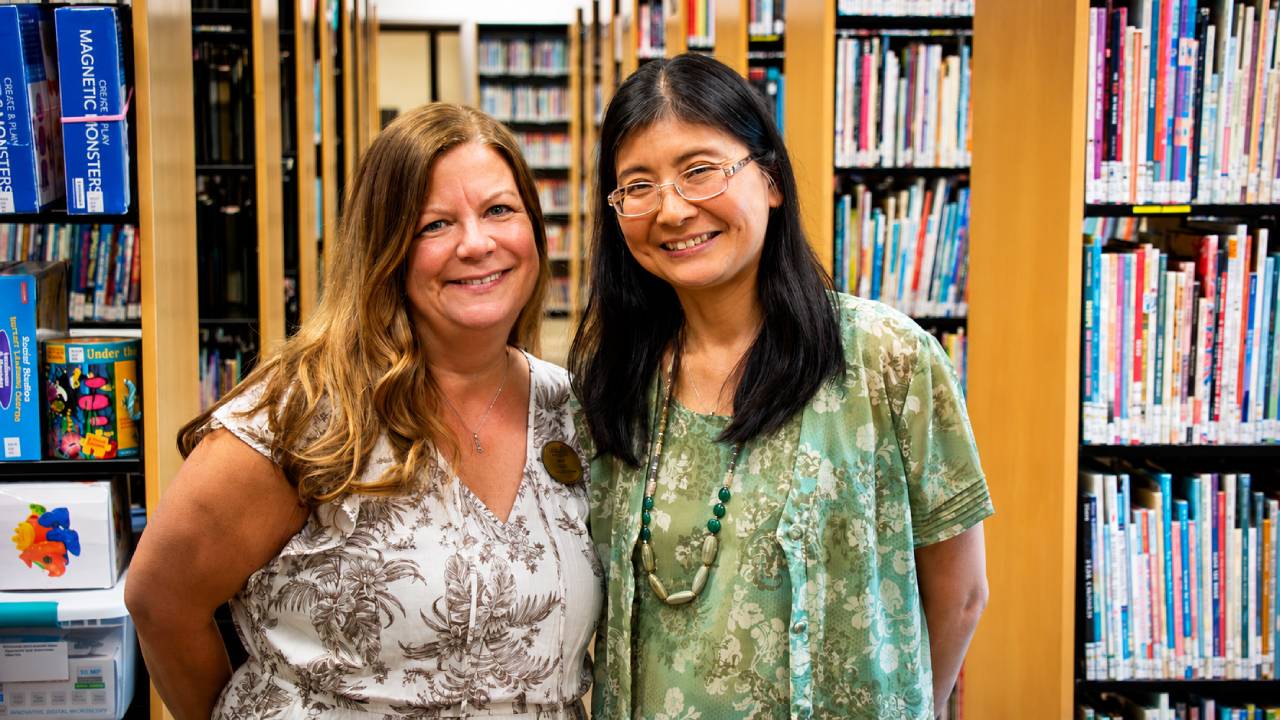
Oakland University has been selected as the new evaluator for the Great Start Readiness Program (GSRP), Michigan’s state-funded pre-K program for four-year-old children.
Dr. Tomoko Wakabayashi, professor of human development and child studies, and Dr. Noel Kelty, assistant professor of human development and child studies, were recently awarded funding through a competitive grant process to support the ongoing evaluation of children participating in GSRP. This contract, renewable for up to five years, will empower them to lead research efforts studying the effectiveness and impact of GSRP.
Originally designed to support children at risk of school failure due to factors such as low household income and special education needs, GSRP has since evolved in response to Gov. Gretchen Whitmer’s “Pre-K for All” initiative, which aims to provide high-quality pre-K education to all four-year-olds in Michigan by 2027. As a result, the state has increased funding for GSRP and eliminated income-based eligibility restrictions, prioritizing families below the 400% poverty level and making the program available to all four-year-olds in Michigan.
“We really want to promote early childhood education as a more universal thing that all children will benefit from,” Wakabayashi said. “I think this universal pre-K is a great thing, and I hope more and more people will understand the importance of it — despite it being a large investment for Michigan — and the long-term impact for society.”
Research widely supports GSRP’s return on investment, with many studies suggesting long-term economic gains as high as $16 for every $1 spent. Additional studies have linked GSRP to increased kindergarten readiness and high school graduation rates.
“It’s the greatest early childhood investment being made in our state,” Kelty said.
To further support the state’s investment in the program, Wakabayashi and Kelty’s research will use a mixed-methods approach that combines the data analysis techniques employed by previous GSRP evaluator Michigan State University with relationship-based fieldwork involving GSRP teachers and children.
“We’re really excited that it’s not just numbers,” Wakabayashi said. “We actually would have the voices of those who are involved that we could bring to this evaluation, so that there will be continued bipartisan support of the program.”
In addition to the ongoing focus groups and interviews they are conducting, Wakabayashi and Kelty invited GSRP program directors — who serve as liaisons between OU’s researchers and participating schools — to campus for a luncheon to thank them for their involvement in the program and gather feedback on ways to improve it in future years.
The university’s role as the statewide GSRP evaluator will also provide invaluable experiential learning opportunities for students, particularly in those enrolled in OU’s new undergraduate program for early childhood education. Wakabayashi and Kelty currently have two doctoral students working with them, but are eager to recruit more students for data collection, entry and analysis.
“Just being part of it would give [students] more ideas of what’s going on in the classroom, what the kids are like developmentally, understanding what assessment looks like, understanding what research looks like,” Wakabayashi said.
Currently, Wakabayashi and Kelty’s research team is working with Oakland Schools, with plans to work with one to two new intermediate school districts (ISDs) each year to build a diverse research sample from across the state by the end of OU’s five-year GSRP contract.
“We’re helping to shape, sustain and grow a strong early care and education system in our state,” Kelty said.
To learn more about OU’s GSRP evaluation research, visit the early childhood projects and partnerships web page or email EvaluationGSRP@oakland.edu.