
Oakland University awards three Community Changemaker Challenge Grants to advance local impact
 February 16, 2026
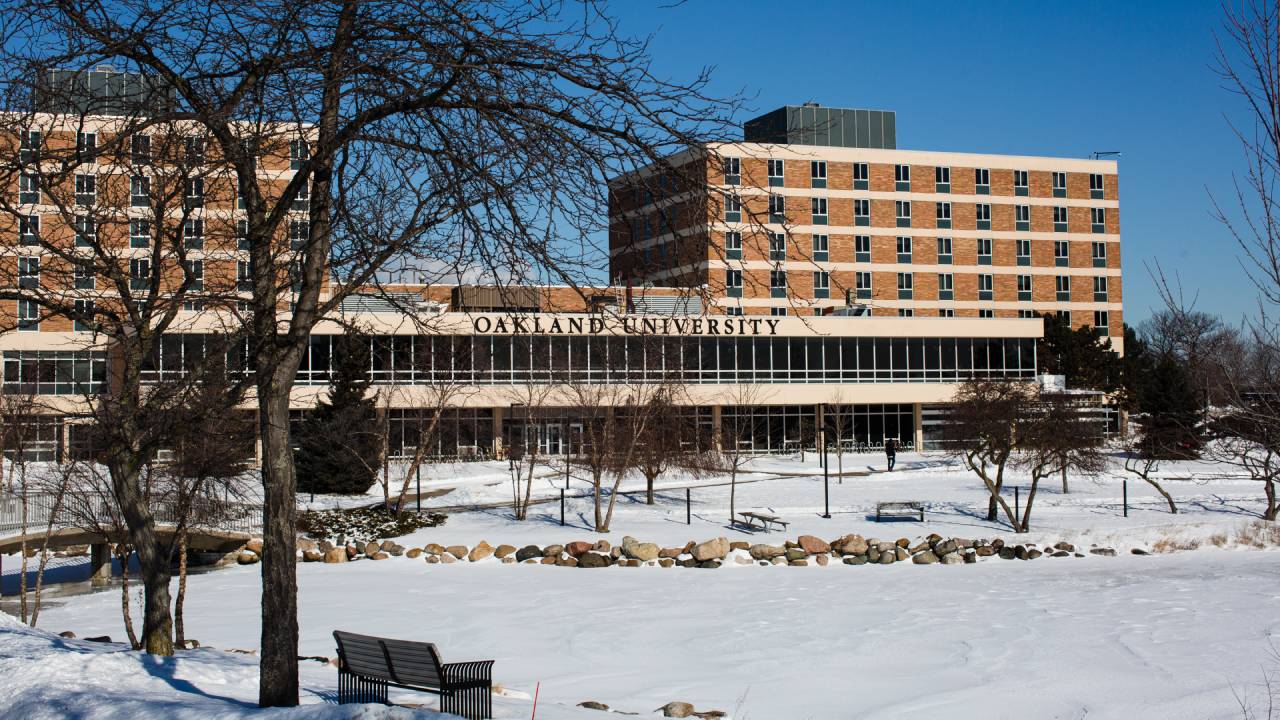
Oakland University will fund three high-impact projects through its Community Changemaker Challenge Grant program, expanding its original plan to support two initiatives following a competitive campus-wide review.
W. Geoffrey Louie
The Community Changemaker Challenge Grant Selection Committee — composed of Amy Banes-Bercelli, vice provost in the Provost’s Office; Meaghan Barry, associate professor in the College of Arts and Sciences; Nicholas DiPucchio, assistant professor in the College of Arts and Sciences; David Dulio, distinguished professor in the College of Arts and Sciences and interim chief community engagement officer; Paul Fontaine from the Research Office; Jennifer Lucarelli, associate professor in the School of Health Sciences; Teresa Rodges of the OU-Pontiac Initiative; David Stone, vice president for research; and David Strubler, professor in the School of Education and Human Services — evaluated 27 proposals representing disciplines from chemistry to art and art history and from engineering to education.
The proposals addressed pressing community challenges, including drug overdose detection, math literacy, environmental health and nonprofit capacity building.
“The committee was very impressed with all of the applications,” said Dulio. “They collectively represent what community engagement at Oakland looks like and what it can be in terms of creating impact in the surrounding communities and great benefits for our faculty and students."
DiPucchio echoed that sentiment.
“All of the proposals reflect a deep commitment by Oakland and its community partners' strong commitment to creating meaningful, sustainable change in both the immediate and the long-term future,” he said.
“There were three projects, however, that stood above the rest,” Dulio continued. “The committee sees these projects as examples of what President Pescovitz was looking for when she made this funding available. Each identifies a community problem to address, partially solve or solve; includes benefits for OU students and faculty; will lead to significant measurable impact; and involves community partners throughout the project.”
Although two awards were originally planned, the committee identified three projects that clearly rose to the top. Each defines a specific community problem, demonstrates measurable impact, integrates students into hands-on learning, and involves community partners throughout the work.
“What is special about the projects that were selected is they embody the key principles of community engagement, such as being co-developed and led with community partners, and will provide experiential learning opportunities for many students,” Lucarelli said.
“The three selected projects empower our students to see themselves as members of a broader community and to understand that their Oakland experience extends well beyond the classroom,” DiPucchio added.
With support from the Research Office — which is providing five Graduate Research Assistant Tuition (GReAT) awards — along with modest budget adjustments by principal investigators and one-time funding from the Office of Community Engagement, all three projects will move forward without additional institutional investment. The decision was unanimous.
“The launch of this initiative shows tangible evidence of Oakland University's commitment to community engagement,” Lucarelli added. “It's not just words in a mission statement or strategic vision, community engagement is being uplifted and integrated into our priorities and operations with this significant financial investment."
The first project, “Elevating Local Community-Based Independent Living with Internet of Robotic Things (IoRT) for Individuals with Intellectual and Developmental Disabilities (IwIDD),” is led by W. Geoffrey Louie, Ph.D., associate professor in the Department of Electrical and Computer Engineering in the School of Engineering and Computer Science (SECS). The interdisciplinary initiative combines engineering and social work to improve independent living outcomes for individuals with intellectual and developmental disabilities.
Partnering with Rochester Housing Solutions, a nonprofit developing neuroinclusive neighborhoods in Oakland County, the research team will design and deploy Internet of Robotic Things technologies that integrate robotics, home sensors, wearables and artificial intelligence. The systems will support a variety of potential homecare needs such as reminders (e.g., medication), safety monitoring and daily living needs. Over two years, faculty and students will co-design and test prototypes in neighborhoods serving 35 residents across 65 homes, engaging four faculty members, graduate researchers, approximately 120 undergraduate engineering students and graduate social work students.
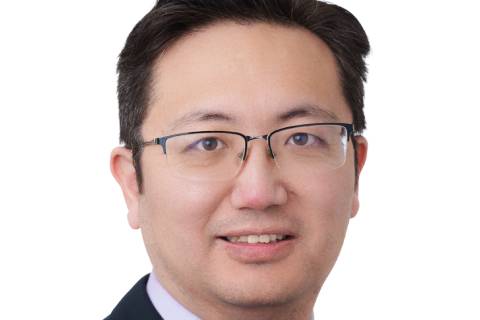
Zhe Wang
The second project, “Protecting Communities from Synthetic Opioids: Development of the eNarc Portable Detection Platform,” is led by Zhe Wang, Ph.D., associate professor in the Department of Chemistry in the College of Arts and Sciences (CAS). The project aims to reduce overdose-related harm and improve emergency response by developing eNarc, a portable device that rapidly identifies substances such as fentanyl, heroin and methamphetamine in suspected overdose situations.
Using a validated sensor platform that mimics natural opioid receptors, eNarc delivers results within two to three minutes through a disposable probe designed to minimize contact risk. Developed in partnership with local EMS, OU Campus Safety and prevention organizations, the device is intended for first responders, law enforcement and community use. Students from engineering, health sciences and criminal justice will play key roles in development, testing and outreach.

Bill Solomonson
The third initiative, “Strengthening Mental Health Access for Youth Experiencing Housing Instability: A Lighthouse, Pontiac, and Oakland University Community Partnership Model,” is led by Bill Solomonson, Ph.D., associate professor and chair of the Department of Organizational Leadership in the School of Education and Human Services (SEHS). The project expands OU’s partnership with Lighthouse MI in Pontiac to increase access to mental health services for youth experiencing housing instability.
Through a satellite counseling model, Oakland University will provide licensed supervision, graduate training and research capacity, while Lighthouse offers program integration and continuity of care. The partnership is designed to improve emotional regulation, housing stability, and educational and employment outcomes for participating youth and families. For OU students, the initiative will generate approximately 2,000 hours of clinical service annually and provide supervised practicum and internship placements that strengthen professional preparation and applied research.
Together, the three projects demonstrate Oakland University’s commitment to community-engaged scholarship that produces measurable impact while enriching student learning. By aligning faculty expertise with community partnerships, the Community Changemaker Challenge Grant program continues to advance meaningful solutions across the region.