
Remembering the Survivors: A New Exhibition Reflects on the Human Legacy of Hiroshima and Nagasaki
 December 18, 2025
UPDATE: Due to the university-wide winter weather closure, the exhibition opening and reception for Memorializing the Hibakusha Experience has been rescheduled to Jan. 22, 2026 from 5-7 p.m. There will be a walkthrough of the exhibition by the curator at 5:30 p.m. The Artist Panel will be rescheduled for a later date in March.
Eighty years after the atomic bombings of Hiroshima and Nagasaki, the stories of those who survived continue to shape how we understand war, memory, and responsibility. This winter, Oakland University invites the public to engage with those stories through Memorializing the Hibakusha Experience.
On view from January 15 through April 5, 2026, the exhibition asks visitors to reflect on how the past continues to inform the present. Through photographs, artifacts, publications, and works of art, Memorializing the Hibakusha Experience details the human consequences of nuclear warfare and the ongoing work of remembrance.
Campaign for Nuclear Disarmament, London, April 23, 1962.jpg)
The exhibition opens with an evening of community conversation. Beginning at 5:00 p.m. on Thursday January 15, an artist panel titled Past Is Present: Memorializing the Hibakusha Experience will take place in West Wilson Hall, Room 124. This free community event features artists Kei Ito, Katy McCormick, Migiwa Orimo, and elin o’Hara slavick. The discussion will be followed by a public reception and exhibition opening at the Oakland University Art Gallery from 6:30 to 8:00 p.m.
Tōmatsu Shōmei, Hibakusha Kataoka Tsuyo, Nagasaki, 1961
At the heart of the exhibition is the Hiroshima-Nagasaki Memorial Collection, an archive created by Quaker peace activist Barbara L. Reynolds. After relocating to Hiroshima in the 1960s, Reynolds devoted her life to antinuclear advocacy, collecting photographs, documents, and personal materials that bear witness to the experiences of hibakusha. The collection, housed at the Peace Resource Center at Wilmington College in Ohio, is considered unparalleled outside of Japan and is being shown beyond its home institution for the first time..jpg)
Historical works by Japanese photographers and artists such as Domon Ken, Matsushige Yoshito, Tōmatsu Shōmei, and Yamahata Yosuke offer courageous documentation of life in the aftermath of the bombings. These images put people, their resilience, and the cost of survival at the forefront.
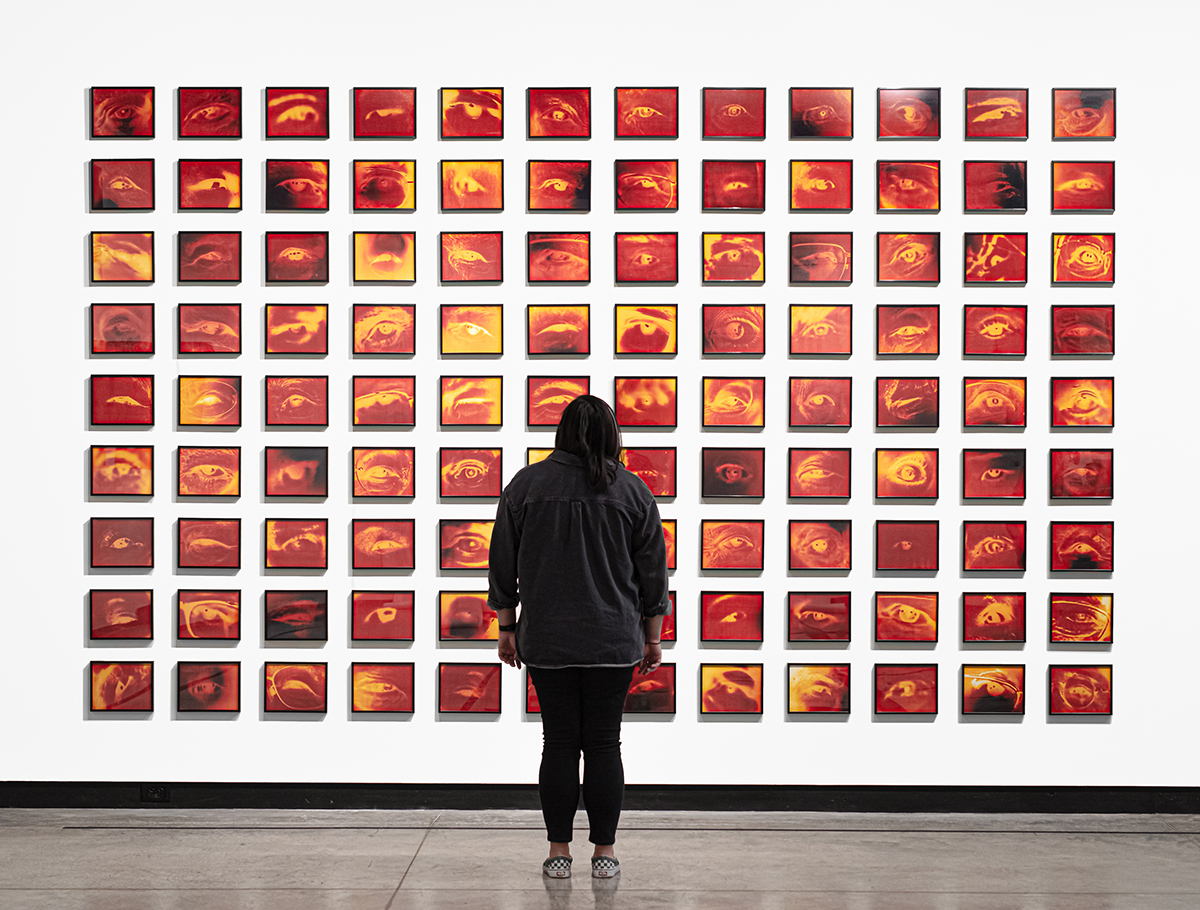
Accompanying these works are contemporary pieces by five artists who, through photography, printmaking, installation, and mixed media, explore how the memory of survivors ripples across generations and cultures. Kei Ito, Myong Hee Kim, Katy McCormick, Migiwa Orimo, and elin o’Hara slavick’s work underscores a central theme of the exhibition: that the hibakusha experience is not confined to history books, but remains urgently relevant today.
Curated by Claude Baillargeon, Professor of Art History at Oakland University, the exhibition was conceived to mark two major milestones: the 50th anniversary of the Peace Resource Center, founded in 1975, and the 80th anniversary of the atomic bombings of Japan. Together, these commemorations frame the exhibition as both a moment of remembrance and a call to reflection.
Additional public programs will extend throughout the semester. On Wednesday, February 11, Baillargeon will present a curator’s talk examining Barbara Reynolds’s antinuclear activism and the origins of the Hiroshima-Nagasaki Memorial Collection. An interdisciplinary symposium on March 20, Plumbing the Depths of A-Bomb Sufferers’ Trials and Tribulations, will further explore the lived realities of atomic bomb survivors through scholarly and artistic perspectives.
Memorializing the Hibakusha Experience is made possible by the generous support of The Judd Family Endowed Fund and the Barry M. Klein Center for Culture and Globalization, co-sponsors of the artist panel. Additional support for the March 20 symposium has been provided by a College of Arts and Sciences Cultural Ambassador Faculty Grant. The exhibition is free and open to the public.